
Silver prices experienced a sudden and aggressive selloff, reversing a short-lived rebound and re-igniting concerns about market stability across precious metals. The sharp decline underscores how quickly sentiment can shift when speculative positioning collides with thin liquidity and rising risk sensitivity.
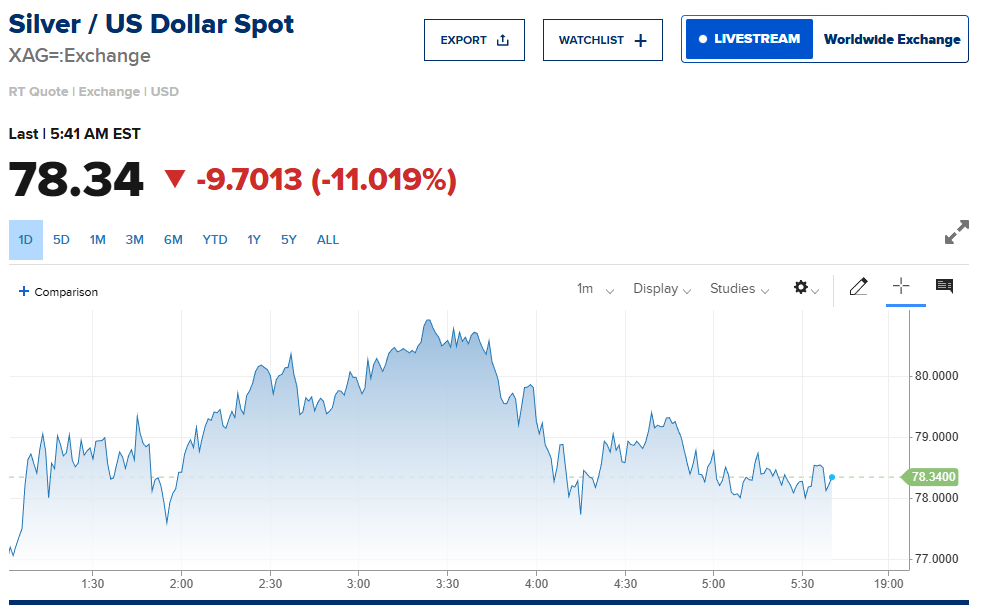
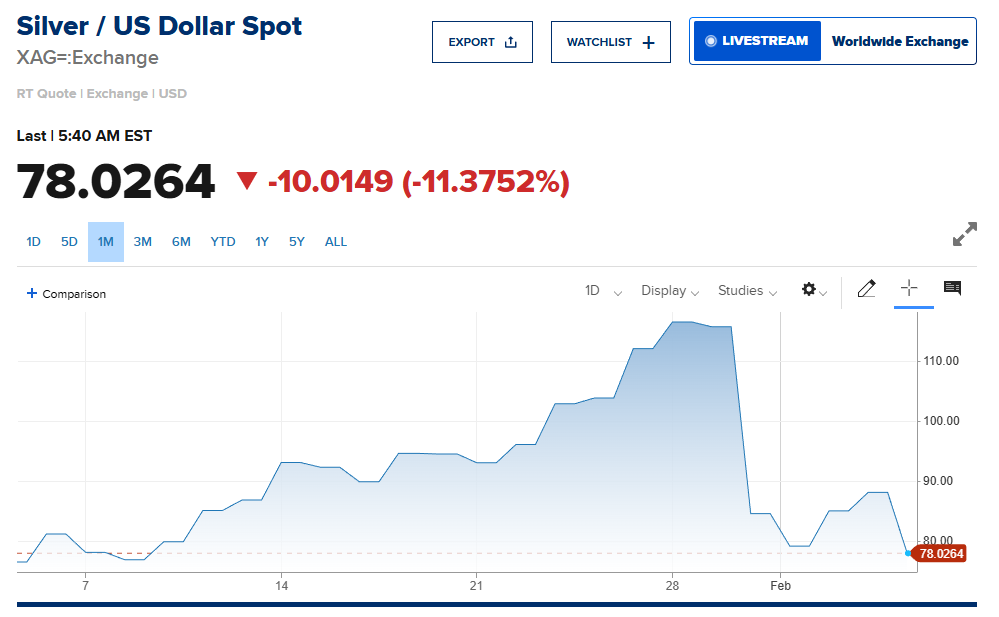
In recent sessions, silver briefly traded above $90 per ounce, only to reverse sharply as selling pressure intensified. Within hours, prices plunged by as much as 17%, effectively wiping out gains from the prior two sessions. The move marked one of the most abrupt short-term declines seen in the metal in years.
Forex experts at Unirock Gestion note that the retreat reflects position unwinding rather than a fundamental demand shock, highlighting the fragility of momentum-driven rallies when liquidity conditions tighten.
Momentum Reversal Exposes Fragile Positioning
Silver’s latest decline follows an extended rally that had pushed prices to record highs in late January, fueled by speculative momentum, leveraged inflows, and broader uncertainty across global markets. After advancing too far and too fast, the metal struggled to establish a durable support base.
From its recent peak, silver has now fallen by more than one-third, a retracement that illustrates how elevated positioning can amplify downside moves once sentiment turns. Technical indicators show momentum rolling over sharply, with overbought conditions unwinding rapidly.
The scale and speed of the move suggest that stop-loss triggers and forced liquidations played a central role, particularly during Asian trading hours where liquidity tends to be thinner. As selling accelerated, bids evaporated, magnifying price swings.
Precious Metals Pull Back in Tandem
The selloff was not isolated to silver. Gold prices also retreated sharply, falling by as much as 3.5% in volatile trading before stabilizing. Platinum and palladium followed suit, reinforcing the view that the weakness reflected broad-based risk reduction rather than metal-specific developments.
Base metals were also caught in the downdraft. Copper prices slipped more than 1%, briefly dipping below $13,000 per metric ton, as investors reassessed exposure across industrial and precious metals alike.
This synchronized move across commodities points to cross-asset de-risking, where portfolio-level adjustments outweigh individual supply-and-demand narratives.
Speculative Flows Amplify Price Swings
Recent market behavior highlights the influence of leveraged exchange-traded products and derivatives positioning in shaping short-term price dynamics. In the weeks leading up to the selloff, silver attracted heavy inflows into leveraged vehicles, alongside elevated call-option activity.
While such flows can accelerate rallies, they also leave markets vulnerable to sharp reversals when sentiment shifts. Once prices began to slip, leveraged positions were rapidly unwound, intensifying selling pressure.
Data suggests that speculative exposure had reached extreme levels, increasing the likelihood of abrupt corrections once momentum stalled. This dynamic helps explain why silver’s decline has been more pronounced than that of other precious metals.
Liquidity Conditions Worsen Volatility
Silver’s inherent market structure contributes to its outsized swings. Compared with gold, silver operates in a smaller and less liquid market, making it more sensitive to sudden changes in order flow.
During periods of stress, reduced liquidity in the over-the-counter market can lead to gaps in pricing and exaggerated intraday moves. Recent trading sessions have reflected these conditions, with prices moving sharply on relatively modest volumes.
As a result, volatility has become self-reinforcing, with rapid price changes further discouraging risk-taking and limiting depth on both sides of the market.
Key Levels Now Under Scrutiny
From a technical perspective, traders are closely monitoring the $70 to $72 per ounce zone, which represents a critical area of prior consolidation. A sustained break below this range could deepen risk aversion and invite further liquidation.
Conversely, stabilization above these levels may allow volatility to compress, creating conditions for more orderly price discovery. However, analysts caution that near-term stabilization does not necessarily signal a trend reversal.
Momentum indicators remain fragile, and price action suggests markets are still searching for equilibrium following the abrupt unwind.
Structural Drivers Remain Intact Despite Turbulence
Despite the violent short-term correction, longer-term structural factors supporting precious metals have not disappeared. Inflation hedging demand, portfolio diversification, and industrial usage continue to underpin silver’s broader investment case.
However, in the absence of renewed inflows or a clear catalyst, prices may remain range-bound and reactive, with rallies facing resistance as investors prioritize capital preservation.
This environment favors tactical positioning over directional conviction, particularly for assets exhibiting elevated volatility.
Outlook: Volatility Likely to Persist
Looking ahead, silver is expected to remain highly sensitive to shifts in risk appetite, liquidity conditions, and speculative flows. Until positioning normalizes and volatility subsides, price action is likely to remain uneven.
For investors, the recent episode serves as a reminder that sharp drawdowns are an inherent feature of momentum-driven markets, especially in assets with thinner liquidity profiles.
While longer-term themes remain supportive, the near-term landscape suggests that patience, risk management, and disciplined exposure sizing will be essential as silver navigates its next phase of price discovery.


