
NVIDIA is drawing renewed attention across technology markets following reports that discussions with OpenAI may be approaching a significant funding agreement. According to widely circulated reports, negotiations could involve an investment of roughly $20 billion, a figure that would place the potential transaction among the largest strategic AI financings in history.
Although neither company has confirmed details publicly, the scale alone has triggered widespread institutional analysis across financial and technology sectors.
Portfolio research analysts at Unirock Gestion indicate that partnerships at this level often carry implications far beyond the companies directly involved. Large capital commitments within foundational AI infrastructure frequently reshape competitive dynamics across the entire ecosystem, influencing suppliers, developers, and enterprise adopters simultaneously.
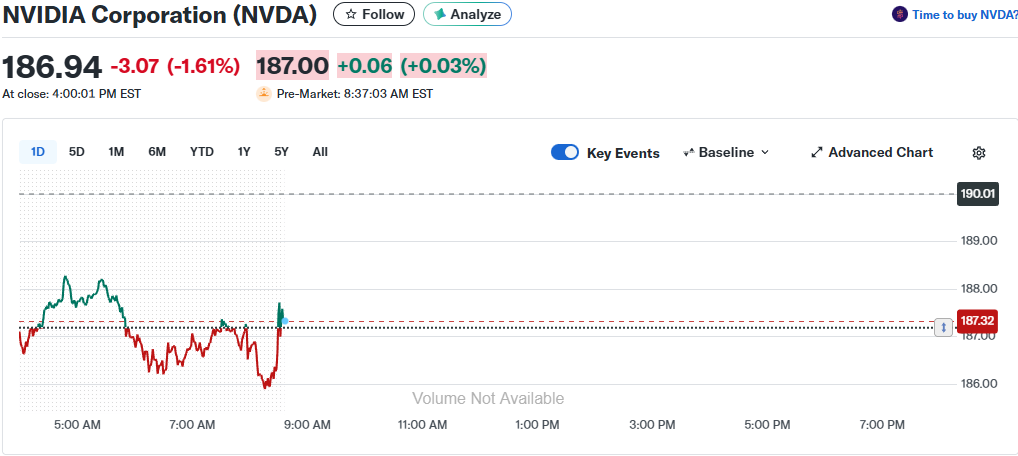
Scale of Funding Reflects Intensifying AI Competition
Reports suggest that OpenAI is seeking as much as $100 billion in total funding, with major technology firms previously exploring participation at different levels. Some investors have discussed potential commitments in the tens of billions, highlighting the substantial capital required to build next-generation computing infrastructure.
Large-scale AI development requires extensive investment in data centers, specialized processors, and energy capacity, making financial resources a decisive competitive factor. Capital intensity has become one of the defining structural characteristics of advanced AI systems, and access to funding increasingly determines which firms can scale models rapidly enough to remain competitive.
Investment Structure Remains Gradual
Recent remarks from NVIDIA’s leadership indicate that any participation would likely occur incrementally rather than through a single transaction. This phased approach suggests a strategy focused on staged capital deployment tied to milestones rather than immediate full-scale funding.
Gradual investment structures are common in large technology partnerships because they allow participants to evaluate progress, performance metrics, and market conditions before committing additional resources. Step-by-step capital allocation reduces downside risk while preserving strategic flexibility, particularly in industries evolving as quickly as artificial intelligence.
NVIDIA’s Central Role in AI Infrastructure
NVIDIA’s position within the AI landscape is rooted in its integrated hardware and software ecosystem. The company develops GPUs, AI accelerators, system-on-chip architectures, and APIs, technologies that serve as core infrastructure for training and deploying machine-learning systems.
Its CUDA platform has become widely adopted across industries, enabling applications ranging from scientific computing to autonomous systems. Over time, this ecosystem has helped establish NVIDIA hardware as a standard for high-performance AI workloads. Dominance at the infrastructure layer often translates into structural influence over technological direction, because many software platforms are optimized for specific hardware environments.
Capital Allocation and Strategic Signaling
Large technology investments frequently serve as strategic signals as much as financial commitments. When firms explore multibillion-dollar partnerships, markets often interpret such discussions as indications of long-term confidence in industry growth trajectories. Capital deployment decisions at this scale can influence valuation models, sector leadership expectations, and competitive positioning across the technology landscape.
Institutional investors closely monitor these developments because they provide insight into where major firms believe future demand will concentrate. Allocation patterns can therefore act as forward-looking indicators, revealing which technologies or platforms may receive priority in the next phase of innovation cycles. In rapidly evolving industries, capital flows themselves can become leading indicators of structural change.
Strategic Effects on the Broader Technology Landscape
Potential collaboration between major AI players is being closely watched because of its second-order market effects. When leading infrastructure providers deepen ties with model developers, the resulting alignment can accelerate innovation cycles and shape industry standards. Such developments may also influence how smaller firms design products or choose technology partners.
Large partnerships can also affect supply chains. Increased demand for advanced processors and specialized computing equipment may drive expansion in semiconductor production, data-center construction, and cloud infrastructure investment. Industry-wide technology cycles often begin with a handful of large strategic commitments, which then cascade through supplier ecosystems.
Competitive Landscape Considerations
The AI sector remains intensely competitive, with multiple global technology firms investing heavily in research, infrastructure, and product development. Funding initiatives of the scale currently under discussion illustrate how rapidly the industry is expanding and how significant financial resources have become to maintaining leadership.
Companies pursuing AI leadership must balance rapid innovation with cost control, infrastructure scaling, and market adoption. Success increasingly depends not only on technical capability but also on access to capital and strategic partnerships, making alliances a decisive factor in long-term positioning.
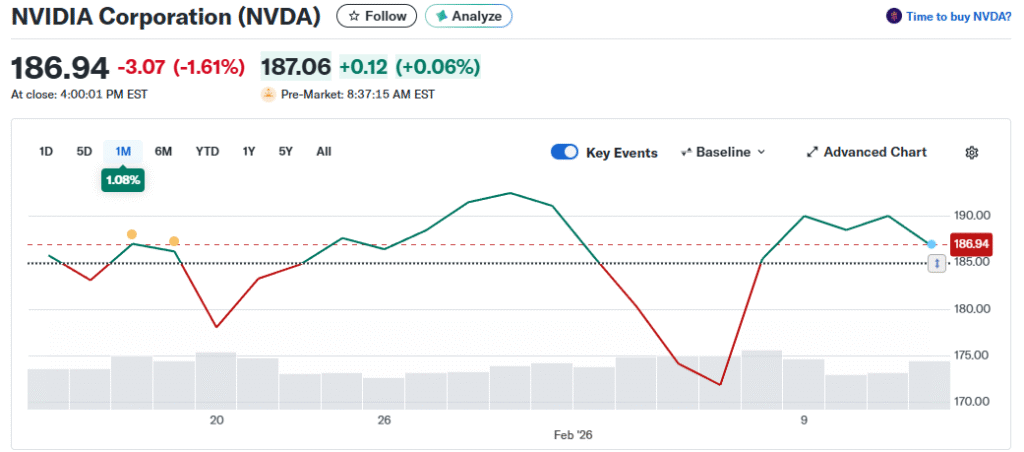
Market Interpretation
Investors and analysts typically view reports of large strategic talks as indicators of confidence in long-term industry growth. Even when agreements are not finalized, discussions alone can signal that participants see substantial opportunity ahead. Markets frequently interpret multibillion-dollar negotiations as confirmation of sustained sector expansion.
Taken together, the reported negotiations highlight how artificial intelligence is evolving into a capital-intensive global ecosystem shaped simultaneously by collaboration and competition. When major technology firms explore partnerships at this scale, it often reflects expectations of structural industry growth rather than short-term momentum.


