
The accelerating race to build artificial intelligence infrastructure is creating significant financial pressure across the technology sector. Oracle’s reported restructuring plans reflect the growing cost burden associated with building large-scale AI data centers and cloud computing capacity.
Investment analysts at Winseterra examine how reports indicate that Oracle is preparing to reduce thousands of positions across multiple business units as part of a broader strategy to manage the enormous financial demands of its artificial intelligence infrastructure expansion. The potential layoffs highlight the economic realities facing technology companies attempting to compete in the rapidly evolving AI cloud market.
Massive Capital Requirements Behind AI Expansion
Artificial intelligence systems require enormous computing power, forcing technology firms to invest heavily in specialized infrastructure.
To support advanced machine learning models and enterprise AI applications, cloud providers are constructing large-scale data centers equipped with high-performance processors, networking hardware, and storage systems.
Oracle has been expanding its AI cloud infrastructure in an effort to strengthen its competitive position against major cloud providers such as Amazon and Microsoft. The company has invested heavily in building facilities capable of handling complex artificial intelligence workloads for enterprise customers.
However, these investments come with substantial financial commitments. Industry projections suggest that the scale of Oracle’s expansion could temporarily strain the company’s cash flow as infrastructure spending accelerates.
Workforce Reductions as Part of Cost Management
In response to the financial pressure created by these investments, Oracle is reportedly planning workforce reductions across several departments.
Sources familiar with the situation suggest that the company may eliminate thousands of roles across multiple divisions, with some job cuts potentially occurring as early as this month.
The restructuring may affect various operational areas as the company evaluates which positions remain essential under its evolving artificial intelligence strategy.
Some of the targeted positions may include job categories that could become less necessary as AI systems increasingly automate internal processes.
Hiring Review Indicates Strategic Shift
Alongside potential job cuts, Oracle has reportedly begun reviewing open job listings across its cloud division.
Internal discussions suggest that hiring for certain roles may slow or temporarily pause while the company reassesses staffing requirements.
Hiring freezes are often used as an early step in workforce restructuring, allowing companies to control operating costs without immediately implementing large-scale layoffs.
Financing a Multi-Billion-Dollar Infrastructure Push
Oracle’s AI expansion strategy requires enormous financial resources.
The company recently indicated it may raise as much as $50 billion this year through a combination of debt and equity financing to support the construction of new data centers and cloud computing infrastructure.
Technology firms often rely on external capital when building infrastructure at this scale. Data centers designed for artificial intelligence workloads require advanced chips, high-speed networking equipment, and substantial energy capacity.
Because these facilities take years to complete and generate revenue, companies frequently experience temporary financial pressure before long-term returns begin to appear.
Industry forecasts suggest the financial payoff from Oracle’s current infrastructure investments may extend toward 2030, when AI cloud services are expected to mature into a major enterprise revenue stream.
Investor Sentiment Turns Cautious
Oracle’s AI expansion strategy initially generated strong investor enthusiasm.
The company’s shares rose 61 percent during 2024 and gained another 20 percent in 2025, reflecting optimism that Oracle could become a major competitor in the artificial intelligence cloud market.
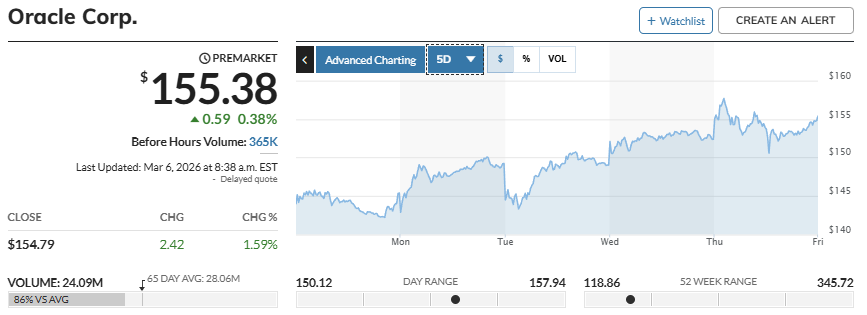
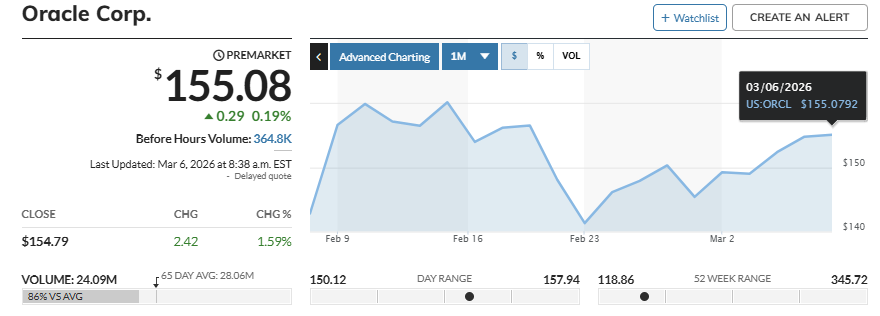
However, investor sentiment has become more cautious as the scale of infrastructure spending increased.
The company’s stock has fallen roughly 54 percent from its September 2025 peak, reflecting concerns about the near-term financial impact of aggressive AI data-center investment.
Restructuring Costs Highlight Strategic Transformation
Oracle previously disclosed plans for one of the largest restructuring programs in its corporate history.
Financial filings indicate that the company expects restructuring expenses to reach as much as $1.6 billion during the current fiscal year. These costs include severance payments and other expenses associated with workforce reductions.
Such large restructuring programs often occur when companies undergo major strategic transformations.
In Oracle’s case, the transition toward artificial intelligence infrastructure and cloud computing services represents one of the most significant shifts in the company’s long-term business strategy.
Oracle’s AI Investment Strategy: The Road Ahead
Despite the short-term financial pressure created by heavy infrastructure spending, many analysts believe the company’s long-term strategy reflects the direction of the global technology industry.
Artificial intelligence is expected to remain a major driver of cloud computing demand for many years. Companies capable of building and operating the infrastructure required to support AI systems may eventually benefit from sustained enterprise demand.
However, the transition requires significant capital investment and operational restructuring.
For investors, Oracle’s workforce adjustments highlight the difficult balance between long-term technological expansion and short-term financial discipline as companies compete to build the next generation of artificial intelligence computing infrastructure.


