
The global semiconductor industry continues to expand rapidly as artificial intelligence infrastructure investment accelerates across the technology sector. Broadcom’s latest projections for artificial intelligence semiconductor revenue highlight the growing importance of custom-designed processors within the next generation of computing infrastructure.
Broadcom recently indicated that its artificial intelligence chip business could generate more than $100 billion in AI chip revenue by 2027, reflecting surging demand from technology companies developing large-scale AI systems. The forecast signals the growing role of specialized semiconductor suppliers as cloud providers and artificial intelligence developers continue expanding their computing capabilities.
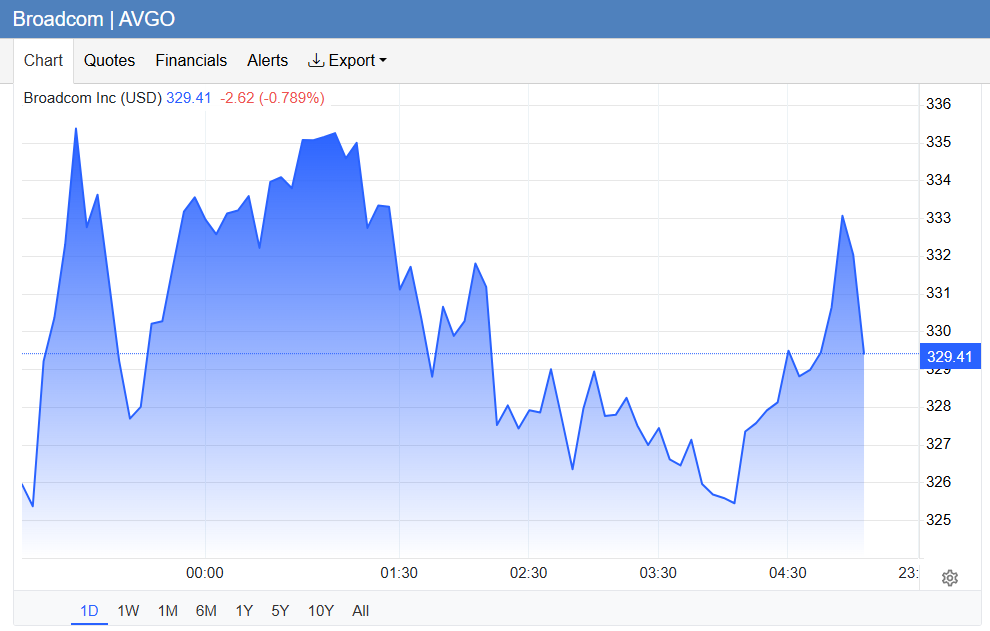
Global asset researchers at Winseterra examine how the announcement sparked a positive reaction in equity markets, with Broadcom shares rising nearly 6% in premarket trading following the company’s earnings update and strategic outlook.
The forecast signals the growing role of specialized semiconductor suppliers as cloud providers and artificial intelligence developers continue expanding their computing capabilities.
AI Infrastructure Spending Fuels Semiconductor Growth
The surge in demand for artificial intelligence processors is closely linked to massive infrastructure investment by the world’s largest technology firms.
Industry estimates suggest that global technology companies such as Alphabet, Microsoft, Amazon, and Meta could collectively spend more than $630 billion in 2026 to expand artificial intelligence infrastructure. These investments include data centers, specialized processors, high-speed networking systems, and advanced storage technologies required to support machine learning and generative AI workloads.
Such spending has created enormous opportunities for semiconductor manufacturers capable of designing processors optimized specifically for artificial intelligence applications.
Broadcom has positioned itself as a major supplier of custom AI processors and networking components, allowing the company to benefit directly from the global expansion of artificial intelligence computing infrastructure.
Broadcom’s Custom Chip Strategy
Unlike some semiconductor companies that design entire processors independently, Broadcom frequently collaborates with major technology clients to develop customized chips tailored to specific computing workloads.
This approach allows technology companies to create proprietary processors optimized for their own software ecosystems and artificial intelligence platforms.
Broadcom engineers assist customers in converting conceptual chip designs into physical semiconductor layouts that can be manufactured at scale by contract foundries such as Taiwan Semiconductor Manufacturing Company, the world’s leading chip fabrication provider.
Strong Revenue Outlook Signals Expanding Market Demand
Broadcom’s financial outlook suggests that demand for custom artificial intelligence processors could expand significantly over the next several years.
The company expects its artificial intelligence semiconductor revenue to exceed $100 billion annually by 2027, a milestone that illustrates the scale of investment currently flowing into the AI technology sector.
For the upcoming quarter, Broadcom projected total company revenue of approximately $22.0 billion, exceeding analyst expectations of about $20.56 billion.
Major Technology Clients Driving Demand
Several of the world’s largest technology firms are contributing to the rapid expansion of Broadcom’s artificial intelligence business.
The company collaborates with major clients to develop specialized processors designed to power machine learning models, cloud computing platforms, and large-scale data processing systems.
One example involves the development of tensor processing units, commonly referred to as TPUs, which are specialized processors optimized for artificial intelligence workloads.
Broadcom also works with artificial intelligence developers designing custom processors for advanced generative AI systems, enabling these firms to build computing platforms optimized for their own software environments.
Growing Energy Requirements of AI Infrastructure
Artificial intelligence computing infrastructure requires enormous amounts of electricity to operate efficiently.
Broadcom executives indicated that shipments of AI processors for some major clients could reach 1 gigawatt of computing capacity in 2026, potentially increasing to around 3 gigawatts by 2027 as demand accelerates.
Large data centers hosting AI workloads can consume electricity comparable to small urban areas, making energy efficiency an increasingly critical factor in semiconductor design.
New Chip Technologies Expand Future Revenue Potential
Broadcom is also developing new semiconductor technologies that could expand its future revenue opportunities.
The company recently indicated plans to deliver more than 1 million chips based on its advanced stacked semiconductor architecture by 2027.
This design approach allows multiple semiconductor layers to be integrated within a single processor, improving performance while reducing energy consumption.
If adopted widely by artificial intelligence infrastructure developers, such technologies could generate billions of dollars in additional semiconductor revenue over the coming years.
Where the AI Chip Market Is Heading
The rapid expansion of artificial intelligence computing is expected to drive semiconductor demand for many years.
As companies invest heavily in new data centers, machine learning infrastructure, and advanced computing platforms, the need for specialized processors and networking hardware will continue growing.
For Broadcom, the ability to design customized semiconductor solutions for major technology firms may remain a critical advantage as the artificial intelligence ecosystem evolves.
If current investment trends continue, the semiconductor sector could remain one of the largest beneficiaries of the global artificial intelligence expansion over the coming decade.


