
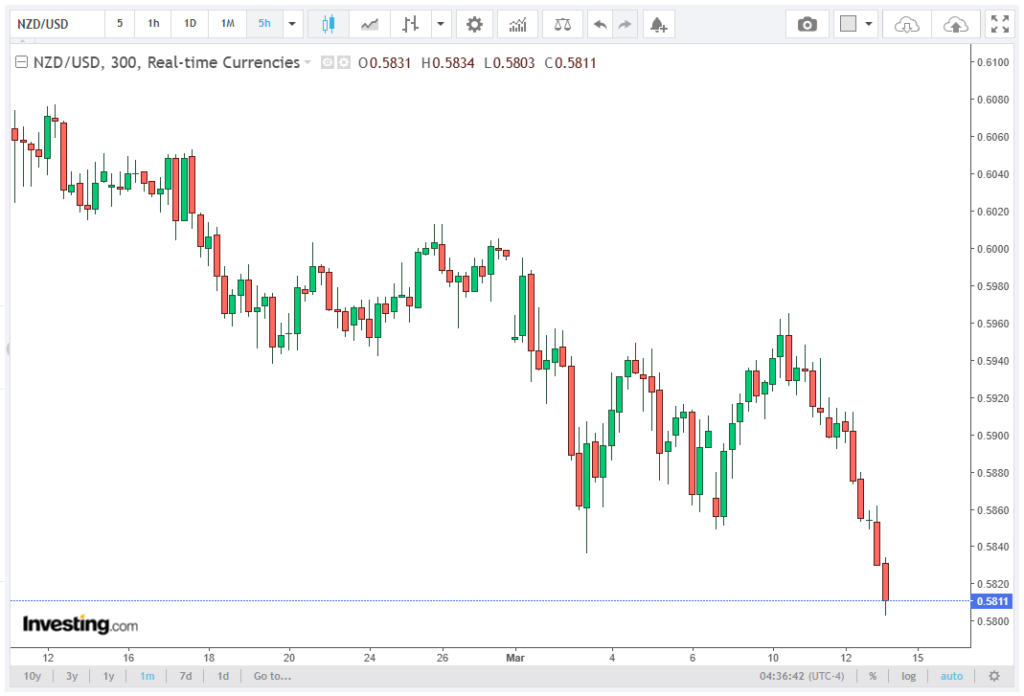
The NZD/USD pair posted modest gains, trading around 0.5855 in early Friday Asian session activity. The pair’s upside momentum remains limited amid ongoing geopolitical risks. Traders are carefully positioning themselves ahead of critical US economic data, particularly the Personal Consumption Expenditures (PCE) Price Index for January, which is set to be released later on Friday. The brokers at Rubizio provide a comprehensive breakdown of this topic in this article.
Despite the Kiwi’s mild strength, the currency faces headwinds from global geopolitical tensions. These factors may limit any meaningful appreciation against the US Dollar (USD), keeping volatility elevated in the near term. Market participants are balancing risk sentiment with fundamental data to assess potential trading opportunities.
Middle East Tensions Cap Upside
Heightening Middle East conflicts are creating a risk-off environment that tends to favor the US Dollar. Iran’s new supreme leader, Mojtaba Khamenei, recently asserted that Tehran would aim to keep the Strait of Hormuz effectively closed. This statement has triggered concerns over global energy supply, potentially pushing oil prices higher and adding pressure to the NZD/USD exchange rate.
In a related development, the US President emphasized that preventing Iran from acquiring nuclear capabilities and containing its Middle East influence is of higher strategic importance than oil costs. Such geopolitical rhetoric tends to drive safe-haven demand for the US Dollar, which can weigh on the New Zealand Dollar.
The combination of these geopolitical headwinds and market uncertainty means that NZD gains are likely to remain measured, with traders seeking clarity from upcoming US inflation data and any further statements from Middle Eastern policymakers.
US PCE Inflation Data in Focus
The US PCE Price Index, the Federal Reserve’s preferred inflation gauge, takes center stage on Friday. Analysts forecast a headline PCE increase of 2.9% year-over-year (YoY) for January, with the core PCE projected to rise 3.1% YoY. These readings are critical as they provide insight into price pressures and could influence Fed interest rate expectations.
Any evidence of softer US inflation may put downward pressure on the Greenback, potentially providing a tailwind for NZD/USD. Conversely, stronger-than-expected inflation could reinforce Fed tightening expectations, boosting the USD against its global peers.
Current market pricing suggests a 99% probability that the Federal Reserve (Fed) will maintain interest rates at its next meeting, according to the CME FedWatch Tool. Despite this, traders remain sensitive to data surprises, which could prompt short-term volatility in the NZD/USD pair.
Geopolitical Risks and Oil Prices Influence NZD/USD
Ongoing geopolitical tensions in the Middle East, particularly threats to the Strait of Hormuz, are creating additional upside pressure on oil prices. Higher energy costs tend to increase import bills for New Zealand, potentially weighing on the NZD over time.
Traders are monitoring these developments closely, as heightened geopolitical risk often drives safe-haven flows into the US Dollar, limiting the Kiwi’s ability to sustain gains. Moreover, any escalation in Iran-US relations could lead to spikes in market volatility, making the NZD/USD pair sensitive to news headlines and short-term risk sentiment shifts.
Kiwi Outlook and RBNZ Policy Expectations
On the New Zealand Dollar side, RBNZ Governor Anna Breman indicated that monetary policy is expected to remain accommodative for the foreseeable future. Her comments underscore the fragile state of the domestic economy, suggesting that the Reserve Bank of New Zealand (RBNZ) may be cautious in implementing policy tightening.
However, financial markets have started pricing in a shift toward RBNZ tightening, with at least two Official Cash Rate (OCR) hikes expected by the end of 2026. This outlook is largely driven by energy price shocks resulting from ongoing Middle East conflicts, which could exacerbate domestic inflation pressures.
Technical and Market Implications
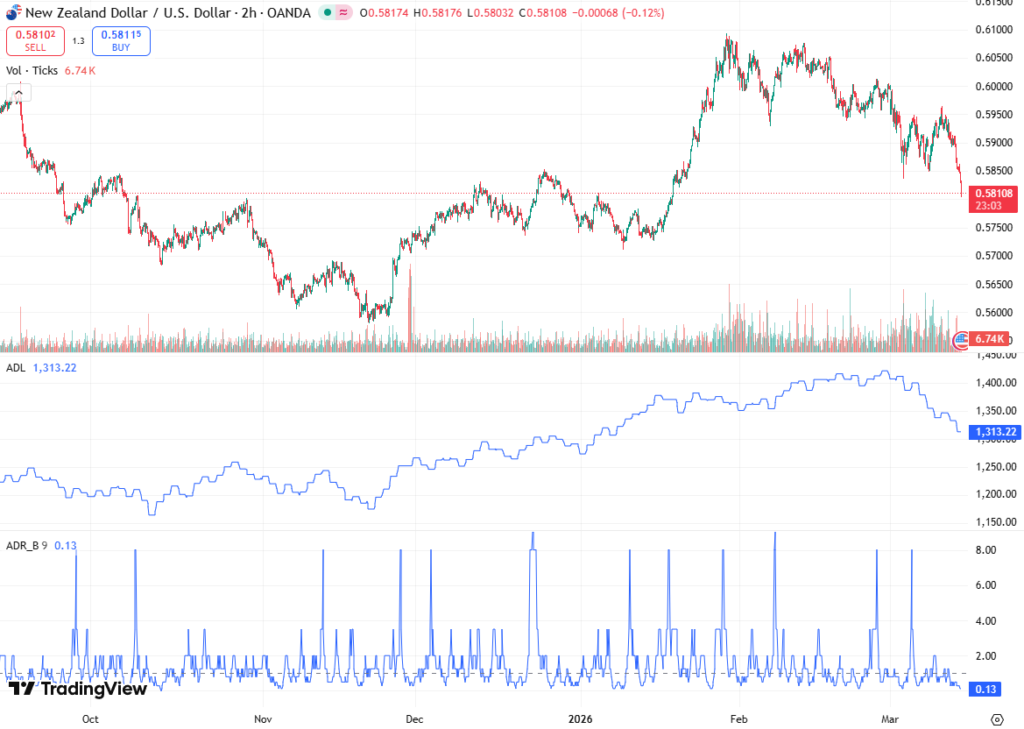
From a technical perspective, the NZD/USD pair is currently hovering above the 0.5850 mark, with resistance levels around 0.5870–0.5880 and support near 0.5830–0.5840. A break above resistance could attract short-term buyers, while a decline toward support may see risk-off traders dominate.
Market participants are also factoring in cross-currency dynamics, commodity prices, and interest rate differentials. The interplay between US inflation expectations and RBNZ monetary policy signals will likely shape NZD/USD movements in the coming sessions.
Conclusion
In summary, the NZD/USD is trading with mild gains around 0.5855 in early Friday trading, supported by domestic resilience but constrained by Middle East tensions and US Dollar strength. Traders are awaiting the US PCE inflation report, which could dictate short-term market sentiment and interest rate expectations.
While the RBNZ continues to signal accommodative policy, markets are beginning to price in future tightening, reflecting concerns over energy-driven inflation. The combination of geopolitical risks, inflation data, and monetary policy guidance will remain key factors influencing the NZD/USD trajectory in the near term.


