
Transportation stocks suffered catastrophic losses on Friday as soaring fuel costs combined with weakening consumer demand. Lead finance experts at Nummixo explore how airline shares plunged between 4 and 6% while cruise operators declined approximately 6% each as the energy shock destroyed profitability assumptions. United Airlines CEO Scott Kirby warned fuel price spike will have a meaningful impact on first-quarter results, triggering a broader sector reassessment.
Oil surging past $90 per barrel creates immediate margin pressures, while deteriorating employment conditions threaten forward bookings. The travel industry confronts dual headwinds: operational cost increases and demand destruction as consumers pull back on discretionary spending.
Airline Sector Devastation
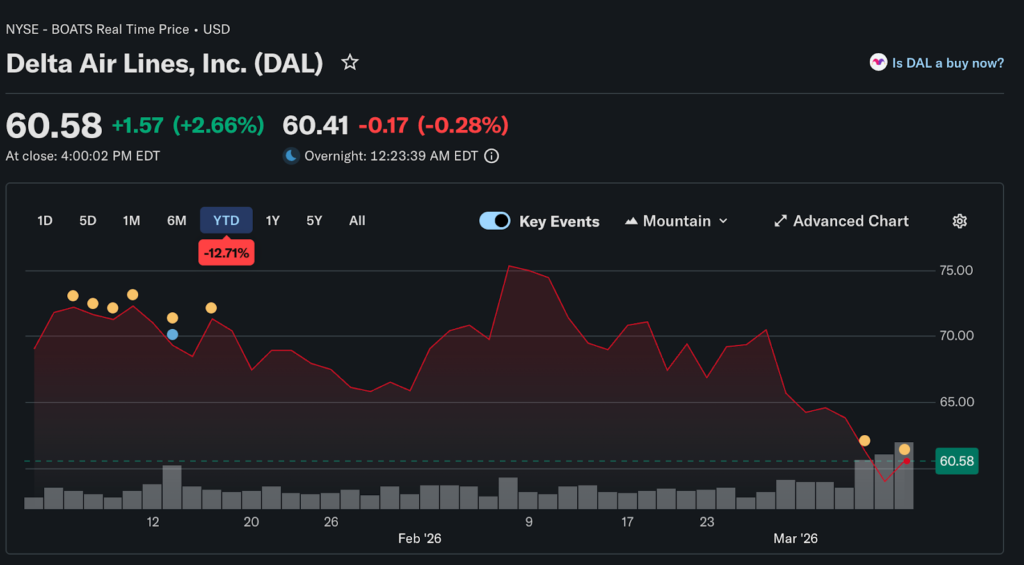
United Airlines shares tumbled 6.44% following the CEO’s comments about fuel cost impacts. Delta Air Lines declined 4.59% while Southwest Airlines lost 4.23% as investors recalibrated profit expectations downward.
Jet fuel prices track movements in crude oil, providing visibility into upcoming cost pressures. Current crude levels suggest jet fuel averaging $3.50 per gallon or higher in the coming months, compared to budgeted assumptions of around $2.80, creating substantial variance that requires operational adjustments.
Airlines have a limited ability to quickly pass fuel costs to consumers through ticket price increases. Advance bookings lock in pricing while competitive dynamics constrain immediate fare adjustments, creating a period of margin compression.
Cruise Industry Carnage
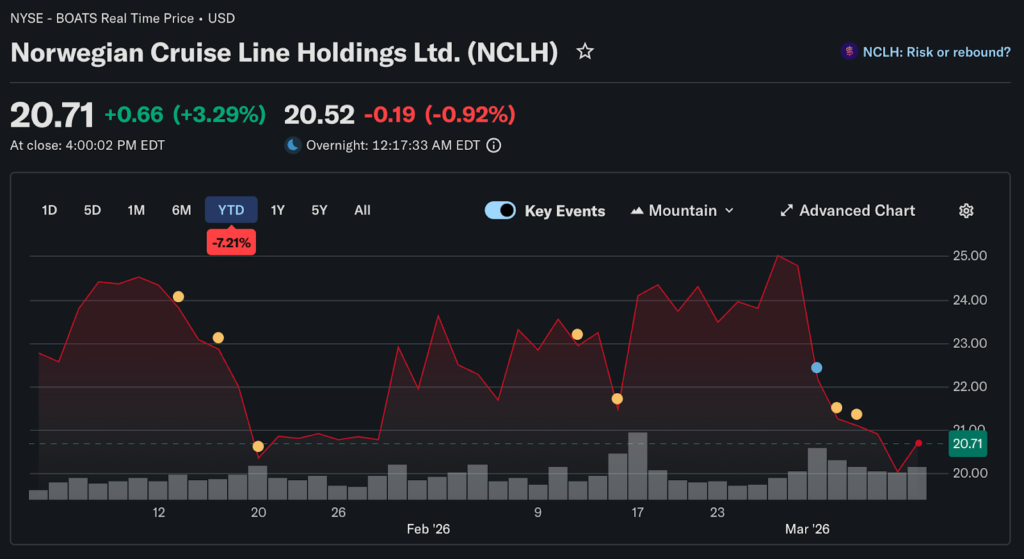
Norwegian Cruise Line and Carnival Corporation both declined approximately 6% Friday. Royal Caribbean fell 6.44%, completing the industry rout. Cruise ships consume large amounts of fuel, making operators particularly vulnerable to energy price spikes.
Unlike airlines, which offer some pricing flexibility, cruise lines face long booking windows with prices set months in advance. This creates an extended period of selling inventory below cost as fuel expenses surge beyond budgeted levels.
Consumer discretionary spending concerns compound operational challenges. Cruise vacations represent luxury purchases easily deferred during economic uncertainty. A combination of higher prices and reduced consumer willingness leads to demand destruction.
Freight and Logistics Hammered
Old Dominion Freight Line plummeted 7.9%, leading the broader logistics sector decline. Trucking companies face diesel price increases, directly impacting margins on existing contracts.
Transportation employment already declining by 11,000 positions in February signals demand softening. A combination of declining volume and rising costs creates a particularly challenging environment. The Middle East conflict threatens shipping lanes, forcing route diversions that increase transit times.
Consumer Spending Threatened
Household budgets face a squeeze from multiple directions. Gasoline prices climbing toward $3.50 per gallon reduces discretionary spending, while heating and electricity costs rise as energy prices rise across all forms.
Real wage growth turns negative when adjusted for inflation. Workers receiving 3.8% annual increases see purchasing power eroded by accelerating price pressures. Travel is a discretionary category that is easily eliminated during financial stress. Uncertainty about summer vacation planning is likely reducing advance bookings, creating future revenue challenges for operators.
Business Travel Remains Subdued
Corporate travel budgets face renewed scrutiny as costs increase and economic growth concerns mount. Virtual meeting technologies adopted during the pandemic provide permanent alternatives, reducing structural demand below pre-2020 levels, creating permanent headwinds.
Companies implementing cost reductions target travel expenses early in the process. A combination of higher prices and expense management creates sustained headwinds for recovery. Convention activity is slowing as corporate event budgets tighten, affecting hotels dependent on business travelers.
Capacity Adjustments Required
Airlines must reduce capacity deployment to match weakening demand. Parking aircraft and reducing frequencies allows better supply-demand matching while cutting fuel consumption.
However, capacity reductions require workforce adjustments, creating employment pressures. Cruise lines face longer adjustment timelines due to ship deployment schedules, creating extended periods of suboptimal occupancy.
International Exposure Varies
Carriers with significant international networks face additional challenges from a stronger dollar and overseas weakness. European and Asian demand is softening ahead of the US market, creating geographic pressures.
Middle East route disruptions force cancellations affecting carriers serving the region. Domestic-focused carriers show relative resilience, though not immune to systemic challenges.
Financial Stress Indicators Emerge
Debt service costs are rising as carriers that refinanced during a low-rate environment now face higher floating-rate costs. The travel industry entered 2026 with elevated leverage from the pandemic recovery.
Credit agencies are reviewing sector outlooks as performance deteriorates. Downgrade risk increases borrowing costs, further compounding pressures, creating a potential liquidity crunch for weaker operators.
Outlook Remains Challenged
The near-term environment is particularly difficult for travel operators as multiple negative factors converge. Energy costs, consumer weakness, and competitive pressures create margin compression across the industry.
Recovery timeline uncertain, depending on conflict resolution, economic stabilization, and restoration of consumer confidence. Summer travel season critical test of demand resilience at elevated price points.
Investors are likely to maintain defensive positioning on travel stocks until visibility improves. Sector volatility is expected to continue as oil prices fluctuate and economic data evolve through the coming quarters, presenting ongoing challenges.


