
Electricity demand in the United States is projected to grow by 4% annually through 2030, and the primary force behind that growth is the artificial intelligence industry. AI’s total energy consumption is expected to triple between 2024 and 2030, creating one of the largest infrastructure investment opportunities in recent memory.
A financial analyst at Nummixo notes that two companies, Plug Power and Oklo, are positioning themselves as solutions to that demand, but the comparison between them reveals meaningful differences in technology fit, commercial traction, and financial health.
Why Data Centers Drive the Energy Conversation
The AI energy story is often framed around the technology itself, but the actual demand originates from data centers. These facilities house the GPU clusters that train and run AI models, and they require enormous amounts of continuous power. Cooling those components alone represents one of the largest line items in any data center’s operating budget, since processors generate significant heat during sustained operation and thermal management directly affects both performance and hardware longevity.
This specific requirement, reliable and scalable power in locations that may be far from traditional grid infrastructure, is what has drawn attention to both hydrogen and nuclear as potential solutions. Cold, remote locations reduce cooling overhead and lower land costs, but they also sit outside the reach of conventional power supply. That gap is the market both companies are trying to serve.
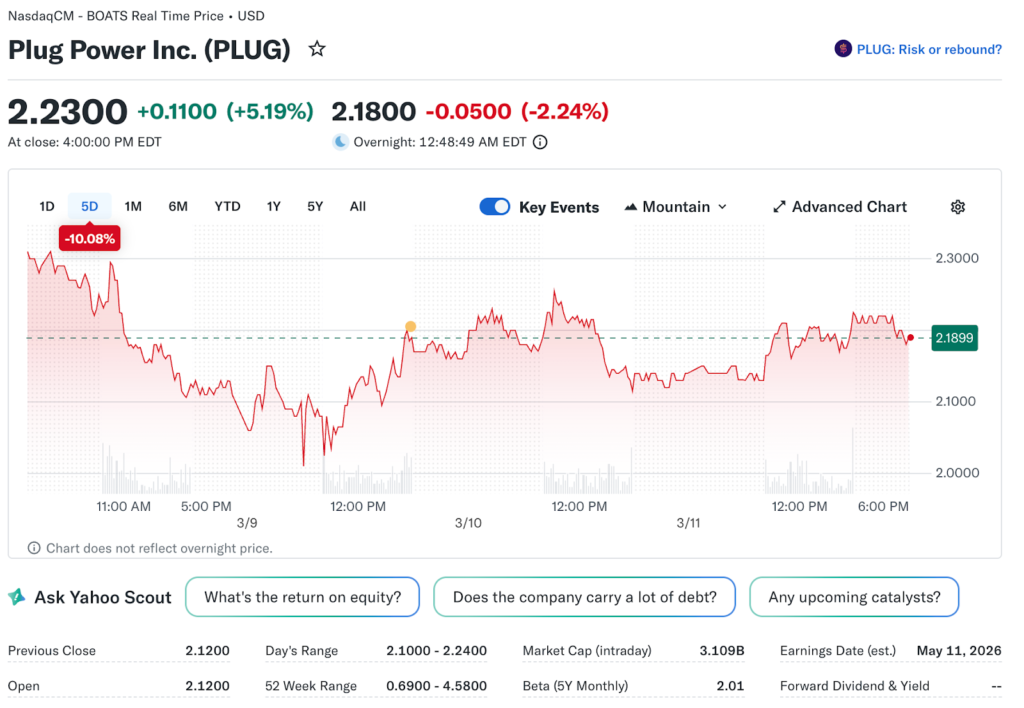
Two Technologies, One Prize
Plug Power has built its business around hydrogen fuel cells, which generate electricity through a chemical reaction between hydrogen and oxygen, producing water as the only emission. The technology works and has real commercial applications in logistics and industrial settings, but scaling it for data center-level baseload power involves significant infrastructure requirements around hydrogen production, compression, storage, and delivery that add cost and complexity to the deployment picture.
Oklo is developing small modular reactors, compact nuclear units that can be manufactured in a controlled factory environment and assembled on-site in locations that could never support a conventional nuclear plant. The design is specifically aimed at remote deployment scenarios, and the projected levelized cost of electricity from SMR technology compares favorably to hydrogen on the metric that energy buyers use most consistently when making long-term infrastructure decisions.
There is also a less-discussed connection between the two technologies. Among the most energy-efficient methods of producing hydrogen at an industrial scale is a process that uses nuclear energy as the power source. That dependency creates an asymmetric dynamic in the competition, where Oklo’s success actually improves hydrogen economics over time while Plug Power’s success does nothing equivalent for nuclear deployment.
Commercial Traction Tells the Story
The difference in institutional confidence between the two companies is visible in the type and scale of deals each has secured. Oklo has signed agreements with major technology firms that are specifically focused on dedicated power supply for data center operations. These are the exact counterparties that need the kind of scalable, remote-deployable energy solution Oklo is building, and the fact that they are committing to Oklo’s technology at this stage reflects genuine confidence in the SMR pathway.
Plug Power’s recent commercial activity has been concentrated in logistics and smaller industrial applications. Those are legitimate markets with real revenue potential, but they do not represent the data center opportunity that is driving the bulk of investor interest in the energy infrastructure space. The contrast in deal profiles suggests the market is currently assigning higher strategic value to Oklo’s positioning in the AI energy chain.
Financial Health Is Not Equal Either
Beyond the technology and commercial arguments, the financial profiles of these two companies differ in ways that matter for investors. Plug Power has been working toward profitability for an extended period and has required significant external capital to fund its operations along the way. That history of cash consumption creates ongoing uncertainty around dilution and the timeline to self-sustaining financial performance.
Oklo is earlier in its commercial journey, which means revenue has not yet scaled, but the company’s partnership activity and the specific alignment between its technology and the highest-growth segment of the energy market give it a cleaner forward narrative.
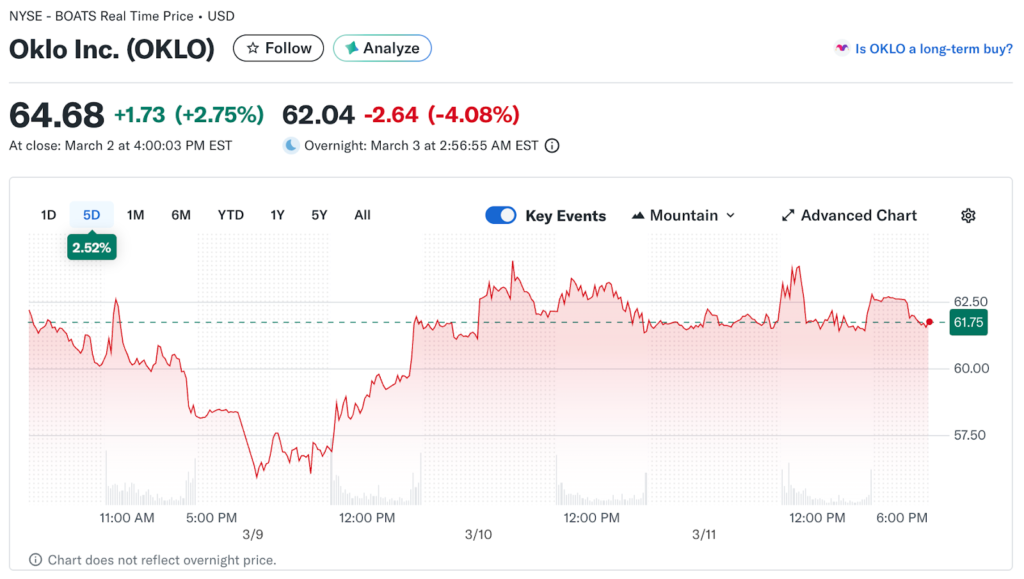
The Clearer Choice in March 2026
For investors trying to identify the better-positioned energy play heading into the second half of 2026, the comparison between Plug Power and Oklo points in one direction. SMR technology fits the data center deployment profile more naturally than hydrogen at the current stage of infrastructure development.
Oklo has demonstrated that the companies most likely to spend heavily on energy infrastructure are already interested in its technology. And the cost economics, on the measure that actually drives energy procurement decisions, favor the nuclear approach.
Plug Power has a longer track record and more physical assets in operation, but the strategic alignment between its current business and the AI data center opportunity remains indirect. In a market moving as quickly as the AI energy infrastructure space, that gap in positioning matters more with each passing quarter.


