
The international energy markets are responding with significant volatility following a series of high-stakes military confrontations in the Middle East over the weekend. As direct kinetic actions between naval forces and commercial vessels escalate, the primary global transit point for crude oil has once again become the epicenter of geopolitical risk.
These developments have triggered a sharp rally in energy prices, as the prospect of a sustained disruption to global supply chains outweighs previous hopes for a diplomatic resolution.
Naval Confrontations And The Seizure Of Commercial Assets
The latest round of escalations began on Sunday when naval forces engaged an Iranian-flagged container vessel in the Gulf of Oman. According to market analysts at Marbrisse, specialized units took custody of the ship following an exchange of fire after the vessel reportedly attempted to bypass an active maritime blockade of regional ports.
This action followed a separate incident on Saturday within the Strait of Hormuz, where maritime security centers reported that gunboats targeted a tanker, while a secondary container ship was struck by an unidentified projectile.
These maritime skirmishes represent a significant violation of the existing truce according to federal administrative officials, who have signaled a return to a more aggressive posture. The sudden shift from apparent de-escalation to active military engagement has caught market participants off guard.
While late last week suggested a path toward stabilization, the current environment is characterized by a “re-escalation” that threatens the fragile balance of global energy distribution.
Analyzing The Financial Impact On Global Benchmarks
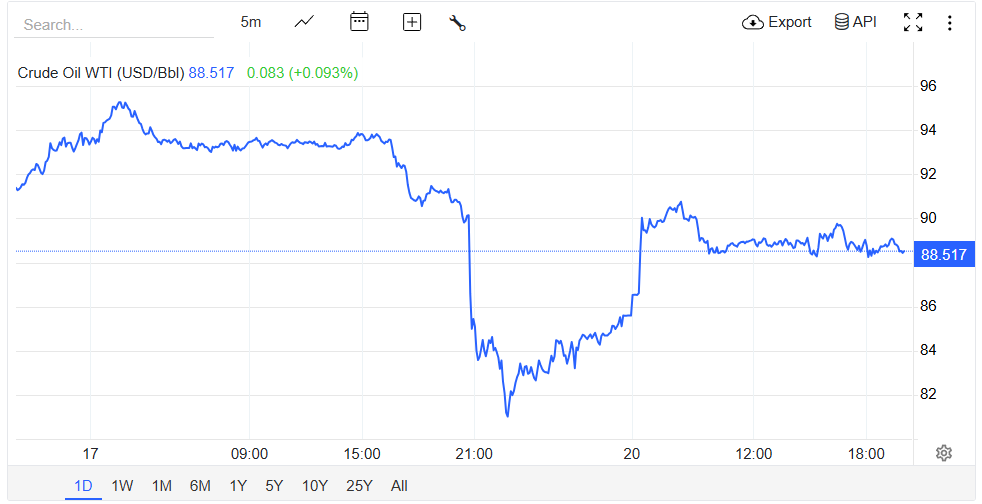
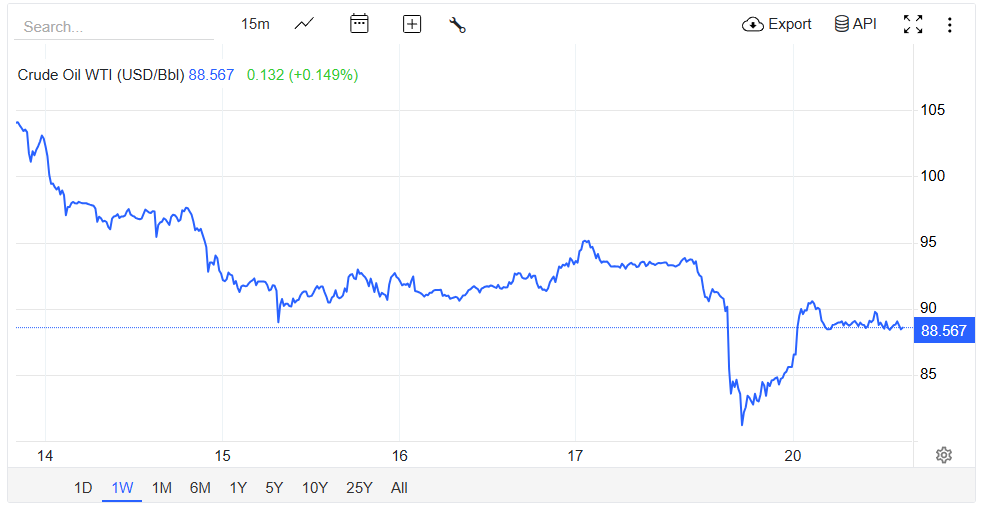
The immediate reaction in the futures markets has been decisive. West Texas Intermediate (WTI) futures for May delivery climbed 5.6%, reaching a price of $88.54 per barrel during early Monday trading. Simultaneously, the international benchmark, Brent crude, saw its June delivery contracts advance by 4.3%, trading near $94.18 per barrel.
These price movements reflect a growing “risk premium” being baked into energy assets as traders account for the possibility of a full-scale closure of the strait.
The Strait of Hormuz is widely considered the world’s most important oil chokepoint, with approximately 20% of the world’s liquid petroleum passing through its narrow waters daily. Any threat to the freedom of navigation in this corridor has a direct and immediate impact on global inflation and energy security.
The current pricing trend suggests that the market is no longer pricing in a “diplomatic discount,” but is instead preparing for a period of severe supply-side constraints.
Diplomatic Deadlock And The Expiration Of The Ceasefire
The path toward a peaceful resolution remains highly uncertain as the existing ceasefire agreement is set to expire this week. While initial reports suggested that a second round of peace negotiations might take place in Islamabad, the likelihood of such a meeting has diminished.
Regional state news agencies have indicated a refusal to attend further talks as long as the maritime blockade remains in place, citing ongoing grievances over the restriction of commercial traffic.
Federal leadership has maintained a rigid stance, refusing to lift the blockade until a comprehensive and permanent deal is accepted. The rhetoric has shifted toward more extreme measures, with threats directed at critical infrastructure if a new agreement is not reached.
This diplomatic stalemate has led to a reversal of the short-lived optimism seen on Friday, when oil prices briefly tumbled following a declaration that the strait would be opened to commercial traffic. That declaration was quickly retracted once it became clear that the conditions for transit remained unchanged.
What is Next For Global Energy Security
As the situation evolves, the focus for institutional players is shifting toward long-term risk mitigation. The volatility seen in recent sessions highlights the vulnerability of the current global energy framework to localized military conflict.
For those assessing the financial trajectory of the sector, the focus is now on how quickly alternative supply routes can be activated and whether strategic reserves will be deployed to stabilize costs.
The upcoming catalysts for the market will likely involve the official expiration of the truce and any further kinetic actions in the Gulf. While the immediate outlook is dominated by “re-escalation,” the future expectations of the market will depend on whether a third-party mediator can bring both sides back to the negotiating table.
Under these evolving conditions, the energy sector remains in a state of high alert, as the balance between maritime security and global economic stability remains precariously thin.
The strategic direction of the administration over the coming days will be the deciding factor in whether the current price surge is a temporary spike or the beginning of a new, higher baseline for global crude oil.


