
The global bullion market is experiencing a period of intense price consolidation as international relations reach a critical juncture. Gold has demonstrated significant resilience on Monday, recovering from an initial bearish gap that saw prices dip during the Asian trading session.
As financial participants navigate a landscape defined by rapid developments in the Middle East, the metal has found a steady footing, reflecting its traditional status as a safe-haven asset during times of systemic uncertainty.
According to the strategic briefing from market analysts at Nummixo, the current price action in XAU/USD is a direct consequence of evolving conditions in global security. While the market initially reacted to hopes of de-escalation, renewed friction has reintroduced a premium for protective holdings.
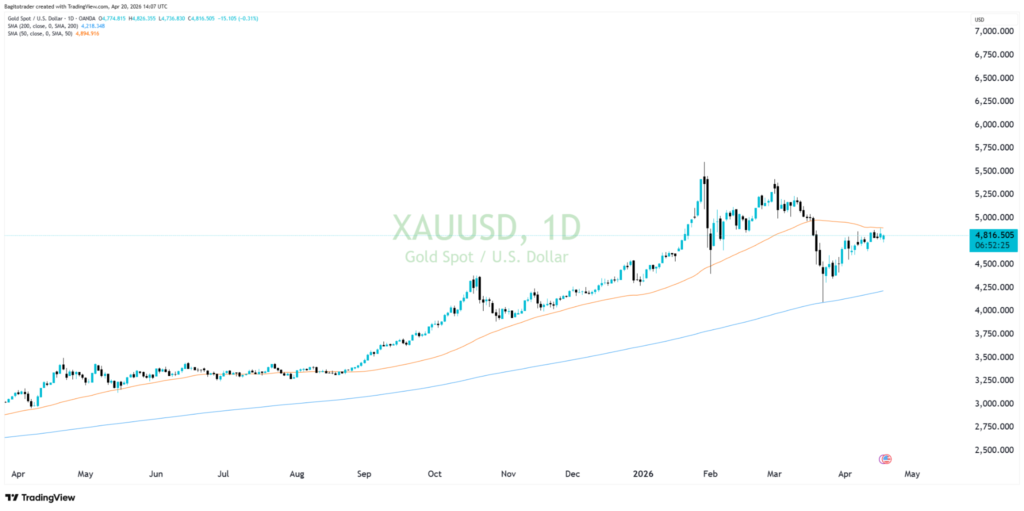
At the time of this report, the metal is trading near $4,822, having successfully climbed back from an intraday low of $4,737.
Geopolitical Friction And The Maritime Crisis
The primary source of market anxiety remains the Strait of Hormuz, where a fragile ceasefire is being tested by renewed naval activity. Initial optimism regarding a ten-day opening of the corridor was quickly dampened after the passage was effectively closed once more.
This decision was cited as a response to a perceived breach of maritime terms, specifically involving a naval blockade of regional ports. These events have cast a long shadow over the strategic direction of the conflict, suggesting that a resolution may be more distant than previously anticipated.
Further complicating the situation, the boarding of a cargo vessel in the Gulf of Oman has triggered a fresh wave of diplomatic condemnation. With a two-week ceasefire set to expire this Wednesday, the global community is closely monitoring the potential for a second round of peace negotiations.
For those assessing the financial trajectory of the commodities market, the stakes remain incredibly high, as any further escalation could trigger a significant spike in institutional demand for hard assets.
Economic Deterrence And Diplomatic Efforts
The administrative stance from Washington has become increasingly assertive, with the President of the United States issuing stern warnings regarding the protection of regional infrastructure.
The potential for aggressive intervention remains a central theme, as the administration seeks to secure a “fair and reasonable” agreement to prevent a total breakdown of order. These statements have kept investors in a state of high alert, as the threat to power plants and bridges represents a severe escalation in the supply-side risk for the region.
Despite the rhetoric, diplomatic channels appear to remain active. Reports suggest that neighboring nations are making positive efforts to facilitate an end to the blockade and bring all parties back to the negotiating table.
This interplay between hardline deterrence and quiet diplomacy creates a complex environment for Gold, as the metal often oscillates between its roles as a hedge against war and a victim of high-interest-rate environments.
Inflationary Pressures And Central Bank Mandates
A significant headwind for the non-yielding metal remains the sustained elevation of energy prices. Rising oil costs continue to pose an upside risk to global inflation, which in turn reinforces the narrative that central banks will maintain a restrictive monetary policy for an extended period.
The strategic direction of the Federal Reserve is under particular scrutiny, especially with the upcoming confirmation hearing of the nominee for Federal Reserve Chair before the Senate Banking Committee.
Traders are also preparing for a light but significant US economic calendar, including Retail Sales data and preliminary S&P Global Purchasing Managers Index (PMI) surveys. These data points will be critical in determining the future expectations for interest rate adjustments.
While Gold typically thrives in inflationary environments, the “higher-for-longer” interest rate stance continues to act as a primary barrier to a sustained breakout above historical resistance levels.
Technical Analysis Of XAU/USD Consolidation
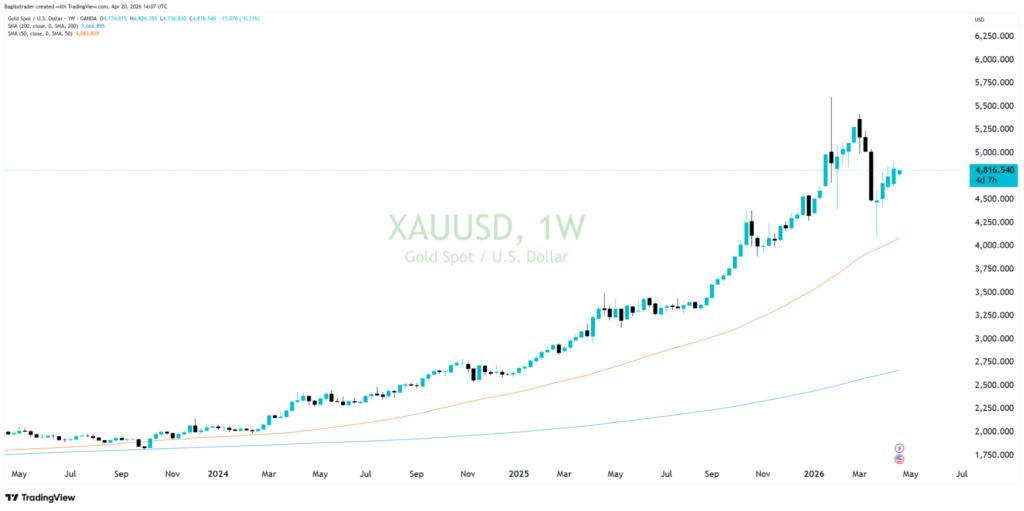
From a technical perspective, the four-hour chart indicates that the metal maintains a mild bullish bias. The price continues to cling to a narrow support band anchored by the 200-period Simple Moving Average (SMA) at $4,796.
This level is reinforced by the psychological floor at $4,800, while the 100-period SMA provides a deeper demand zone near $4,698. The Relative Strength Index (RSI) currently sits at 50.24, signaling a neutral momentum that could be swayed by the next major headline.
As global participants await clearer signals from the upcoming peace talks and economic data, the focus remains on capital preservation. The current evolving conditions suggest that while volatility is elevated, the underlying structural demand for safety remains intact.
The ability of the market to navigate these future expectations will ultimately determine the stability of the precious metals sector as it moves into the next fiscal quarter. With several upcoming catalysts on the horizon, the market is bracing for a definitive shift in the global financial trajectory.


