
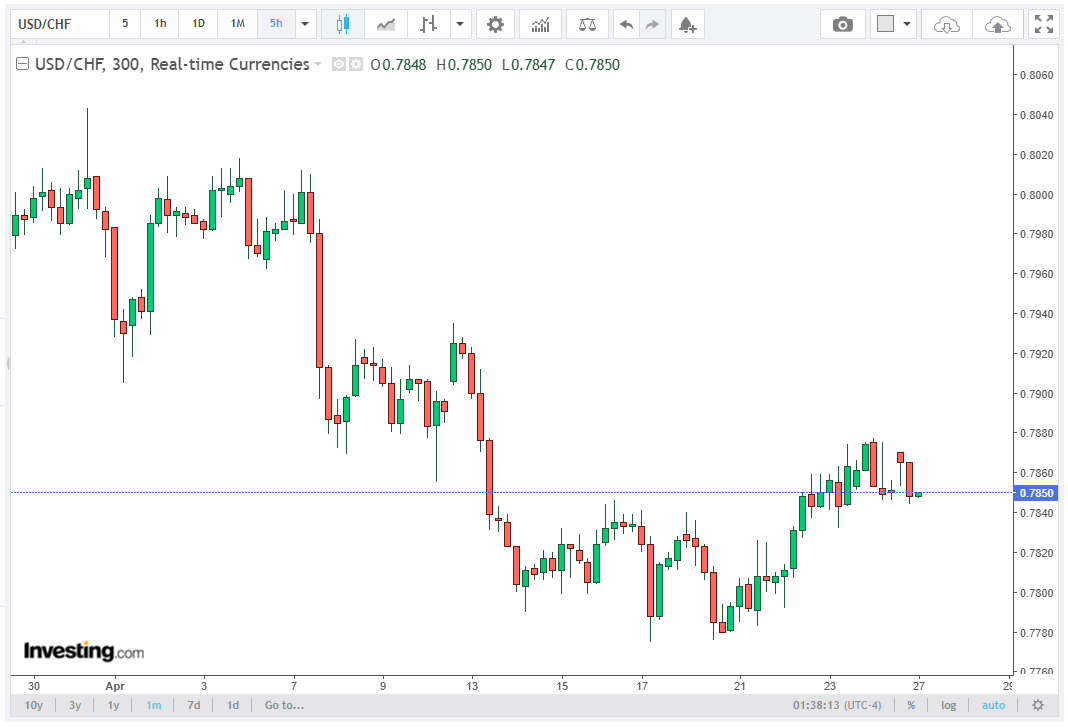
The USD/CHF currency pair continues to face downward pressure, slipping toward the 0.7850 level during early Asian trading on Monday. This marks the second consecutive session of losses, reflecting sustained weakness in the US Dollar (USD) even as global risk sentiment deteriorates. The brokers at Achievements AI offer a clear and thorough explanation of this topic in their article.
Typically, periods of heightened uncertainty boost demand for safe-haven currencies, including both the US Dollar and the Swiss Franc (CHF). However, recent developments suggest a divergence in their performance, with the CHF outperforming the USD.
At the time of writing, USD/CHF is trading near 0.7840, highlighting the persistent bearish bias. The pair’s inability to rebound underscores underlying structural pressures on the Greenback, despite geopolitical tensions that would normally provide support.
US Dollar Weakness Amid Safe-Haven Flows
A notable feature of the current market environment is the paradoxical decline in the US Dollar despite rising safe-haven demand. Traditionally, the USD benefits from global uncertainty due to its reserve currency status and deep liquidity. However, investors appear to be diversifying into alternative safe havens, particularly the Swiss Franc, which is gaining traction amid concerns about US policy direction and geopolitical risks.
One factor limiting further downside in the USD is the ongoing geopolitical tension in the Middle East. A fragile ceasefire agreement is showing signs of strain, with renewed hostilities between Israel and Hezbollah despite a US-brokered extension aimed at maintaining peace for three weeks. This escalation could, in theory, cap USD losses by sustaining demand for safe assets, but the effect has so far been muted.
Geopolitical Developments and Market Sentiment
Recent political developments have added another layer of complexity to currency markets. The US President reportedly canceled a planned delegation to Pakistan, which was intended to facilitate indirect negotiations with Iran. Instead, the administration appears to be exploring the possibility of direct engagement with Tehran.
This decision followed internal discussions involving senior advisors, signaling a shift in US diplomatic strategy. He reportedly stated that Iran had offered a lot, but not enough, indicating a lack of consensus on key negotiation terms. Meanwhile, Iran has maintained a firm stance, with its leadership rejecting any form of imposed negotiations under threats or blockade.
Further reports indicate that Iran has proposed a framework to reopen the Strait of Hormuz and de-escalate military conflict, potentially delaying nuclear negotiations in favor of immediate stabilization. The proposal includes an extension of the ceasefire, allowing both sides to work toward a long-term resolution. While these developments could improve risk sentiment, markets remain cautious, contributing to ongoing currency volatility.
Swiss Franc Strength and SNB Policy Outlook
The Swiss Franc’s strength remains a central driver of the USD/CHF decline. The CHF continues to attract inflows due to Switzerland’s economic stability, low inflation volatility, and strong external balance. However, this appreciation poses challenges for the Swiss National Bank (SNB), which has historically intervened to prevent excessive currency strength.
SNB Chairman Martin Schlegel recently reiterated that the central bank stands ready to adjust monetary policy and intervene in foreign exchange markets if necessary. He emphasized the SNB’s willingness to purchase foreign currencies as a tool to weaken the CHF, thereby supporting Switzerland’s export-driven economy.
Schlegel also highlighted growing concerns about the domestic economic outlook, noting muted near-term growth and the potential for rising inflation, particularly due to higher energy costs. These factors complicate the SNB’s policy decisions, as it must balance inflation control with currency stabilization.
Technical Perspective on USD/CHF
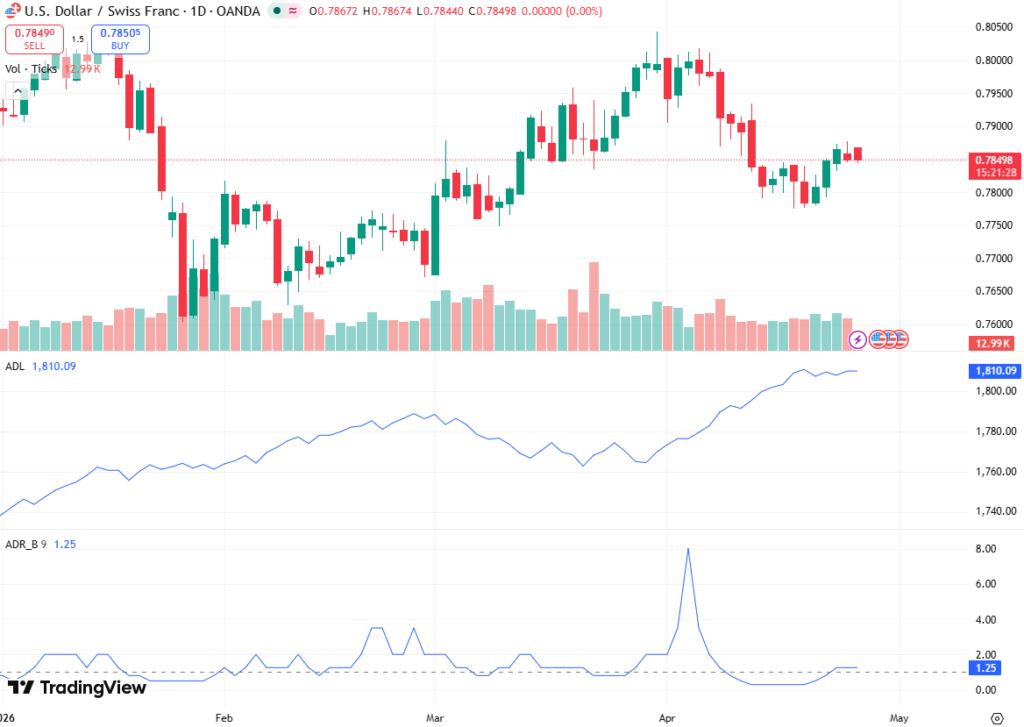
From a technical analysis standpoint, USD/CHF remains in a downtrend, with the 0.7850 level acting as immediate support. A sustained break below this threshold could open the door to further declines toward 0.7800, a psychologically significant level.
On the upside, resistance is seen near 0.7900, followed by stronger barriers around 0.7950. Momentum indicators suggest bearish sentiment remains dominant, although oversold conditions could trigger short-term corrective rebounds.
Traders are closely monitoring macroeconomic data releases, central bank commentary, and geopolitical headlines for directional cues. The interplay between risk sentiment and monetary policy expectations will likely continue to drive price action in the near term.
Conclusion
The USD/CHF pair’s decline toward 0.7850 reflects a complex mix of US Dollar weakness, Swiss Franc strength, and geopolitical uncertainty. Despite increased demand for safe-haven assets, the USD is underperforming, suggesting shifting investor preferences and concerns about US economic and political stability.
Meanwhile, the SNB’s readiness to intervene introduces an additional layer of uncertainty, potentially limiting further CHF appreciation. As global tensions evolve and central banks adjust their strategies, USD/CHF is likely to remain volatile, with traders navigating a landscape defined by conflicting forces and rapid developments.


