
Silver (XAG/USD) extended its winning streak for the fourth consecutive day, trading near $80.70 per troy ounce during Asian hours on Monday. The precious metal has attracted renewed attention from investors amid a mix of macroeconomic data, geopolitical tensions, and monetary policy developments. In this article, the brokers at Winseterra share an extensive discussion of the topic.
However, despite the recent gains, silver prices face potential downside pressure as a confluence of factors, including rising energy costs, central bank caution, and US Dollar strength, threatens investor sentiment.
Rising Energy Costs and Inflationary Pressures
One of the primary headwinds for silver is the persistent increase in energy prices. Higher costs for oil, natural gas, and electricity have reignited inflation concerns, particularly in major industrial economies. For investors, this presents a challenge: while precious metals like silver are traditionally seen as inflation hedges, surging input costs may pressure corporate margins, dampening industrial demand for silver.
The current environment has prompted global markets to price in a “higher-for-longer” interest rate scenario, reflecting expectations that central banks may sustain restrictive monetary policies to tame inflationary pressures. Rising borrowing costs could reduce appetite for non-interest-bearing assets such as gold and silver, adding to the downward pressure on XAG/USD.
US Labor Market Supports Fed’s Restrictive Policy
The latest US labor market data further bolsters the case for tight monetary policy. In April, Nonfarm Payrolls increased by 115K, surpassing analyst expectations of 62K despite a slowdown from March’s 185K gain. Additionally, the unemployment rate remained steady at 4.3%, signaling continued labor market resilience.
These statistics justify the Federal Reserve to maintain a restrictive stance, suggesting that the US economy is sufficiently robust to withstand higher interest rates without immediate risk of recession.
Traders are now pricing in a 25-basis-point rate hike from the European Central Bank (ECB) in June, with expectations for a total of three hikes by the end of 2026. Such monetary tightening creates a headwind for silver, as the metal does not pay interest and therefore becomes less attractive relative to yielding assets.
Geopolitical Risks: Middle East Tensions
Geopolitical instability adds another layer of complexity to the silver market. The US President recently rejected Iran’s latest peace proposal, calling it “totally unacceptable”. While Tehran has expressed a desire to stabilize the region, including Lebanon and the Strait of Hormuz, the lack of a concrete agreement has left markets uneasy.
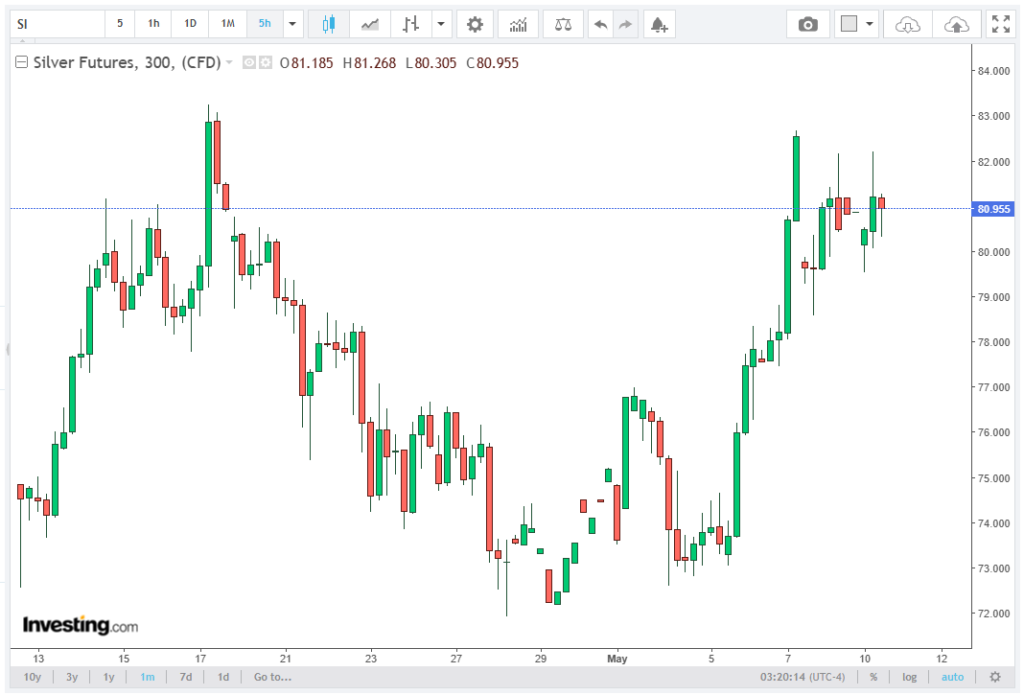
This stalemate raises the risk of renewed conflict, which historically increases demand for safe-haven assets like gold and silver. However, in this instance, the US Dollar (USD) has emerged as the primary beneficiary of safe-haven flows, limiting silver’s upside potential. Investors are prioritizing liquidity over precious metals exposure, particularly amid rising interest rates and geopolitical uncertainty.
Industrial Demand
Beyond its role as a safe-haven asset, silver is increasingly influenced by industrial demand, particularly from renewable energy and technology sectors. The metal is a critical component in photovoltaic panels, electric vehicles (EVs), and electronics, where its superior conductivity and antimicrobial properties make it indispensable.
Rising adoption of green energy solutions and expansion of EV production could support long-term demand for silver, potentially offsetting some monetary policy pressures.
USD Strength Weighs on Silver
The US Dollar has strengthened in response to both monetary policy expectations and geopolitical uncertainty, creating a significant headwind for XAG/USD. Since silver is priced in USD, a stronger dollar increases the effective cost for foreign investors, potentially reducing international demand.
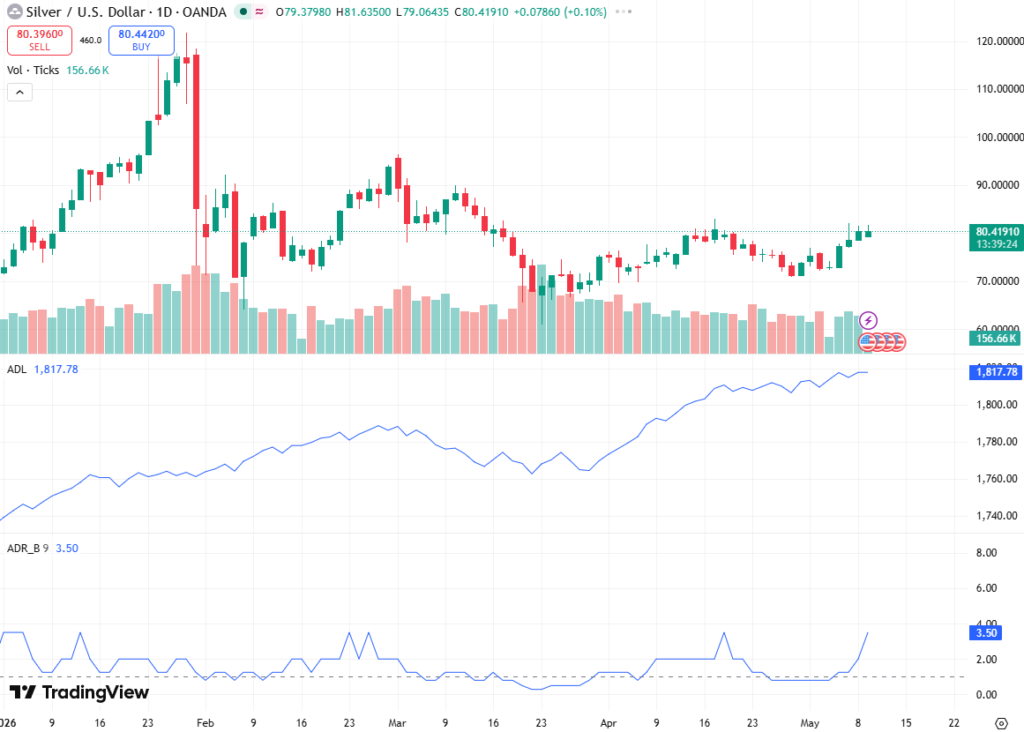
This dynamic underscores the inverse relationship between silver prices and the USD index (DXY), particularly in periods of heightened geopolitical tension. Traders seeking portfolio hedges may prefer the currency’s liquidity, especially when coupled with tightening central bank policies, which further diminishes silver’s appeal.
Technical Outlook
Despite the broader macro and geopolitical headwinds, silver has maintained an upward trajectory, with XAG/USD testing the $81.00 per troy ounce level. The short-term bullish trend is supported by safe-haven demand amid Middle East tensions and persistent inflation concerns, which continue to attract investors to precious metals.
However, caution is warranted. Rising energy prices, tight monetary conditions, and USD strength may create a resistance zone around $81.50–$82.00, where profit-taking or short positions could intensify. Traders are likely to monitor Federal Reserve communications, ECB policy updates, and geopolitical developments closely for signals of silver price volatility.
Conclusion
The silver market is navigating a complex intersection of macroeconomic, monetary, and geopolitical factors. While XAG/USD has extended gains near $80.70 per troy ounce, several downside risks persist, including energy-driven inflation, tightening central bank policies, and US Dollar strength.
Investors and traders must weigh safe-haven appeal against interest rate pressures and global risk sentiment. Ultimately, silver’s trajectory toward $81.00 remains possible in the short term, but sustained upside momentum will require geopolitical stability and moderation in monetary tightening.


