
The Japanese Yen (JPY) weakened on Monday as escalating Middle East tensions and renewed signals of potential Japanese currency intervention influenced market dynamics. The USD/JPY pair drifted higher to around 157.15 during the early European session, reflecting a combination of safe-haven flows into the US Dollar (USD) and lingering concerns over geopolitical uncertainty. The brokers at Rubizio provide a detailed breakdown of this topic in this article.
USD/JPY Edges Higher Amid Middle East Concerns
During Monday’s early European session, the USD/JPY pair gained ground, trading near 157.15, as the US Dollar strengthened against major peers, including the Euro (EUR). Investors reacted to renewed tensions in the Middle East, where recent developments in Iran-US relations pushed markets toward risk aversion.
The surge in safe-haven demand came after the US President rejected a new Iran peace offer, describing it as totally unacceptable. According to reports from Tasnim News Agency, Tehran’s proposal called for an immediate ceasefire on all fronts, the lifting of a US naval blockade, and assurances against future attacks on Iran.
The rejection triggered oil price increases, which further pressured risk-sensitive currencies, including the British Pound (GBP), while boosting USD flows.
Japan Signals Potential for Continued Currency Intervention
While the Yen softened, the Bank of Japan (BoJ) and government officials maintained warnings about potential intervention, which could constrain the USD/JPY upside. Atsushi Mimura, Japan’s top foreign exchange official, stated last week that continued intervention remains possible, highlighting that International Monetary Fund (IMF) rules do not limit the frequency of currency interventions.
Recent reports suggest that Japanese authorities actively intervened in the foreign exchange market during Golden Week, with market participants estimating the cost of these actions at roughly ¥4 trillion to ¥5 trillion ($32 billion). The interventions were aimed at curbing the Yen’s rapid depreciation and maintaining financial stability.
Market Reaction to Geopolitical Developments
The market response to the Middle East tensions reflects broader dynamics affecting major currencies. The USD benefited from its status as a global reserve currency, attracting flows amid fears of disruption to oil supply and regional stability.
Oil markets were particularly sensitive to the US’s rejection of Iran’s peace proposal, which increased the likelihood of further Middle East conflict. Higher crude prices added inflationary pressures in energy-importing economies, strengthening the case for USD demand as investors sought a hedge against rising costs.
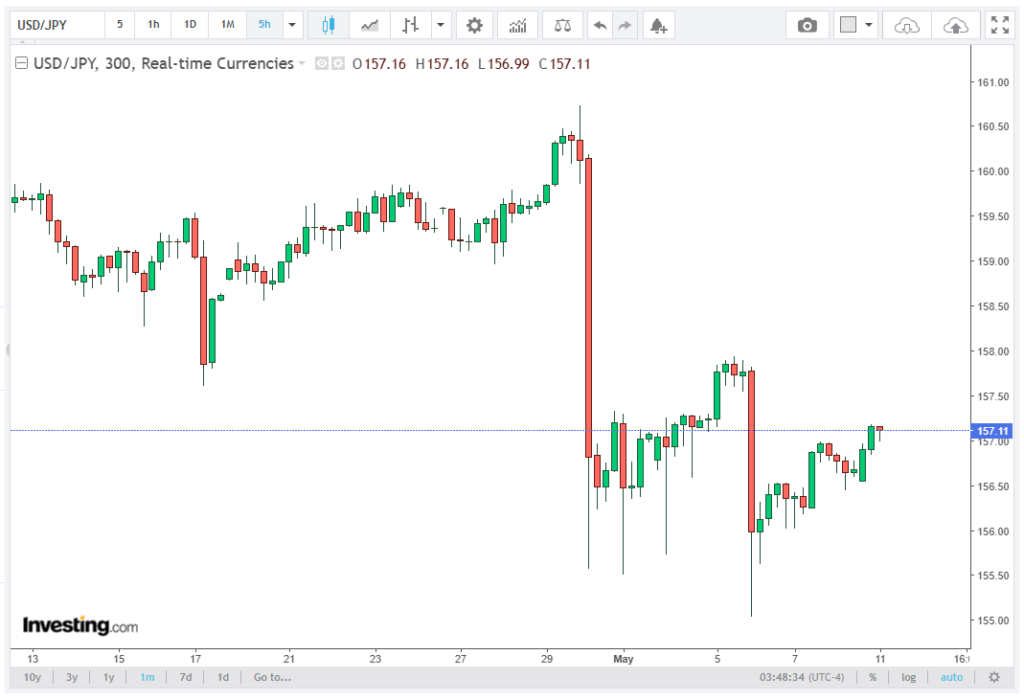
Meanwhile, the British Pound (GBP/USD, Cable) came under pressure, illustrating the market’s risk-off sentiment. Currency markets often react asymmetrically to geopolitical shocks, with the Yen sometimes strengthening as a safe-haven. However, in this instance, persistent intervention threats from Japan kept the Yen weaker, highlighting the tension between market forces and policy actions.
Technical and Structural Considerations
From a technical standpoint, the USD/JPY pair remains under scrutiny near the 157.00–157.50 range, where intervention risk and official commentary weigh heavily. Analysts emphasize that short-term spikes are likely to face resistance as the Japanese government signals readiness to act if the Yen weakens further.
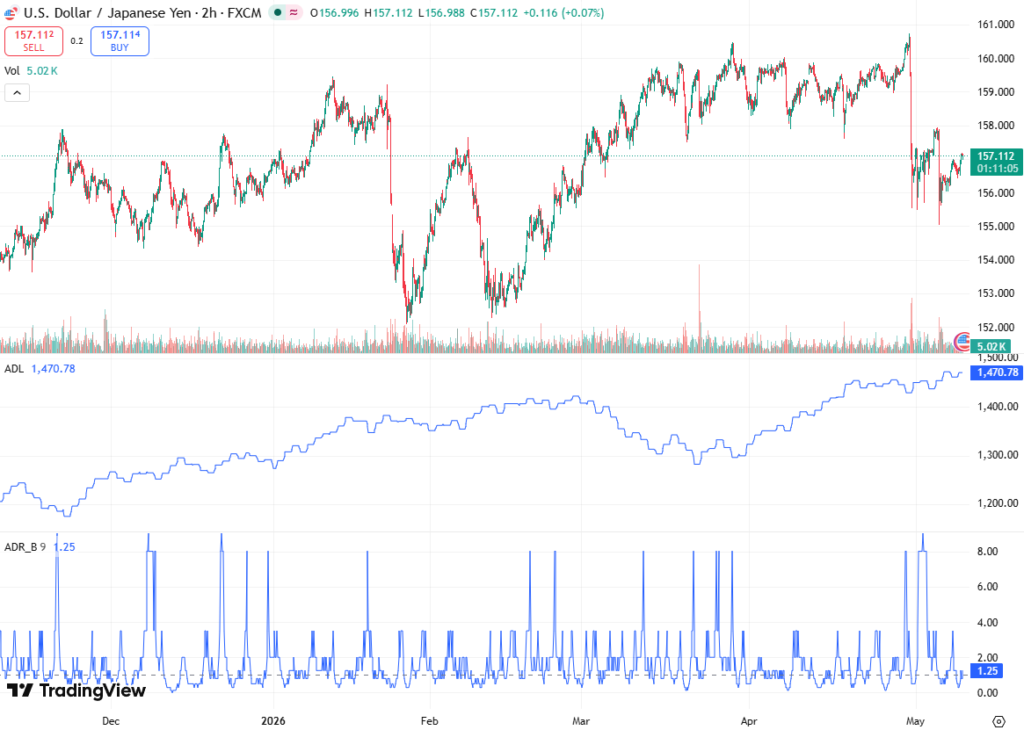
Structural factors also play a role. Japan faces chronic trade deficits and low domestic interest rates, which historically pressure the Yen. The combination of low yields, persistent USD strength, and the threat of government intervention creates a complex environment for traders.
Investors are closely monitoring BoJ communications, as even subtle signals can trigger volatile moves in USD/JPY. The market is particularly sensitive to the potential for coordinated interventions, which can occur without violating IMF guidelines, a point Mimura emphasized.
Outlook for USD/JPY and Japanese Yen
Looking ahead, the USD/JPY is expected to remain sensitive to geopolitical developments, particularly in the Middle East, and to policy statements from Japanese authorities. Any escalation in conflict or failure to reach diplomatic agreements could maintain upward pressure on the USD, while Yen intervention threats may act as a ceiling for gains.
Analysts remain neutral to moderately bullish on USD/JPY in the near term. The Yen is seen as structurally undervalued, but intervention risks limit the scope for a sustained rebound. According to Stefan Rittner, intervention pressure is likely to rise again if the USD/JPY approaches previous levels near 160, suggesting continued volatility for traders.
Conclusion
The Japanese Yen’s softening reflects a convergence of geopolitical tensions, safe-haven flows, and official intervention risk. The USD/JPY pair trading near 157.15 illustrates the balance between market dynamics and policy influence.
While the Middle East conflict and the US’s rejection of Iran’s peace offer supported USD strength, Japan’s Mimura emphasized that continued currency intervention remains a viable tool, highlighting the ongoing influence of policy signals on currency markets.
For market participants, the key takeaway is that USD/JPY movements are unlikely to follow a purely technical path.


