
The British Pound (GBP) pared recent gains against the Japanese Yen (JPY), reflecting a combination of UK political uncertainty and cautious market sentiment regarding Japanese monetary policy.
During Asian trading hours on Wednesday, the GBP/JPY currency cross traded around 213.60, losing its daily gains amid mounting geopolitical and fiscal concerns. In their article, Nummvix presents a full analysis of the issue at hand.
UK Political Crisis Pressures the Pound
The British Pound faced downward pressure following a severe political crisis in the United Kingdom (UK). Over 80 Labour MPs have called for Prime Minister Keir Starmer to resign after disastrous local election results, triggering market fears of leadership instability.
Traders are closely monitoring the situation, as a potential UK leadership change could trigger increased fiscal spending aimed at appeasing voters. This prospect of expansionary fiscal policy has weighed on GBP sentiment, despite Starmer’s assurances that no leadership contest currently exists.
The GBP’s decline highlights how political risk can directly influence currency markets, particularly for major pairs such as GBP/JPY, where investor confidence in the UK economy is a critical determinant of market direction.
Japanese Yen Shows Mixed Signals
The Japanese Yen held its ground after the release of Japan’s current account data, which revealed a surplus of JPY 4,681.5 billion in March, up from JPY 3,625.3 billion a year earlier. This figure exceeded market expectations of JPY 3,879 billion, marking the largest surplus on record.
Despite this strong external balance, the JPY’s gains were muted. Traders cited concerns over potential policy shifts at the Bank of Japan (BoJ), as the central bank’s April Summary of Opinions suggested policymakers are considering further rate hikes.
The JPY remains sensitive to macroeconomic indicators and monetary signals, with market participants balancing strong external surpluses against the prospect of tighter monetary policy.
BoJ Policy Outlook Supports Yen Strength
The Bank of Japan (BoJ) appears increasingly attentive to inflationary pressures, particularly those linked to rising oil prices. Analysts suggest that BoJ policymakers could pursue a June rate hike, which would mark a significant shift from the central bank’s long-standing ultra-loose monetary policy.
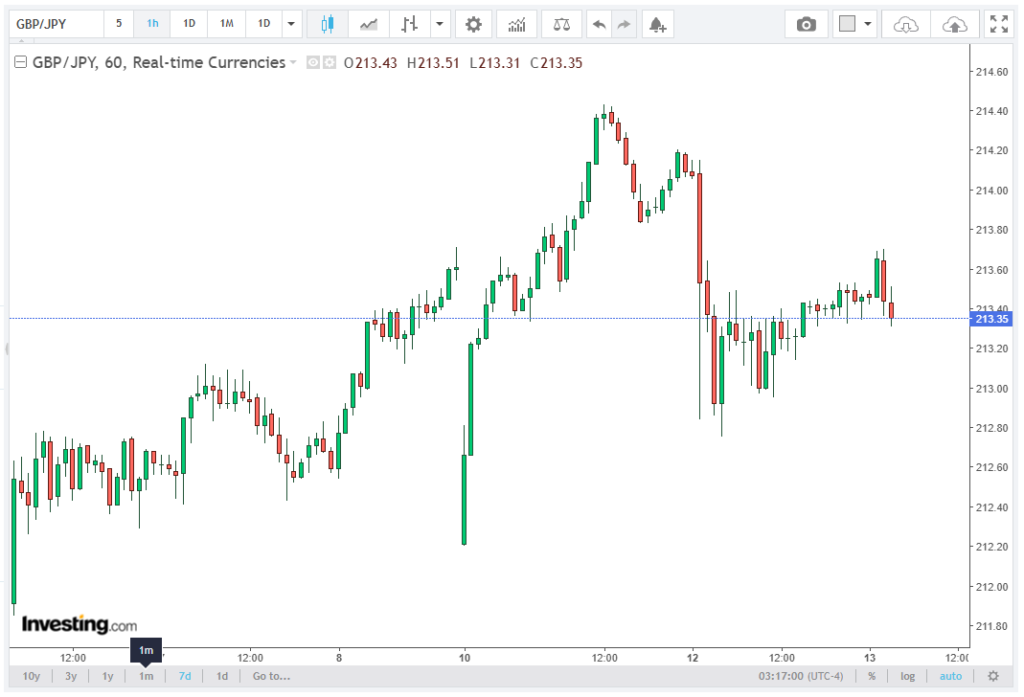
Current projections indicate that short-term policy rates may rise to 2% by the end of 2027, while the BoJ remains prepared to adjust bond-buying programs if financial or market disruptions emerge. These measures reflect a cautious but hawkish stance, which could ultimately support the JPY against the GBP.
Market participants are closely watching BoJ communications, as any hint of accelerated tightening could trigger a stronger JPY rally, further pressuring the GBP/JPY cross.
GBP/JPY Technical Outlook and Market Sentiment
From a technical analysis perspective, the GBP/JPY pair shows signs of consolidation after recent swings, with traders monitoring key support and resistance levels. Immediate support lies around 212.50, while resistance near 215.00 could define the short-term trading range. Volatility indicators suggest moderate fluctuations, reflecting market caution amid ongoing UK political uncertainty and BoJ monetary signals.
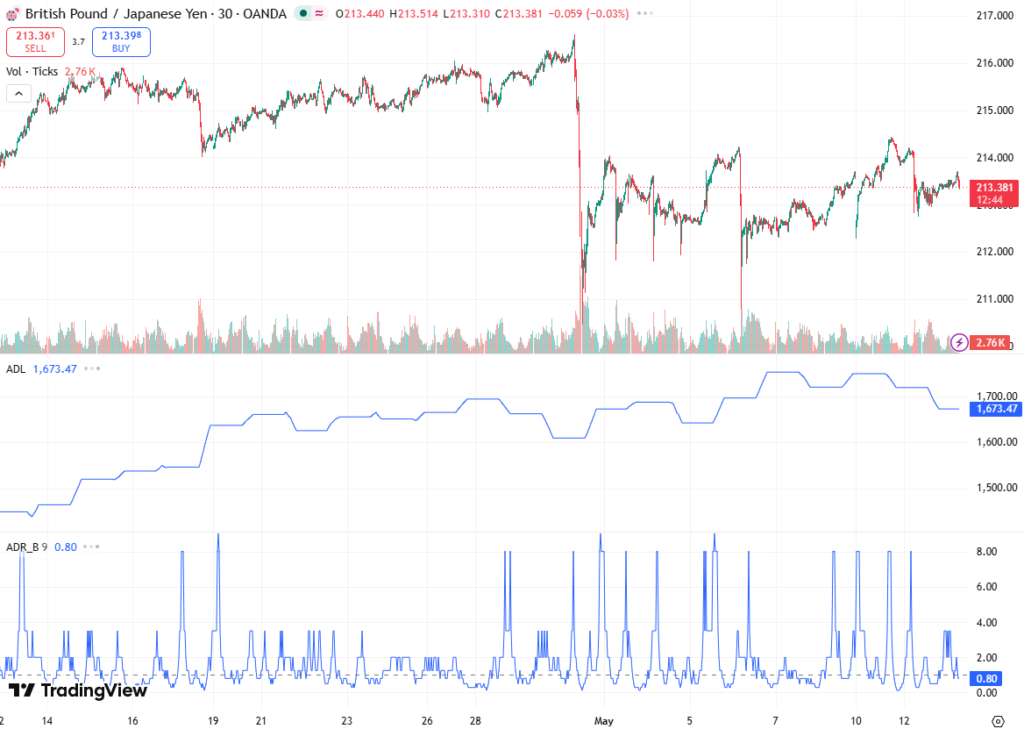
Investor sentiment is currently risk-averse, with positioning data indicating that many hedge funds and forex traders are reducing long GBP exposure while increasing Yen holdings as a hedge against potential global financial shocks. This positioning, combined with technical resistance levels, could lead to range-bound trading in the near term.
Monitoring momentum indicators, such as RSI and moving averages, may provide further insights for day traders and swing traders, highlighting opportunities to capitalize on short-term currency fluctuations while remaining aligned with broader macro trends affecting GBP/JPY.
Market Implications for GBP/JPY
For the GBP/JPY cross, the combination of UK political instability and potential BoJ rate hikes suggests a period of volatility. The Pound remains vulnerable to domestic political events, while the Yen may strengthen as monetary policy expectations shift.
Short-term traders are likely to focus on fiscal announcements from the UK government, as any indication of increased spending could exacerbate GBP weakness. Simultaneously, BoJ policy statements and inflation data from Japan will be key drivers for JPY movement.
Analysts expect the GBP/JPY pair to trade within a range unless either political clarity emerges in the UK or BoJ signals a more aggressive rate path. Market participants remain alert to geopolitical risk, fiscal policy shifts, and monetary tightening cycles as the main determinants of cross-currency trends.
Conclusion
The British Pound has pared gains against the Japanese Yen, reflecting political uncertainty in the UK and potential monetary tightening in Japan. With the GBP/JPY trading around 213.60, markets are weighing fiscal risks against policy-driven Yen strength.
Going forward, investors will closely monitor UK leadership developments, BoJ policy updates, and global inflation trends, as these factors will heavily influence FX volatility. For now, the GBP/JPY cross demonstrates the delicate interplay between political risk, fiscal policy, and central bank action, emphasizing the importance of macro-driven analysis in foreign exchange markets.


