
The rapid expansion of artificial intelligence infrastructure continues to reshape global technology markets. Equity researchers at Winseterra examine how recent developments surrounding Marvell Technology are reinforcing investor confidence in the semiconductor sector as demand for AI hardware accelerates worldwide.
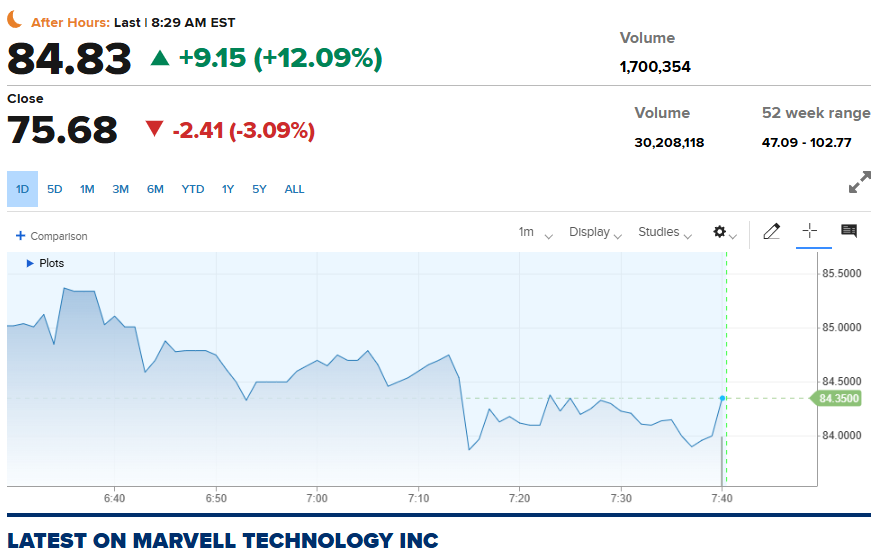
Investor attention increased after Marvell released an optimistic long-term outlook tied to rising demand for custom processors and high-speed connectivity used inside large-scale data centers. The announcement strengthened sentiment across the semiconductor market and highlighted how artificial intelligence investment is becoming a primary driver of technology-sector growth.
AI Infrastructure Spending Accelerates
Artificial intelligence is rapidly becoming a core component of global digital infrastructure. Technology companies are expanding computing capacity to support machine learning, advanced data analytics, and automation platforms.
Industry estimates indicate that Alphabet, Meta, Microsoft, and Amazon could collectively spend more than $630 billion this year on artificial intelligence infrastructure. These investments include advanced processors, large-scale data-center expansion, networking hardware, and energy-efficient computing systems.
Such massive capital expenditures are reshaping demand across the global semiconductor supply chain. Companies supplying AI processors, optical networking technologies, and specialized computing hardware are expected to benefit directly from this spending surge.
Custom Chips Gain Importance in AI Computing
A major factor driving semiconductor demand is the growing use of specialized chips designed for specific computing workloads.
These processors are known as application-specific integrated circuits (ASICs). Unlike general-purpose processors, ASICs are optimized to perform a single computational task with greater efficiency and lower power consumption.
Cloud providers increasingly deploy custom AI accelerators to handle machine learning workloads and large-scale data processing. This allows companies to tailor hardware performance to their own software ecosystems and artificial intelligence services.
Industry analysts expect the deployment of custom AI processors to expand significantly over the next five years, particularly among hyperscale cloud operators managing massive computing clusters.
As artificial intelligence models grow increasingly complex, specialized hardware becomes essential to maintain computing efficiency, control power consumption, and support high-volume data processing.
Marvell Forecast Signals Strong Growth Potential
Investor sentiment strengthened following Marvell Technology’s updated financial projections.
The company expects fiscal 2028 revenue to reach approximately $15 billion, representing growth close to 40 percent from current levels. Analysts had previously estimated revenue near $12.92 billion, making the new forecast significantly stronger than market expectations.
Marvell also raised its fiscal 2027 revenue outlook, projecting annual sales approaching $11 billion, representing more than 30 percent year-over-year growth.
Such projections suggest that large enterprise customers and hyperscale cloud providers are committing to multi-year infrastructure investments as artificial intelligence adoption accelerates across industries.
Strong forward guidance often signals that companies deep within the semiconductor supply chain are experiencing expanding demand visibility and sustained growth potential.
Networking Technology Powers AI Data Centers
Artificial intelligence systems require not only powerful processors but also extremely fast communication between hardware components.
Modern AI data centers often contain thousands of processors operating simultaneously. To maintain efficiency, enormous volumes of data must move rapidly between chips, memory systems, and storage infrastructure.
This requirement has increased demand for high-speed optical connectivity technology capable of transmitting data across massive server clusters.
Networking infrastructure has therefore become a critical component of the artificial intelligence ecosystem. Without sufficient communication bandwidth, even the most advanced processors cannot deliver optimal computing performance.
As AI clusters continue scaling, networking technology is expected to play a larger role in determining the efficiency and scalability of data-center environments.
Strong Near-Term Outlook Reinforces Confidence
Marvell also provided an encouraging short-term financial forecast.
For the upcoming quarter, the company expects revenue of approximately $2.40 billion, compared with analyst estimates of about $2.27 billion.
The improved outlook reflects growing demand in the data-center segment, as well as contributions from recently integrated technologies focused on connectivity and AI infrastructure.
Semiconductor Valuations Remain Under Review
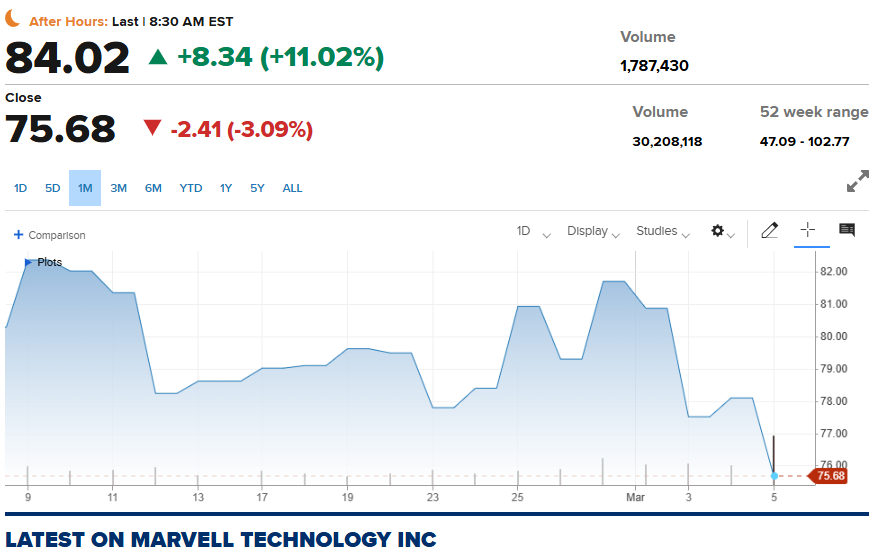
Despite strong market momentum, investors continue evaluating the long-term sustainability of the semiconductor rally.
Marvell currently trades at a forward price-to-earnings ratio near 19.99, which remains below several competitors operating within the AI hardware ecosystem. Some semiconductor peers trade closer to 25.31, suggesting investors may still be assessing the durability of long-term AI-driven growth projections.
Outlook for the AI Hardware Investment Cycle
The latest developments in the semiconductor sector highlight the massive scale of investment flowing into artificial intelligence computing infrastructure.
Technology companies are committing unprecedented capital to expand data-center capacity and support advanced machine learning workloads. This investment cycle is expected to influence global semiconductor demand for many years.
Analysts believe the next phase of the AI hardware cycle will focus not only on faster processors, but also on the broader ecosystem of components required to support large-scale computing environments.
As artificial intelligence adoption continues expanding across industries, semiconductor firms supplying both specialized processors and high-speed connectivity technologies may remain central to one of the most significant technology investment cycles of the decade.


