
The domestic push for mineral independence reached a new milestone on Wednesday as ReElement Technologies Corporation officially entered a strategic partnership with the Minerals Integrity & Resilience Alliance (MIRA).
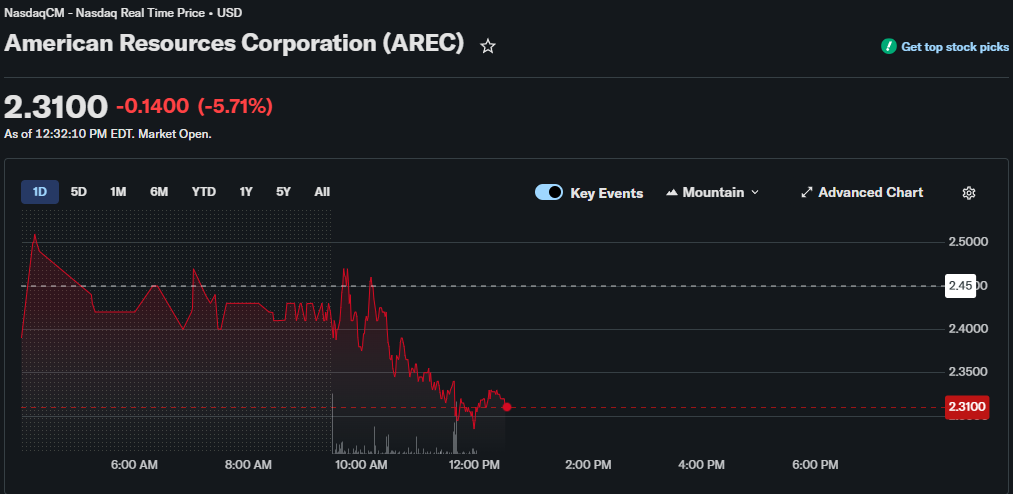
This initiative, organized by the Center for International Private Enterprise (CIPE), is designed to unite primary stakeholders across the raw material lifecycle to address systemic vulnerabilities and establish new standards for sector accountability. American Resources Corp (AREC), which maintains a minority equity position in the refining firm, saw its shares trade down 5.37% in the wake of the broader market correction.
According to a market analyst at Fondesia, this move signals a pivot toward formalized governance in the critical minerals sector. By joining MIRA, the refining entity aims to contribute to a more protected and high-transparency ecosystem across North America and allied international markets.
This collaborative framework is intended to catalyze actionable solutions for the complex logistical and ethical challenges currently hindering the diversification of the rare earth element supply chain.
Governance, Trust, and the Refining-First Methodology
Leadership within the refining division emphasized that the decision to join the alliance is rooted in a commitment to practical collaboration and trust-building. The primary objective is to move beyond legacy chokepoints that have historically concentrated mineral processing power in a limited number of geographical regions.
By engaging with a diverse group of investors, manufacturers, and government representatives, the firm intends to validate its refining-first strategy as a commercially viable and environmentally responsible alternative for the global market.
The partnership focuses on three primary pillars: responsible asset ownership, total supply chain integrity, and investment readiness. As international demand for high-purity rare earths continues to accelerate, the establishment of institutional-grade productivity in refining requires a foundation of accountability.
The organization’s participation in MIRA is expected to refine these standards, ensuring that the scaling of domestic processing capabilities meets the rigorous requirements of modern industrial and defense contractors.
Industrial Ramping and the Marion Supersite Buildout
The entry into the MIRA alliance coincides with an aggressive expansion of the company’s physical refining infrastructure. ReElement is currently finalizing the buildout of its Marion Advanced Technology Center in Indiana, a facility designed to serve as a cornerstone for domestic rare earth processing.
In March, the company announced an expansion of its Phase 1 operations to include four dedicated production lines, providing an annual separated oxide capacity of over 16,000 metric tons. This facility is on track for initial production in Q3 2026, with full commissioning expected by year-end.
This “Supersite” is specifically engineered to handle a multi-mineral, multi-feedstock stream, allowing for the concurrent processing of recycled magnets, lithium-ion battery waste, and primary mined concentrates. By utilizing its proprietary chromatography-based platform, the refinery can achieve purities of up to 99.999% for critical elements like neodymium (Nd), praseodymium (Pr), and dysprosium (Dy).
Unlike traditional solvent-based refining methods, this modular approach offers a significantly lower environmental footprint, which is becoming a prerequisite for securing federal energy and critical mineral funding.
Strategic Equity and Potential IPO Momentum
The capital markets have responded favorably to the organization’s technological roadmap. ReElement recently secured a $200 million strategic equity facility backed by Transition Equity Partners, a move that implies a corporate valuation tier ranging from $900 million to $1.35 billion.
This liquidity injection is serving as a catalyst for a potential public listing on the Nasdaq in the second half of 2026. The company is already building out public-company governance structures and reporting processes to align with these ambitions.
Furthermore, the firm attracted a strategic investment and collaboration agreement from Mitsubishi Materials Corporation on March 31, 2026. This partnership targets integrated, scalable refining across the United States and Japan, leveraging existing recycling infrastructure to create a circular resource supply chain.
By aligning with global industrial leaders, American Resources Corp is effectively de-risking the commercialization of its refining platform, ensuring that it has both the feedstock and the offtake agreements necessary to support institutional-grade productivity as its operations reach full scale.
Resource Security and Global Market Outlook
The formalization of the MIRA alliance serves as a definitive marker for the critical minerals industry for the duration of 2026. By aligning with an action-oriented group focused on integrity, the company is addressing the “governance gap” that has previously deterred large-scale institutional investment in domestic refining.
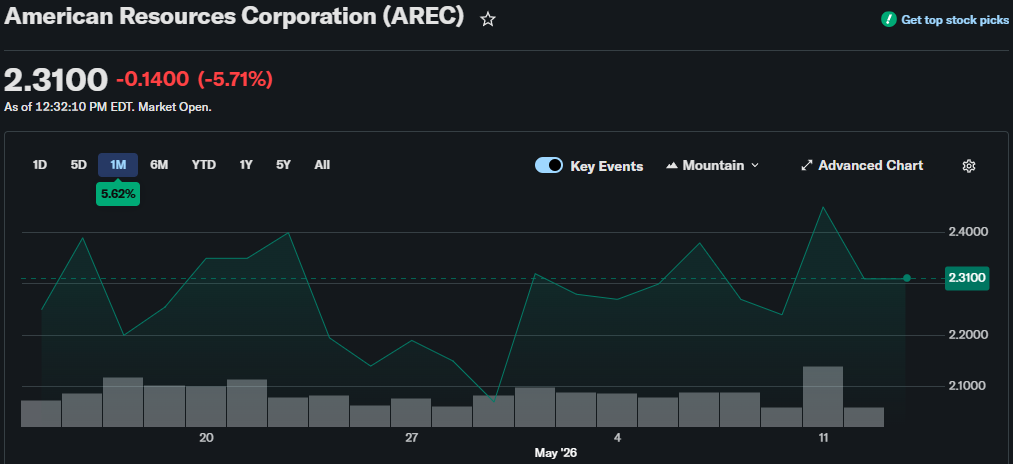
The primary focus for market participants in the coming months will be the successful Phase 1 rollout at the Marion facility and the impact of the Mitsubishi partnership on global sourcing. Although the impending momentum of the AREC share price has been impacted by broader industrial sector weakness, the foundational tone of the company’s expansion remains positive.
Investors should view the entry into this alliance as a de-risking event that enhances the company’s standing with both governmental bodies and tier-one manufacturers.


