
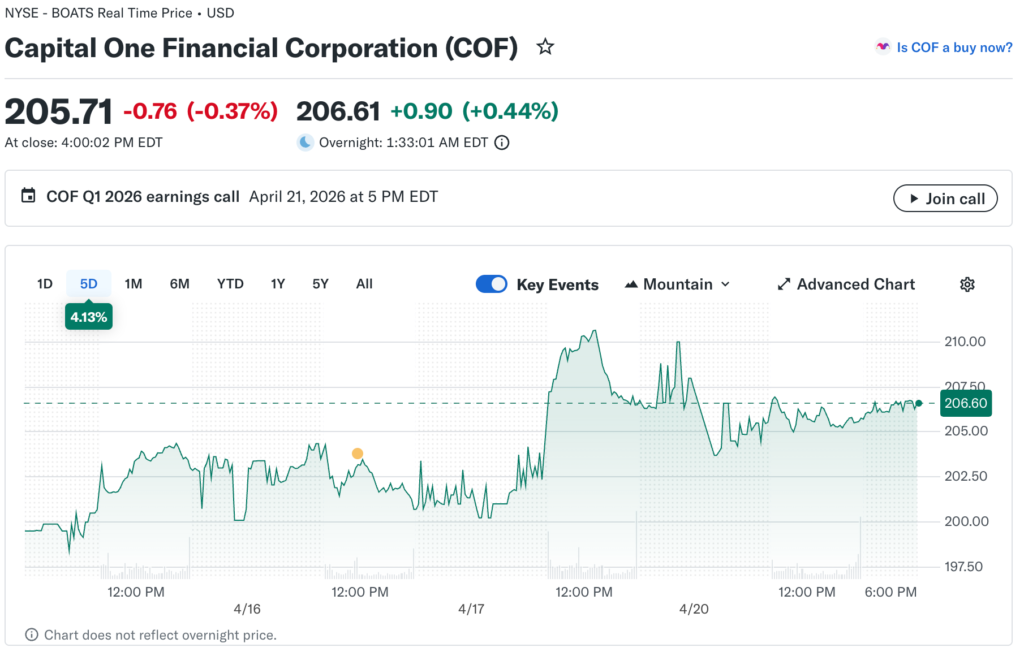
Capital One Financial delivered first-quarter results that exceeded expectations handily on Tuesday morning, with earnings growth driven by merger synergies and strong consumer spending patterns. The credit card giant reported earnings reflecting the successful integration with Discover Financial Services, creating a combined entity with enhanced scale and market positioning.
Analysts from Nummvix examine how financial institutions navigated the complex interest rate environment successfully during the quarter while managing competing pressures. Net interest income trends remained relatively stable as deposit costs moderated while loan yields held firm, creating a favorable spread environment that supported profitability across the banking sector.
The Megabank Performance
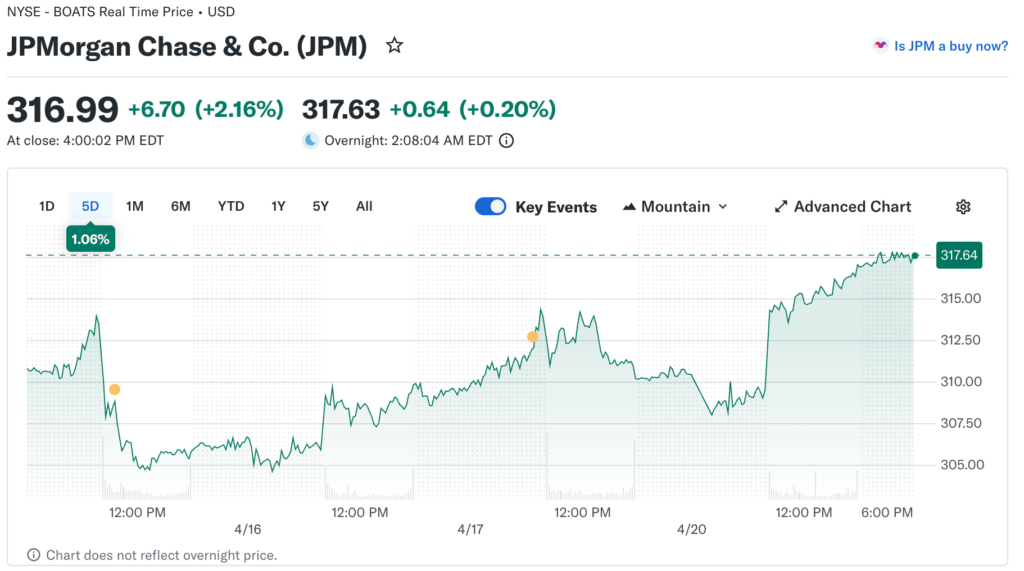
JPMorgan Chase kicked off bank earnings season with strong results demonstrating the advantages of scale and diversification across multiple business lines. The nation’s largest bank by assets reported growth across consumer banking, corporate and investment banking, and asset management divisions.
Bank of America’s results highlighted the challenges and opportunities from interest rate positioning as the institution managed significant duration risk in its securities portfolio. The Charlotte-based bank reported solid growth in deposit balances as consumers maintained higher cash levels despite elevated rates making savings more attractive.
Wells Fargo continued its operational turnaround, showing progress on efficiency initiatives and regulatory remediation efforts that had constrained growth for several years. The San Francisco-based lender reported improvement in expense ratios as cost-cutting measures took effect, while revenue growth accelerated from improved execution.
The Investment Banking Revival
Goldman Sachs and Morgan Stanley both reported dramatic increases in investment banking fees, reflecting a resurgence in corporate activity after an extended slowdown. The advisory revenues surged as companies pursued strategic acquisitions, taking advantage of elevated stock prices and improved financing conditions.
Debt underwriting volumes remained strong as corporations refinanced existing obligations at favorable terms while also raising capital for growth initiatives. The investment-grade bond market experienced particularly robust issuance as companies locked in longer-term financing before potential rate increases.
The Consumer Banking Strength
Credit card balances grew across the industry as consumers maintained spending levels despite higher interest rates and some softness in confidence measures. The payment rates remained healthy with delinquencies tracking below pre-pandemic levels even as pandemic-era savings buffers depleted. Rewards program competition intensified as issuers fought for high-spending customers with enhanced benefits and sign-up bonuses.
Auto lending remained selective, with banks carefully managing exposure to potential used vehicle price declines after significant appreciation during the supply shortage. The origination standards tightened modestly with higher down payment requirements and more stringent income verification. Lease residual values required careful monitoring as electric vehicle adoption could impact the resale values of internal combustion engine vehicles.
The Commercial Banking Dynamics
Small business lending showed modest growth as entrepreneurs remained cautiously optimistic about expansion opportunities despite economic uncertainties. The commercial and industrial loan growth remained subdued as large corporations maintained strong cash positions and relied less on bank financing. Commercial real estate exposures received heightened scrutiny from regulators and investors, given concerns about office property valuations.
Office buildings, particularly in major cities, faced headwinds from hybrid work adoption, reducing space needs for many tenants, with vacancy rates elevated. The multifamily properties generally performed well with strong rental demand supporting valuations, though new supply in some markets created competitive pressures. Industrial and logistics real estate remained favored, given e-commerce growth driving warehouse demand.
The Wealth Management Growth
Asset management fees increased as market appreciation lifted assets under management to new highs for many institutions during the quarter. The fee compression pressures continued as passive products gained share, though active managers in certain categories demonstrated a value proposition. Alternative investments gathered increasing assets as investors sought diversification and return enhancement beyond traditional stocks and bonds.
Private banking services for ultra-high-net-worth clients expanded as banks competed for lucrative relationships offering comprehensive solutions. The family office services grew rapidly as wealthy families sought sophisticated advice on complex financial situations and multi-generational planning.
The Technology Investments
Digital transformation spending remained elevated as banks modernized core systems and enhanced customer-facing applications to compete with fintech challengers. The artificial intelligence applications expanded across fraud detection, customer service, and underwriting, with early results showing promise. Cloud migration accelerated as institutions sought scalability and reduced infrastructure costs, though legacy system integration remained challenging.
Cybersecurity investments increased as the threat landscape evolved with sophisticated attacks targeting financial institutions. The authentication technologies improved user experience while enhancing security through biometrics and behavioral analysis.
The Outlook Commentary
Net interest income guidance varied by institution, with some forecasting modest growth while others expected flat to declining trends. The credit quality outlook remained generally positive, though management acknowledged monitoring emerging stress in certain portfolios. Expense guidance reflected continued investments in technology and compliance, offset partially by efficiency gains.
Loan growth projections ranged from low single digits to mid-single digits, depending on business mix and market focus. The deposit competition is expected to moderate as the rate cycle evolves, though pricing remains an important retention tool. Capital deployment priorities balanced organic growth, acquisitions, and shareholder returns.


