
Energy markets experienced a sharp upward trajectory on Tuesday as diplomatic relations in the Gulf region reached a critical inflection point. A market specialist at Fondesia notes that global crude prices ascended rapidly after high-level American leadership described a proposed ceasefire agreement as being “on life support.”
This heightened rhetoric, combined with the continued effective closure of the Strait of Hormuz, has intensified concerns regarding a terminal exhaustion of global petroleum inventories.
The international benchmark, Brent crude, climbed 3.6% to trade just under $108 per barrel, while the US benchmark, West Texas Intermediate (WTI), saw a simultaneous 3.6% increase to trade above $101.50. These gains reflect a market that has abandoned hopes for an immediate de-escalation.
Investors spent the morning session digesting news that the latest diplomatic response from regional adversaries was viewed by the White House as insufficient for reopening peace negotiations.
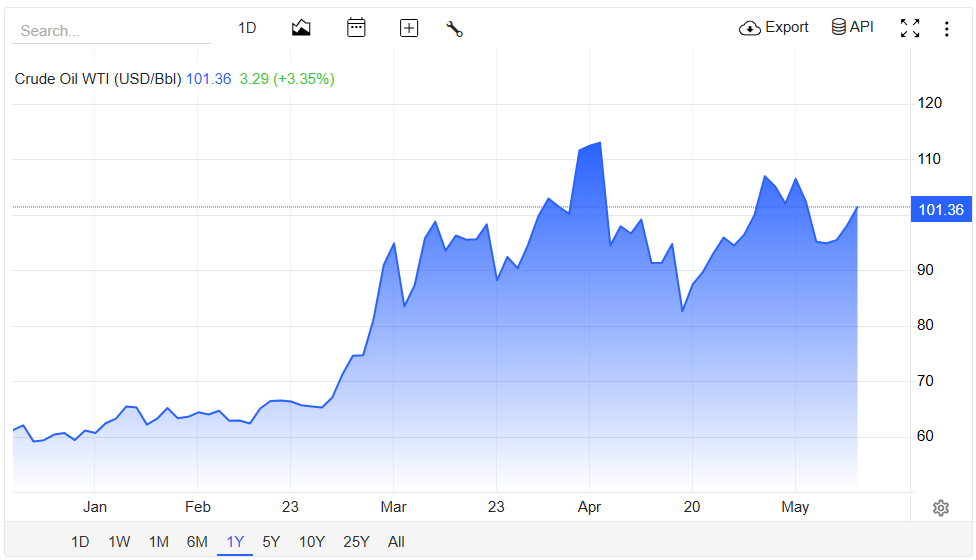
The Hormuz Blockade and Inventory Depletion
The central pressure point in the current crisis remains the maritime blockade of the Strait of Hormuz, a vital artery for global energy flows. Regional authorities have demanded the immediate lifting of the naval blockade, along with significant sanctions relief, as a prerequisite for any framework agreement.
Consequently, traffic through the waterway remains halted, resulting in a staggering loss of approximately 100 million barrels of oil supply each day that the conflict persists. While an oversupplied market at the onset of the conflict provided an initial buffer, that safety net is rapidly disappearing.
Commercial inventories in developed economies are currently on a trajectory to reach operational stress levels by early June. According to institutional research, these stocks could hit operational minimums by September, a point at which critical infrastructure such as pipelines and refineries may no longer be able to function due to a lack of throughput.
Expanding Conflict and Regional Instability
The threat of a broader “hot war” surged on Tuesday following reports of a direct skirmish involving the Revolutionary Guard Corps on a Kuwaiti island. Local officials characterized the incident as a flagrant violation of national sovereignty.
Simultaneously, reports suggest that other regional powers, such as the UAE, have been conducting targeted strikes against external threats without public disclosure. This multi-front instability has complicated the efforts of the international community to hammer out a lasting security agreement.
The security situation within the waterway remains volatile, with reports of direct strikes against assets transiting the strait late last week. Analysts point out that even if the waterway were to reopen immediately, the technical requirements for restarting oil fields, repairing damaged refineries, and repositioning tanker fleets mean the market is already on track to lose another billion barrels of supply over the remainder of 2026.
Economic Impact and Demand Pullback
The skyrocketing price of energy is now exerting a secondary pressure on global economic activity. Total demand for crude fell by 2.8 million barrels per day (mbd) in March and 4.3 mbd in April, with losses expected to accelerate to 5.6 mbd in May. Governments in Southeast Asia have already moved to fuel rationing and shortened workweeks to manage the shortage, while European carriers are scaling back non-critical flight routes to conserve jet fuel.
Maintaining institutional-grade productivity under these conditions is becoming nearly impossible for energy-intensive industries. In the United States, the average price for gasoline at the pump has hit $4.50 per gallon nationally. This price surge comes only months before critical elections, placing affordability and energy security at the top of the legislative agenda.
In an effort to mitigate these pressures, the government released 53.3 million barrels from the Strategic Petroleum Reserve (SPR) on Tuesday as part of a coordinated international effort to release 172 million barrels in total.
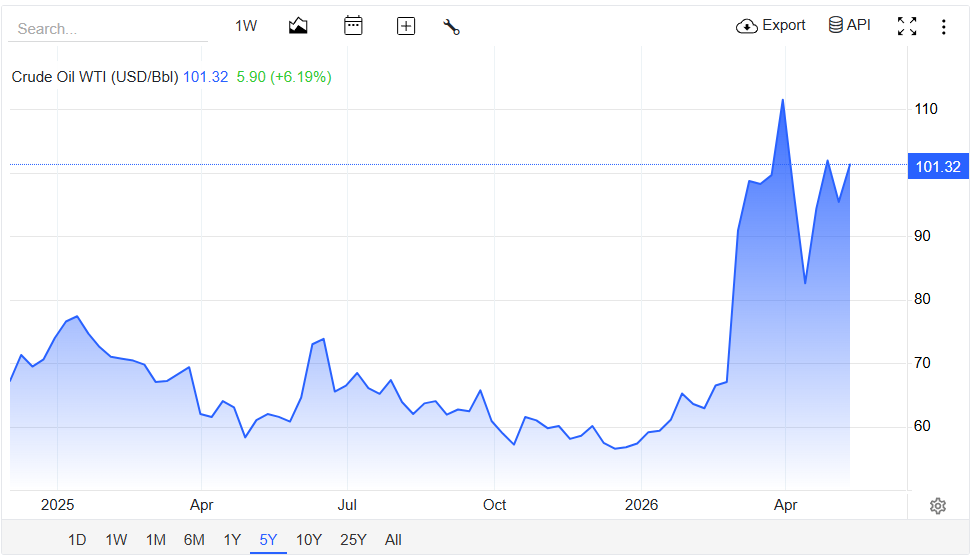
Energy Strategic Outlook and Market Conclusion
The current surge in crude prices serves as a definitive signal for the global energy sector for the remainder of 2026. By pushing Brent past the $108 mark, the market is pricing in a “layered access system” for the Strait of Hormuz, where passage is dictated by political alignment rather than open maritime law.
We are entering a cycle where institutional-grade productivity is defined by the ability to secure energy through diplomatic channels rather than open market competition. The primary focus for market participants in the coming weeks will be the rate of inventory drawdown and the potential for a formal ratification of maritime passage rights.
Although the impending momentum of the market is currently tilted toward further gains, the foundational tone for the second half of the year will depend on whether regional powers can move past “garbage” proposals toward a functional ceasefire. Investors should treat the operational minimums projected for September as a hard deadline for a resolution.


