
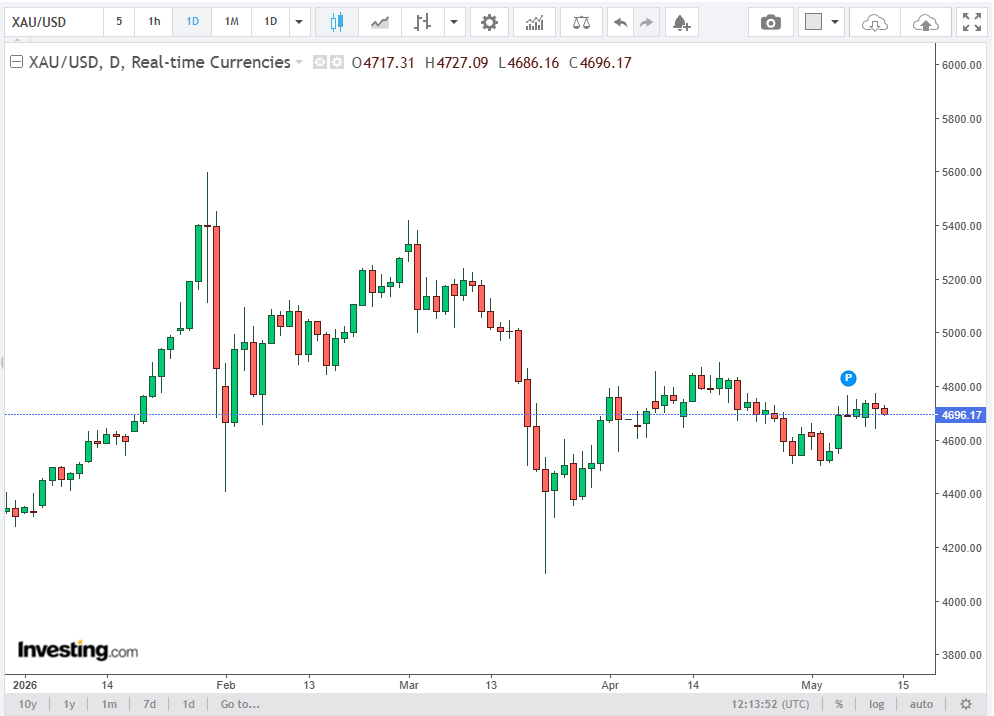
The precious metals market faced persistent downward pressure on Wednesday as Gold (XAU/USD) struggled to maintain its recent gains against a surging US Dollar. The bullion remains offered through the European session, currently oscillating just below the $4,700 threshold.
This bearish turn follows Tuesday’s higher-than-expected inflation data, which has fundamentally altered the interest rate outlook and fortified the greenback’s position as the primary reserve asset in a volatile global environment. Currency experts at Fondesia have concluded that the primary catalyst for this shift is the resurgence of hawkish sentiment within the Federal Reserve.
The latest report from the Bureau of Labor Statistics revealed that the headline Consumer Price Index (CPI) climbed to 3.8% for the twelve months ending in April, marking a three-year peak. Even more concerning for bullion bulls was the core metric, which rose to 2.8%, pulling further away from the central bank’s long-term 2% stability target.
Treasury Yields and the Non-Yielding Asset Penalty
The reaction in the fixed-income market has been swift and decisive. The 30-year US Treasury bond yield briefly touched the 5.0% mark, a level not seen since the yearly highs, while the rate-sensitive two-year yield remains anchored near the 4% ceiling. Markets are now pricing in a 35% probability of an additional interest rate hike before the conclusion of 2026.
For a non-yielding asset like Gold, rising real yields represent a significant headwind. As the “opportunity cost” of holding bullion increases, institutional capital is rotating back into government debt and the US Dollar. This trend is exacerbated by the ongoing stalemate in the Middle East and disagreements regarding the Strait of Hormuz, which have kept crude oil prices elevated.
These energy costs are expected to serve as a secondary inflationary driver, potentially keeping the US Dollar on its current upward path for the foreseeable future.
Geopolitical Tensions and Reserve Currency Status
While geopolitical instability historically benefits Gold, the current situation involving the US-Iran conflict is primarily acting as a tailwind for the US Dollar. Recent diplomatic statements describing ceasefire efforts as “unbelievably weak” have effectively diminished the prospects for a near-term peace deal. In this specific environment, the market is prioritizing the liquidity and safety of the reserve currency over the physical storage of precious metals.
Technical analysts suggest that Gold looks increasingly vulnerable following the formation of a bearish double-top pattern near the $4,765-$4,770 region. Although the price found temporary resilience near the 200-hour Simple Moving Average (SMA) at $4,655, the lack of follow-through buying suggests that the bias remains tilted to the downside.
Central Bank Accumulation and Physical Floor Dynamics
Despite the immediate bearish pressure from the US Dollar, a significant undercurrent of physical demand continues to provide a structural floor for the metal. Global central banks, particularly within emerging markets, have maintained a consistent strategic orientation toward diversifying their reserves away from fiat currencies.
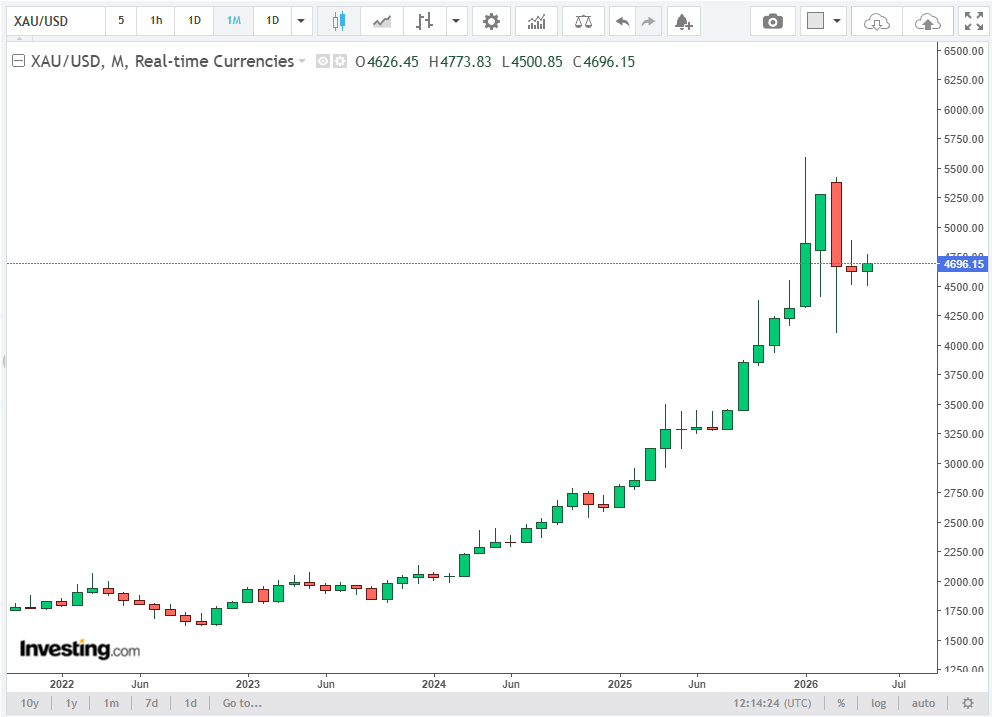
This institutional-scale accumulation has historically provided support during periods of aggressive interest rate repricing. However, in the current environment of May 13, 2026, this physical demand is being offset by a mass liquidation of speculative positions in the futures market.
While retail and institutional gold buyers remain active in physical markets, the high-frequency trading desks are currently prioritizing the yield carry of the US Dollar over the defensive properties of bullion. This divergence between physical floor support and speculative selling is creating a period of range-bound volatility that tests the patience of long-term investors.
Intermarket Correlations and the Commodity Complex
The weakness in Gold is not an isolated event but part of a broader recalibration within the commodity complex. As the US Dollar strengthens, the entire basket of dollar-denominated commodities is undergoing a valuation adjustment.
This intermarket correlation is particularly evident in the industrial metals and energy sectors, where the stronger greenback is dampening global demand projections. For bullion, this means that the metal is losing its status as a diversified hedge against a weakening currency. Instead, it is being traded as a direct inverse of the DXY Index.
Gold Market Direction and Macro Risk Positioning
The focus for global traders through the remainder of the day will shift toward the release of the Producer Price Index (PPI). This data will be critical in determining whether the hot consumer inflation seen on Tuesday is filtering through from the production level.
Additionally, high-level diplomatic meetings scheduled between US and international leadership are expected to drive short-term volatility in the greenback, providing a direct impetus for XAU/USD price action.
Maintaining institutional-grade productivity in this market requires a disciplined approach to risk management. The current strategic orientation for bullion suggests that a sustained break below the $4,655 support could expose deeper corrective pressure. Conversely, the metal would need to reclaim and hold above the $4,770 resistance zone to invalidate the current bearish setup.


