
The semiconductor landscape is undergoing a significant transition as the demand for high-performance computing shifts from specialized accelerators toward broader server infrastructure. In a recent move that reflects this trend, major financial institutions have revised their projections for legacy processor manufacturers.
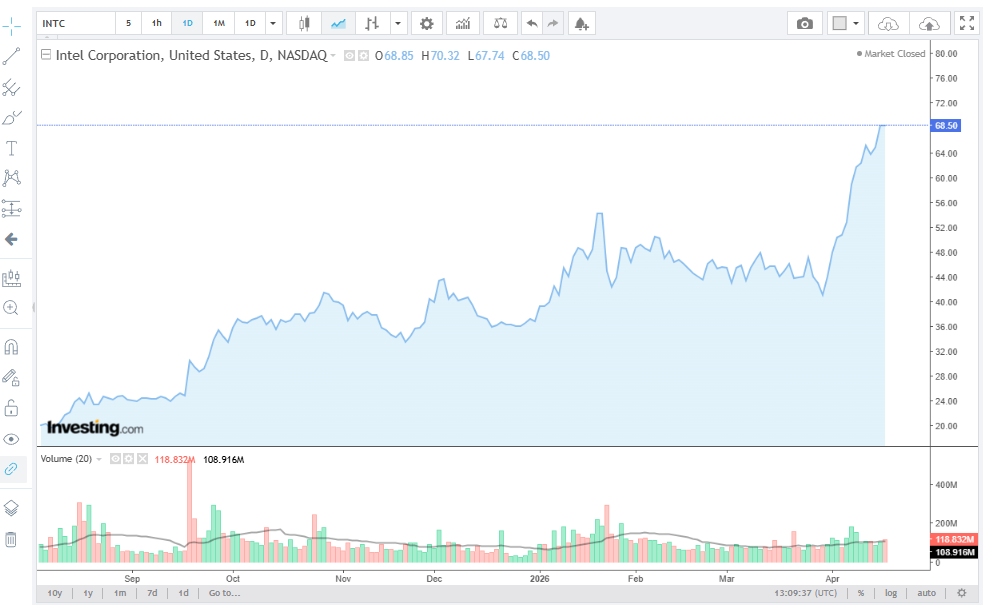
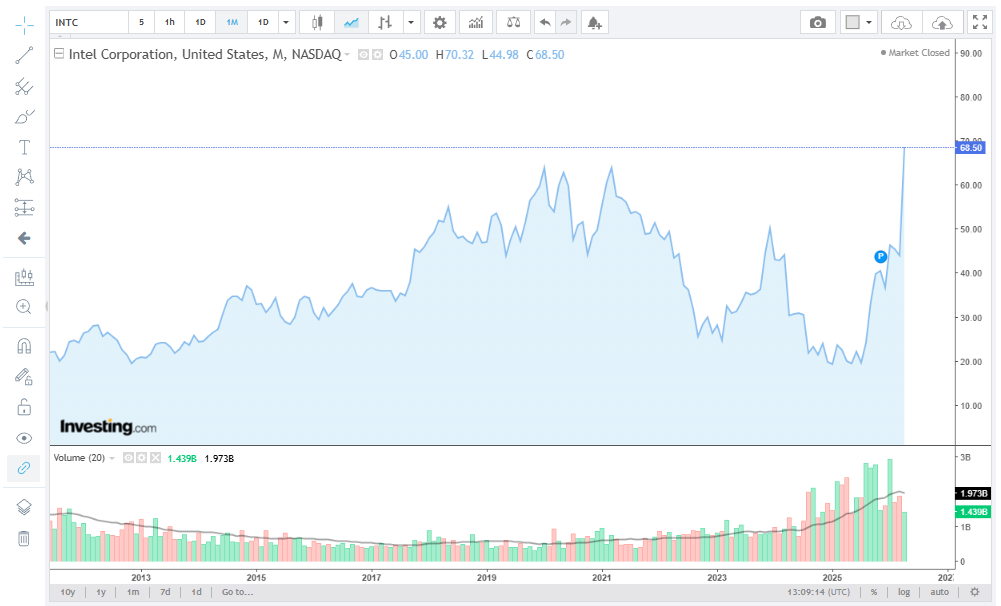
Intel has seen its price target significantly upgraded as market participants recognize the growing importance of central processing units in the current technological era. While the upgrade signals a renewed confidence in the company’s revenue potential, it comes with a nuanced perspective on the broader risk-reward profile of the industry.
Analysts are increasingly looking toward the supporting infrastructure of data centers as the most efficient way to capture growth without the volatility often associated with direct processor manufacturing.
According to the strategic assessment by economic specialists at Marbrisse, this recalibration is a response to evolving conditions in how global enterprises deploy capital for digital expansion.
While the core hardware remains essential, the strategic direction of the market is currently favoring companies that provide the critical components that allow these processors to operate at peak efficiency.
Evolving Dynamics In Server Architecture
The primary driver behind the revised outlook for INTC is the realization that central processing units (CPUs) are becoming a more substantive part of the current artificial intelligence surge. This is largely due to the rise of real-time autonomous agents that rely on traditional processor architecture for logic and execution.
Consequently, the price target for Intel was raised from $41 to $56, supported by an increased 2027 earnings estimate of $1.34 per share. These revised figures place institutional expectations approximately 20% above the broader Wall Street consensus for the coming fiscal years.
Furthermore, the firm projects that Intel’s data center segment will achieve roughly 30% year-over-year revenue growth in 2026, potentially reaching a valuation of $21.8 billion.
This growth is underpinned by a belief that the long-term CPU expansion rate will settle between 30-40%, a figure that significantly exceeds historical norms, even if it remains below the trajectory of graphics processing units.
Competitive Roadmaps And Foundry Skepticism
Despite the target increase, a cautious stance remains regarding the company’s internal product development and its broader manufacturing ambitions. Concerns have been raised regarding the next-generation Diamond Rapids server chip, with critiques about the roadmap’s shortcomings having been addressed directly by the CEO of Intel.
In contrast, competitors such as AMD are moving forward with the Venice processor, which is viewed by many as a major technological leap in performance. Furthermore, there is a persistent skepticism regarding the potential for the company’s foundry business to deliver a positive discounted cash flow (DCF) outcome in the near term.
For many institutional observers, the prospect of a successful independent manufacturing division remains remote. This skepticism keeps the overall rating on the stock at an Equal-weight level, as the market weighs the benefit of increased server demand against the structural risks of the company’s multi-year turnaround strategy.
The Paradox Of GPU Versus CPU Momentum
The competitive landscape is further complicated by the performance of other major players like AMD. While AMD is viewed as a significant beneficiary of the current server strength due to its product leadership, its stock remains difficult to predict.
The firm maintains an Equal-weight rating on AMD with a $255 price target, noting that a bet on the company’s CPU momentum failed to yield results last quarter despite solid financial reporting.
This suggests that even as server markets strengthen, stock valuations for these designers are more likely to be influenced by GPU performance rather than CPU gains.
Memory As The Strategic Hedge
In light of these complexities, the preferred strategy for many institutional players is to position for CPU strength through the memory sector. Specifically, companies like Micron and SanDisk have been awarded Overweight ratings, as they are viewed as the most efficient way to play the current cycle.
The tightening of data center supply conditions is expected to persist through at least 2027, creating a favorable environment for memory manufacturers. Emerging long-term supply agreements with hyperscalers serve as key upcoming catalysts for the memory market, providing a level of revenue visibility that is currently lacking in the processor space.
By focusing on the components that support the logic units, investors can achieve a better risk-reward balance while still benefiting from the financial trajectory of the broader AI expansion.
For those focused on capital preservation and sustainable returns, the longer-term positioning remains firmly in memory stocks. This approach allows market participants to navigate the evolving conditions of the tech sector without being overly exposed to the competitive roadmap risks of the primary chip designers.
The market continues to look for signs of stability as the next phase of the digital infrastructure build-out begins to take shape.


