
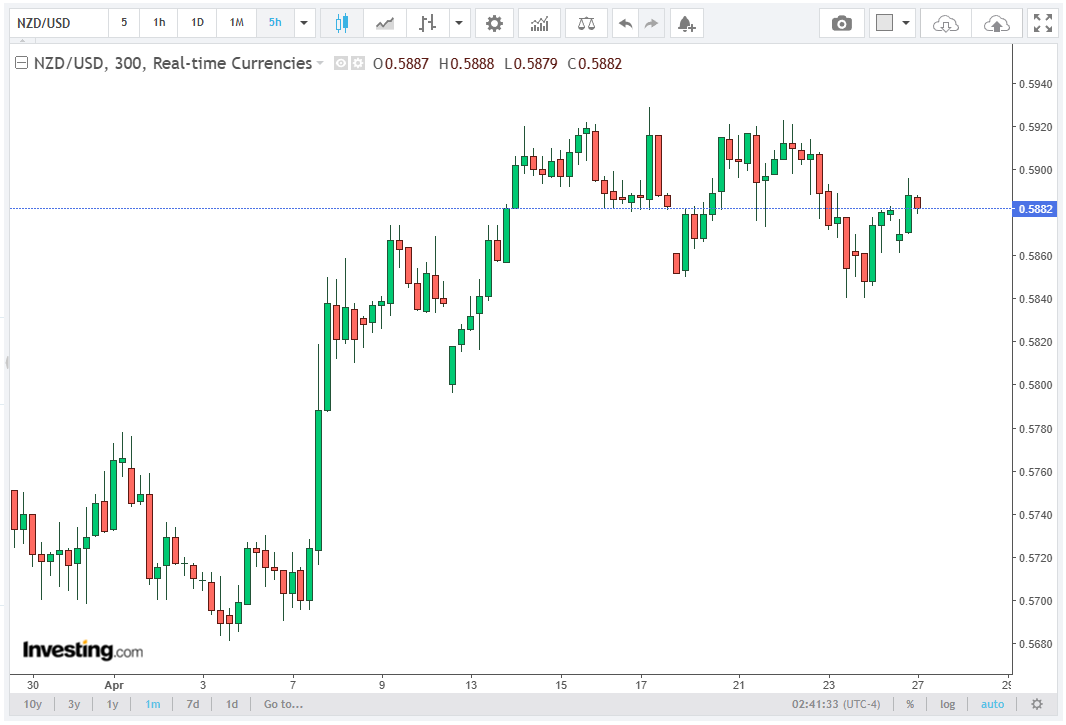
The NZD/USD currency pair is extending its recovery for a second consecutive session on Monday, supported by a modest US Dollar (USD) downtick and improved risk sentiment. Price action has pushed the pair back toward the psychologically significant 0.5900 level, building on Friday’s rebound from the 200-day Simple Moving Average (SMA) support near the 0.5840 area.
However, despite the short-term bullish tone, upside momentum appears increasingly constrained as traders weigh macroeconomic uncertainty, geopolitical tensions, and central bank policy expectations. In their article, the brokers at Achievements AI give a thorough and straightforward explanation of this topic.
Technical Recovery Builds Above Key Support
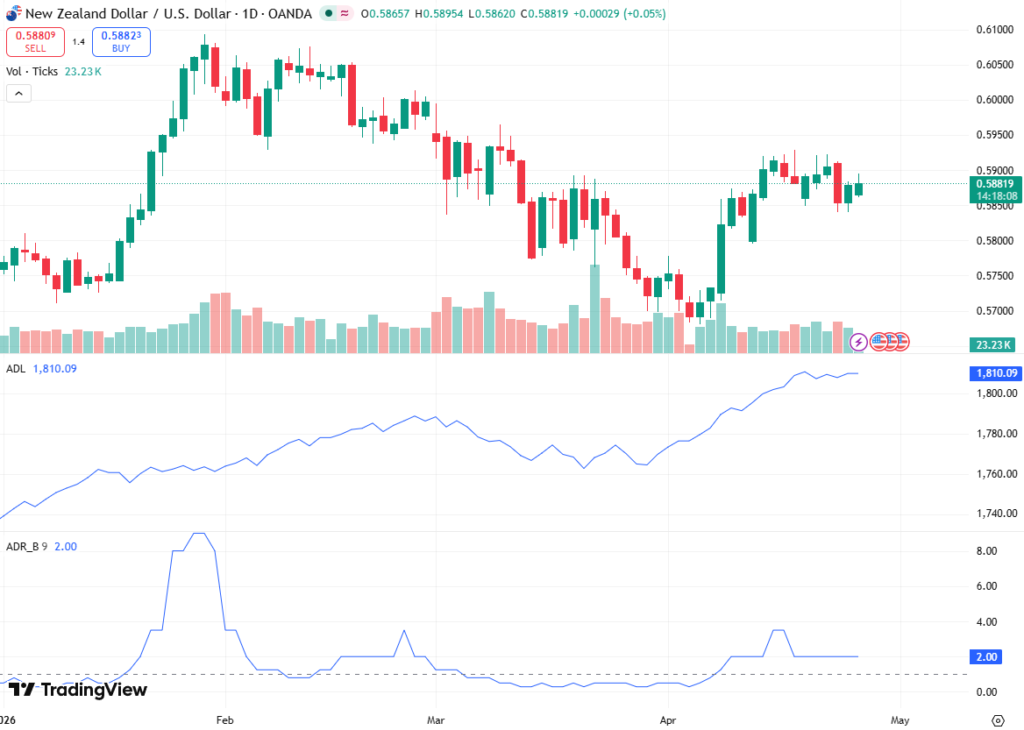
From a technical standpoint, NZD/USD’s rebound from the 200-day SMA reinforces the importance of this long-term dynamic support zone. The bounce near 0.5840 suggests that dip-buyers are still active at lower levels, defending a key structural area that has historically acted as a trend filter between bullish and bearish phases.
The recovery toward 0.5900 now places the pair near an interim resistance zone. A sustained break above this level would be required to confirm a more durable bullish reversal and potentially open the door toward higher retracement targets. However, momentum indicators remain mixed, reflecting cautious participation rather than conviction buying.
The broader structure still leans neutral, with price action oscillating between macro support (0.5840) and psychological resistance (0.5900–0.5950), suggesting that NZD/USD is currently in a consolidation phase rather than a trending environment.
Softer USD Driven by Risk Sentiment, but Not a Clean Breakdown
The recent USD softness has been a key catalyst behind NZD/USD’s upside attempt. A generally positive tone across global equity markets has reduced demand for the safe-haven US Dollar, allowing higher-beta currencies like the New Zealand Dollar (NZD) to recover.
However, this USD weakness remains fragile and selective, rather than broad-based. While equities support cyclical currencies, underlying macro risks continue to prevent a sustained USD decline. As a result, the Greenback’s pullback appears more corrective than structural.
The USD index remains underpinned by a combination of geopolitical risk premiums and expectations that the US Federal Reserve (Fed) will maintain a relatively restrictive policy stance for longer than previously anticipated.
Fed Policy Expectations Keep the USD Supported
Another major factor limiting USD downside is the market’s evolving stance on US Federal Reserve policy. Persistent inflation concerns, partly driven by energy market risks, have reinforced expectations that the Fed may maintain a hawkish policy bias for longer.
Market participants continue to price in the possibility that interest rates will remain elevated, particularly if inflationary pressures re-emerge due to supply-side shocks linked to geopolitical tensions.
This expectation supports US Treasury yields, which in turn provide structural support for the USD. As long as the Fed maintains a restrictive stance, the dollar’s downside potential is likely to remain contained, even during risk-on trading sessions.
FOMC Meeting in Focus: Volatility Catalyst Ahead
Attention now shifts toward the upcoming two-day Federal Open Market Committee (FOMC) meeting, scheduled for midweek. This event is expected to be a key volatility trigger for FX markets, including NZD/USD.
Traders are likely to adopt a wait-and-see approach, reducing exposure ahead of the policy announcement. This defensive positioning typically leads to range-bound price action and lower conviction trends in the short term.
The key focus will be on forward guidance regarding the inflation trajectory, any shift in the Fed’s rate-cut timeline, and updated commentary on financial conditions alongside labor market resilience.
These elements will be critical for assessing whether policy remains on a gradual easing path or if persistent inflation and tight labor dynamics could delay or reshape the expected monetary policy pivot.
RBNZ Policy Expectations Provide Partial Support to NZD
On the other side of the pair, the Reserve Bank of New Zealand (RBNZ) is also influencing sentiment. Market participants expect the central bank to maintain a relatively cautious but potentially tightening bias, as inflation remains sticky and above target levels.
The prospect of sustained monetary restraint, or even further tightening, acts as a medium-term support factor for the NZD, limiting aggressive bearish positioning.
However, global risk dynamics and USD strength still dominate near-term price action. As a result, the NZD’s policy-driven support is not yet strong enough to trigger a sustained breakout.
Outlook: Range Trading Likely Before Macro Catalyst
Overall, NZD/USD remains in a technically constructive but fundamentally capped recovery phase. The pair is benefiting from short-term USD softness and improved risk sentiment, yet broader macro forces, especially geopolitical tensions, Fed expectations, and safe-haven demand, continue to limit upside momentum.
Until the FOMC decision provides clearer direction, price action is likely to remain range-bound between 0.5840 support and 0.5900–0.5950 resistance. Traders will continue to balance short-term dip-buying interest against medium-term macro uncertainty, keeping volatility elevated but directionally constrained.


