
The Japanese investment environment underwent a dramatic recalibration on Wednesday as SoftBank disclosed a staggering $46 billion yearly gain within its Vision Fund unit. This massive financial windfall was almost exclusively driven by the explosive valuation growth of its centerpiece investment in OpenAI.
While the broader portfolio faced headwinds from legacy holdings, the singular success of the generative intelligence sector has effectively restructured the group’s balance sheet, pushing the SoftBank Group to a total net profit of 5 trillion yen for the fiscal year ended March 2026.
An investment analyst at Fondesia highlights that this gain represents one of the most successful single-asset appreciation events in modern venture capital. To date, the Japanese conglomerate has deployed more than $30 billion into the AI research lab, with current year-over-year gains on that specific position totaling $45 billion.
This performance has served as a vital buffer against simultaneous losses incurred from other high-profile holdings such as Coupang (CPNG), DiDi Global, and Klarna.
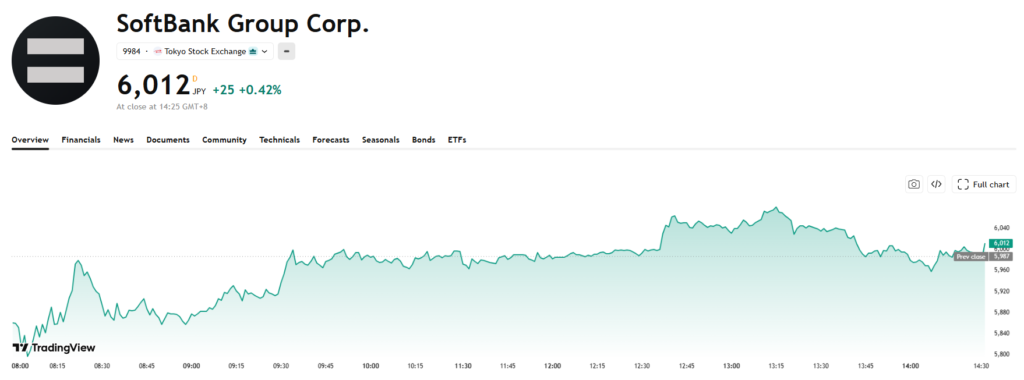
The $852 Billion Valuation and Ownership Dynamics
The scale of the current windfall is tied directly to a funding round closed in March 2026, which valued the AI developer at a historic $852 billion. SoftBank has committed to a total investment exceeding $60 billion in the lab, a move that would ultimately secure approximately 13% ownership of the organization.
By positioning itself at the epicenter of the artificial intelligence boom, the group is attempting to pivot away from its previous identity as a diversified tech investor to become the primary institutional architect of the AI age.
However, the sheer size of this commitment has not been without controversy. In the final quarter of the fiscal year alone, the Vision Fund booked a gain of $20 billion, nearly all of which was sourced from the AI lab’s valuation.
Liquidity Management and Asset Divestment Strategy
To fund its massive capital calls and manage its debt load, the organization has been systematically liquidating positions in more mature technology entities. Significant stake reductions in T-Mobile (TMUS) and Nvidia (NVDA) provided the necessary capital to sustain the AI bet.
These sales, along with other investment activities, generated approximately 218.1 billion Japanese yen ($1.4 billion) for the fiscal year. Despite these gains, when accounting for expenses and currency fluctuations, the investment income excluding the Vision Fund actually resulted in a loss of 472.1 billion yen.
The group’s financial leadership has emphasized the necessity of rigorous discipline to navigate this transition. Currently, the company maintains a cash position of 3.5 trillion yen, a liquidity buffer designed to cover more than two years of bond redemptions. This defensive posture is intended to reassure creditors that the firm can sustain its high-stakes strategic orientation without risking a liquidity crisis.
Maintaining institutional-grade productivity in this context involves a delicate balancing act between aggressive growth in emerging sectors and conservative management of legacy liabilities.
Portfolio Optimization and the ARM Integration Factor
Beyond the primary AI lab investment, the group is aggressively aligning its subsidiary holdings to support a unified “AI First” architecture. Central to this strategy is the optimization of its majority stake in ARM, which serves as the hardware foundation for the majority of global AI compute.
By creating a synergistic link between its software investments and its semiconductor assets, the organization is attempting to build a closed-loop ecosystem that captures value at every stage of the intelligence lifecycle. This vertical integration is a critical component of its strategic orientation to defend its $852 billion valuation anchor.
The firm is currently exploring ways to leverage ARM’s high-efficiency designs to lower the operational overhead of the massive data centers required by its primary research partners. This hardware-software synergy is expected to be a primary driver of institutional-grade productivity as the group enters the next phase of its global expansion.
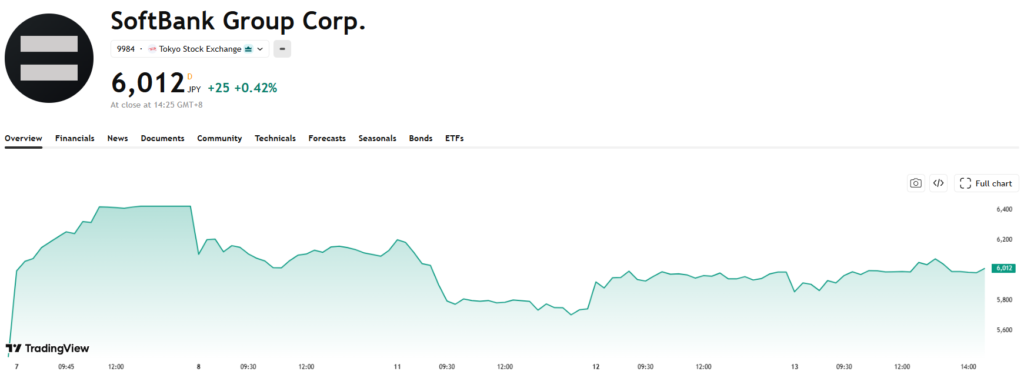
The Future of Concentrated AI Investment Strategy
The fiscal results delivered on May 13, 2026, mark a definitive turning point for the global investment sector. By tethering its future so closely to a single AI developer, SoftBank has signaled that it views the current technological shift as a winner-take-all event.
We are entering a cycle where institutional-grade productivity is no longer measured by the breadth of a portfolio but by the depth of integration into the dominant intelligence platforms. The primary focus for market participants through the remainder of 2026 will be the ability of the organization to maintain its credit rating while fulfilling its multibillion-dollar commitments.
Although the impending momentum of the AI sector is supported by a valuation of $852 billion, the “negative” outlook from ratings agencies serves as a reminder of the inherent risks in such a concentrated strategy. Investors should treat the 3.5 trillion yen cash reserve as the most critical metric for the company’s survival.


