
West Texas Intermediate (WTI) crude oil started the week on a firmer footing, extending modest gains and holding above the $94.00 per barrel threshold. The benchmark US crude briefly retraced part of Friday’s losses but quickly regained positive traction as traders reassessed the evolving geopolitical and macroeconomic landscape. This topic is clearly and comprehensively explained by the brokers at Achievements AI in their article.
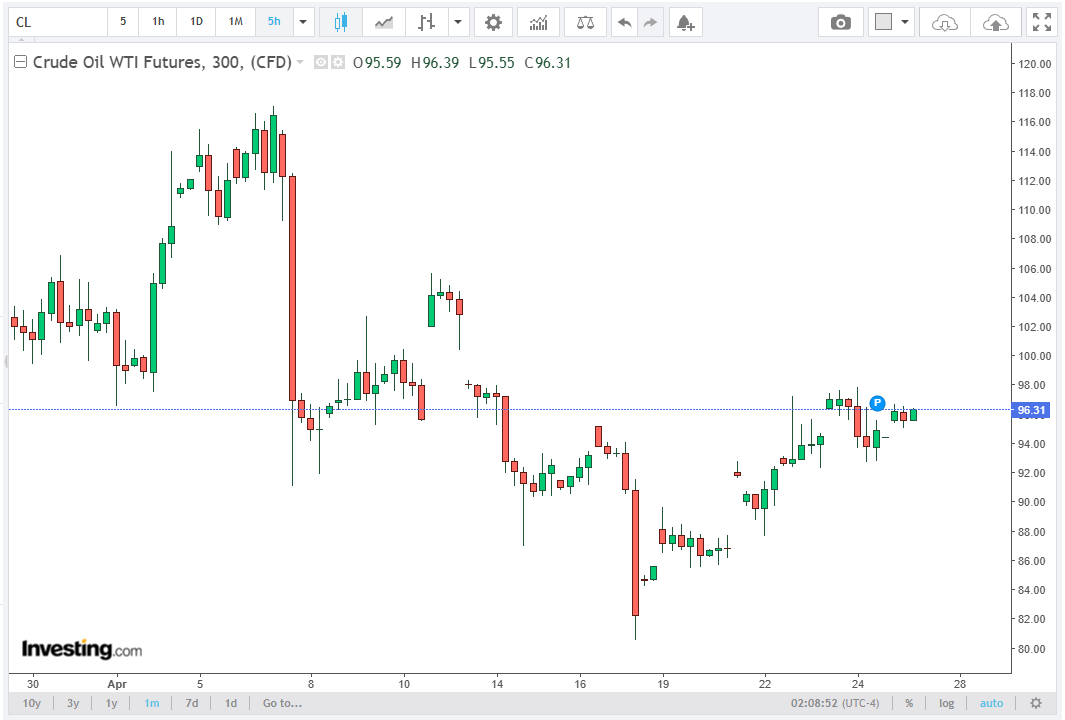
At the time of writing, WTI is trading just below the mid-$94.00s, marking an intraday advance of nearly 1.0%. Despite the upward bias, price action remains contained, reflecting a tug-of-war between geopolitical risk premiums and a firmer US Dollar (USD) that limits further upside momentum.
Geopolitical Risk: Hormuz Standoff Keeps Supply in Focus
A key driver behind the recent resilience in crude prices is the ongoing supply disruption risk linked to tensions surrounding the Strait of Hormuz, one of the world’s most critical energy chokepoints. Approximately a significant share of global seaborne oil exports transits through this narrow waterway, making it highly sensitive to geopolitical instability.
Recent developments have intensified market unease. Reports indicate that US-Iran diplomatic engagement has stalled, with the US President cancelling a planned visit by envoys Steve Witkoff and Jared Kushner to Islamabad. Simultaneously, Iran’s Foreign Minister Abbas Araqchi has arrived in Pakistan, underscoring the fragmented and indirect nature of ongoing negotiations.
The absence of diplomatic progress has reinforced concerns that the Hormuz standoff could persist, potentially escalating into broader disruptions. Compounding this, restrictions on maritime movement, combined with heightened naval presence and countermeasures, have contributed to a perceived tightening of global oil supply chains.
Supply Dynamics: Persistent Disruption Worries Support Prices
Beyond diplomatic friction, actual logistical constraints in the region are increasingly influencing sentiment. Reports of restricted vessel movement through the Strait, coupled with heightened inspections and security protocols, have reduced throughput efficiency.
These conditions have raised concerns about a potential prolonged supply bottleneck, particularly if tensions escalate further or retaliatory measures intensify. Even the perception of constrained flows is sufficient to tighten short-term balance expectations in the oil market.
Traders are therefore closely monitoring shipping data, tanker availability, and insurance premiums for Middle East routes, all of which serve as indirect indicators of physical supply stress. This environment continues to act as a bullish undercurrent for WTI prices.
Macroeconomic Backdrop: USD Strength Caps Upside
While geopolitical risks provide support, gains in WTI remain capped by macroeconomic headwinds, particularly the modest strength in the US Dollar.
The USD has firmed slightly as markets reassess expectations around Federal Reserve (Fed) policy easing. Investors are increasingly skeptical about near-term rate cuts, with current pricing suggesting more than an 80% probability that the Fed will maintain interest rates within the existing range into 2026.
This shift in expectations has reinforced demand for the USD, which in turn weighs on USD-denominated commodities such as crude oil. A stronger dollar makes oil more expensive for non-US buyers, typically dampening global demand elasticity.
Inflation and Interest Rate Expectations: A Delicate Balance
Energy markets are also increasingly sensitive to the broader inflation narrative. Traders remain alert to the possibility that a sustained surge in oil prices could reignite inflationary pressures, particularly in developed economies.
Such an outcome could force central banks, including the Federal Reserve, to maintain a more hawkish policy stance than previously anticipated. This reinforces the current market consensus that rate cuts will remain limited or delayed, further supporting USD strength.
However, this macro constraint introduces a paradox: while higher oil prices are fundamentally bullish for energy assets, they simultaneously risk tightening financial conditions, which can suppress speculative upside.
Technical Outlook: Range-Bound With Bullish Bias
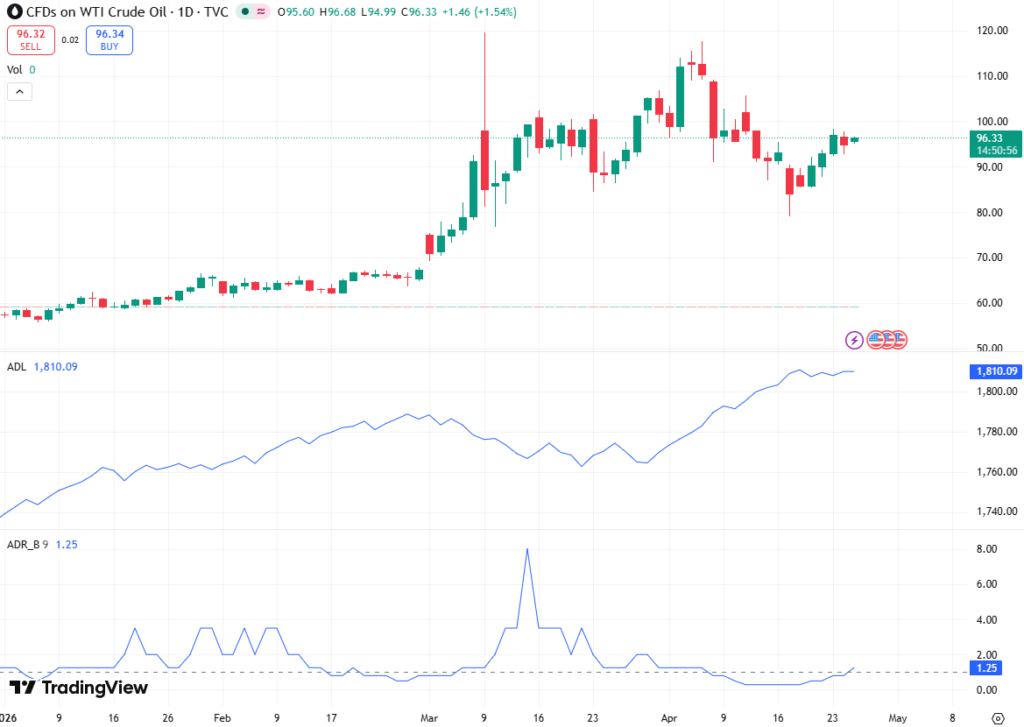
From a technical perspective, WTI continues to exhibit a constructive but range-bound structure. The $94.00 level now acts as a short-term pivot zone, with repeated defenses of this area signaling underlying buy-side interest.
However, resistance is emerging near the $95.00 psychological threshold, which remains a critical breakout level. A sustained move above this mark could trigger momentum-driven buying and open the door toward higher resistance zones.
On the downside, any corrective pullbacks are expected to find support due to the prevailing geopolitical risk premium, suggesting that dips may continue to be bought into rather than sold aggressively.
Conclusion: Upside Favored but Breakout Needed
Overall, the fundamental backdrop for WTI crude oil remains cautiously bullish. The combination of Hormuz supply risks, stalled US-Iran diplomacy, and persistent logistical constraints provides a solid support base for prices above $94.00.
In this environment, the path of least resistance remains tilted to the upside, but traders are likely to remain disciplined. A decisive breakout above $95.00 will likely be required to confirm a stronger bullish continuation and attract fresh momentum-driven positioning.


