
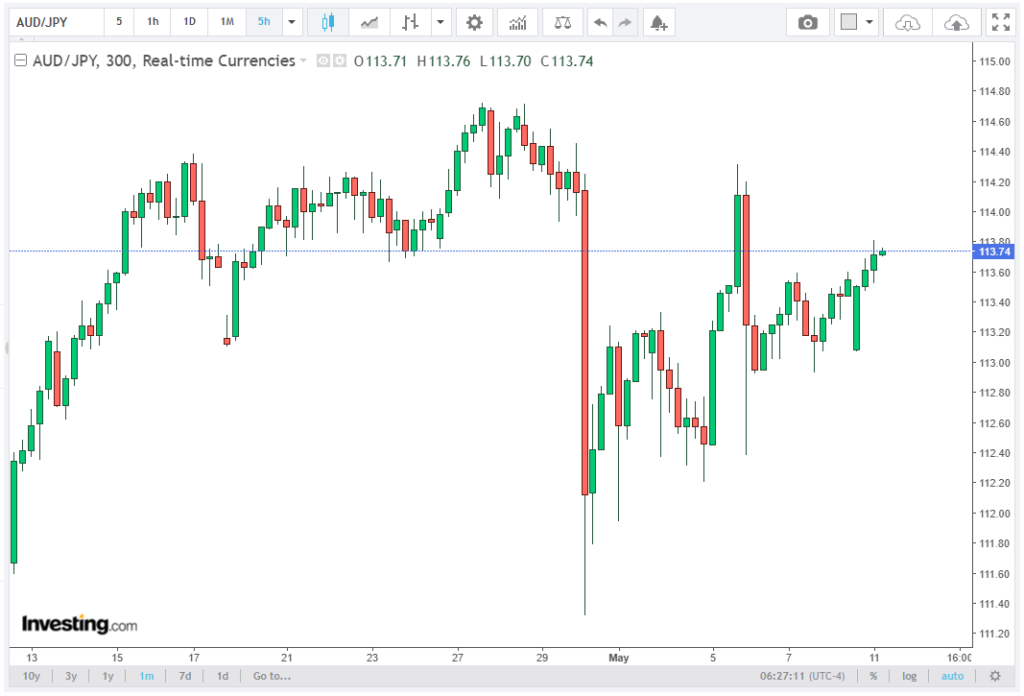
AUD/JPY traded around 113.70 on Monday, reflecting modest gains of 0.13% at the time of writing. The Australian Dollar (AUD) continues to receive support from the Reserve Bank of Australia’s (RBA) hawkish stance, while the Japanese Yen (JPY) remains under pressure due to rising Oil prices and lingering concerns over Japan’s economic outlook.
Despite the upside momentum, the pair’s gains remain capped amid ongoing intervention risks by Japanese authorities. This article presents a thorough exploration of the topic by Rubizio’s team of brokers.
RBA Hawkish Tone Supports AUD
The RBA recently raised its policy rate to 4.35%, returning to its December 2024 peak, marking the third consecutive rate hike this year. Elevated inflationary pressures in Australia have prompted the central bank to maintain a restrictive monetary policy.
The RBA’s projections now indicate that the policy rate could reach 4.7% by the end of 2026, with no cuts expected before 2028. Analysts note that this hawkish outlook is a major factor behind the Australian Dollar’s strength, which has been among the best-performing G10 currencies this quarter.
HSBC highlighted that the AUD’s performance reflects not only the RBA’s tighter policy stance but also improving global risk sentiment, which continues to favor currencies with higher yields.
Geopolitical Factors Enhance AUD Sentiment
The Australian Dollar is further buoyed by geopolitical developments, including US-China relations. The US President’s upcoming visit to China from May 13 to May 15 has raised expectations of positive diplomatic engagement. Discussions with Chinese President Xi Jinping are likely to cover Middle East tensions, Taiwan, artificial intelligence, and critical minerals.
Any sign of easing tensions between Washington and Beijing could further strengthen the AUD, given Australia’s heavy reliance on exports to China.
Additionally, recent Chinese economic data has reinforced optimism around the AUD. China’s Consumer Price Index (CPI) rose 1.2% YoY in April, above expectations of 0.8%, while the Producer Price Index (PPI) surged 2.8%, also exceeding forecasts. These data points suggest robust economic activity in China, which is supportive of Australian trade and commodity exports.
Japanese Yen Faces Pressure from Rising Oil Prices
On the JPY side, the currency remains under pressure due to rising Oil prices. West Texas Intermediate (WTI) crude trades near $95, fueled by geopolitical risks after the US President rejected Iran’s demands regarding the Strait of Hormuz.
Japan’s energy import dependence makes the JPY particularly vulnerable to higher energy costs. Rising global crude prices typically increase Japan’s trade deficit, exerting further pressure on the Yen.
However, despite the downside risks, the JPY’s depreciation may be limited due to potential intervention by Japanese authorities. Reports last week indicated that Tokyo intervened in the FX market during Golden Week, with estimates ranging between ¥4 trillion and ¥5 trillion.
Atsushi Mimura, Japan’s top foreign exchange official, reiterated that further interventions remain possible if market conditions warrant. This cautionary stance has contributed to the AUD/JPY’s restrained upside, as investors weigh potential policy intervention risks against the currency’s current momentum.
Technical Outlook for AUD/JPY
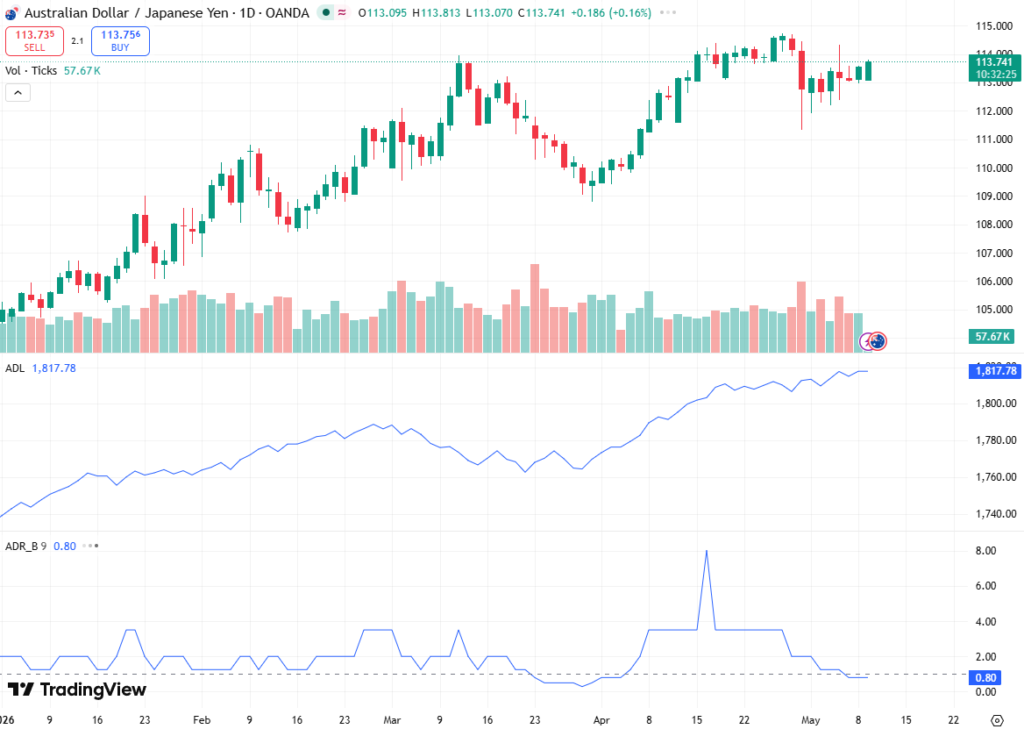
From a technical perspective, AUD/JPY is trading just below the 114.00 resistance level, which has historically acted as a psychological barrier. While support around 113.00 provides a floor for the pair, any break above 114.00 could be challenging due to intervention concerns.
Momentum indicators suggest that short-term bullishness remains intact, but market participants remain wary of sudden JPY interventions. The combination of a hawkish RBA, positive global risk sentiment, and geopolitical optimism supports further AUD strength, yet the Yen’s safety net may prevent significant breakouts.
Market Expectations and Future Rate Trajectory
Market consensus anticipates that the Australian policy rate could reach 4.7% by the end of 2026, reflecting the RBA’s continued commitment to combating inflation. No rate cuts are expected until 2028, solidifying the AUD’s attractive carry.
Investors are also monitoring commodity prices, particularly iron ore and energy markets, which have a direct impact on Australia’s trade balance. Any further geopolitical shocks or unexpected inflationary spikes could influence AUD/JPY dynamics, while the Yen remains sensitive to domestic intervention measures and external energy shocks.
Conclusion
AUD/JPY continues to trade in a narrow range around 113.70, supported by the RBA’s hawkish tone, positive global sentiment, and geopolitical developments favoring Australia. The JPY, however, faces downside risks from rising Oil prices, although intervention risks from Japanese authorities cap the pair’s upside potential.
For traders and investors, the key drivers remain RBA policy guidance, geopolitical developments, commodity price movements, and the potential for Japanese market interventions. Monitoring these factors closely will be critical in navigating AUD/JPY’s near-term volatility.


