
The Australian Dollar (AUD) remained under pressure on Monday, as the AUD/USD currency pair continued to trade in negative territory, reflecting a combination of strong US Dollar (USD) demand and heightened market risk aversion. The pair opened with a bearish gap, yet managed modest gains during Asian trading, hovering around 0.7240. This article includes a detailed overview of the topic prepared by the brokers at Winseterra.
AUD/USD Faces Pressure from a Stronger USD
The AUD/USD pair’s recent weakness has been driven by a strengthening US Dollar, which often benefits during periods of market uncertainty. Investors turned to the Greenback as a safe-haven currency amid escalating tensions in the Middle East.
Reports indicated that the US President rejected Iran’s latest peace proposal, describing it as “totally unacceptable,” while Iran emphasized a multi-front approach to conflict resolution, including securing shipping routes through the Strait of Hormuz.
The geopolitical tension has contributed to risk aversion in global markets, encouraging investors to seek USD-denominated assets. Consequently, the AUD, which is considered a risk-sensitive commodity currency, came under significant downward pressure, reflecting sensitivity to global risk sentiment.
China’s CPI Data Exceeds Expectations
China’s Consumer Price Index (CPI) for April surprised markets by rising 1.2% year-on-year (YoY), up from 1.0% in March and exceeding the 0.8% forecast. Every month, CPI increased by 0.3%, reversing a 0.7% decline in March and outperforming expectations of a 0.1% drop.
Meanwhile, Producer Price Index (PPI) data showed a 2.8% YoY increase in April, following March’s 0.5% rise, surpassing the market consensus of 1.5%. These figures indicate accelerating inflationary pressures within China, which can influence Australian trade flows given the close economic relationship between the two nations.
Despite the positive CPI and PPI readings, the AUD/USD reaction was muted, reflecting broader market dynamics and the dominance of USD strength in dictating near-term movements.
The Impact of US Economic Data
US labor market data further reinforced USD strength, as the Nonfarm Payrolls (NFP) report showed 115K jobs added in April, down from March’s 185K increase, yet well above the 62K forecast. The Unemployment Rate remained steady at 4.3%, aligning with analyst expectations.
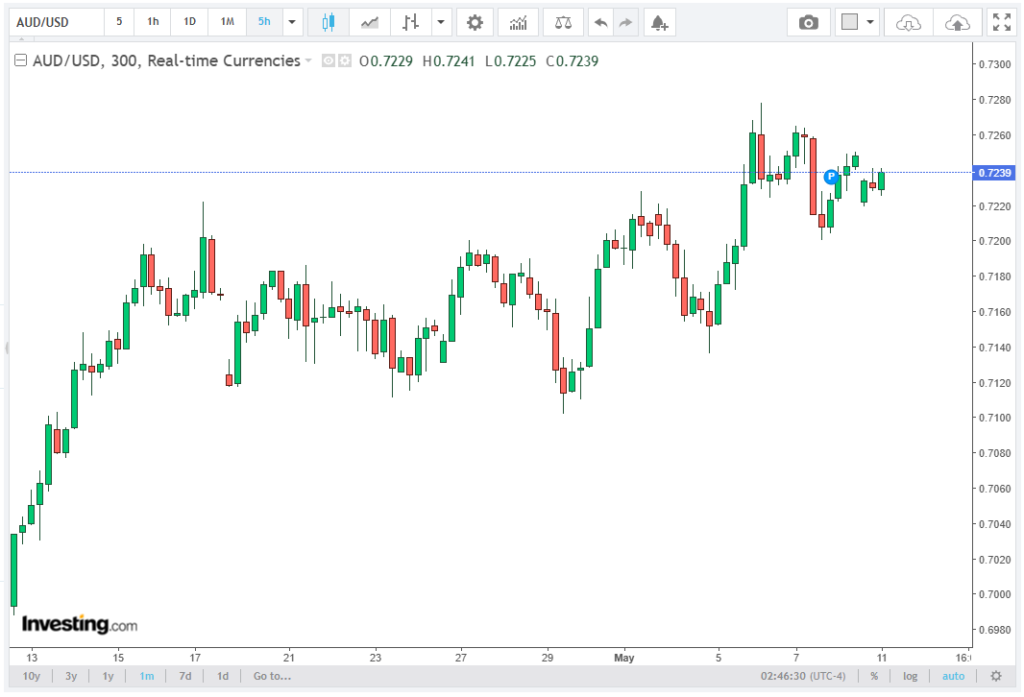
The strong employment data bolstered the US economic outlook, suggesting that the Federal Reserve may maintain a relatively hawkish stance in its monetary policy, keeping interest rates elevated for longer. This scenario tends to support the USD against risk-sensitive currencies like the AUD, maintaining downward pressure on the AUD/USD pair.
Market Risk Sentiment and Geopolitical Concerns
The combination of geopolitical tensions in the Middle East and robust US labor market data has created an environment of heightened market risk aversion. Investors are prioritizing safety over yield, leading to strong demand for the US Dollar.
This risk-off sentiment continues to weigh on the AUD, as Australia’s currency is heavily influenced by global trade dynamics, particularly with China, its largest trading partner. Any fluctuations in Chinese economic growth, whether through inflationary pressures or industrial production, can have material effects on the AUD/USD exchange rate.
Technical Outlook for AUD/USD
From a technical perspective, AUD/USD opened the week with a bearish gap, signaling initial downward momentum. The pair’s modest recovery to 0.7240 during Asian hours suggests short-term consolidation, but the dominance of USD strength implies that upside potential remains limited.
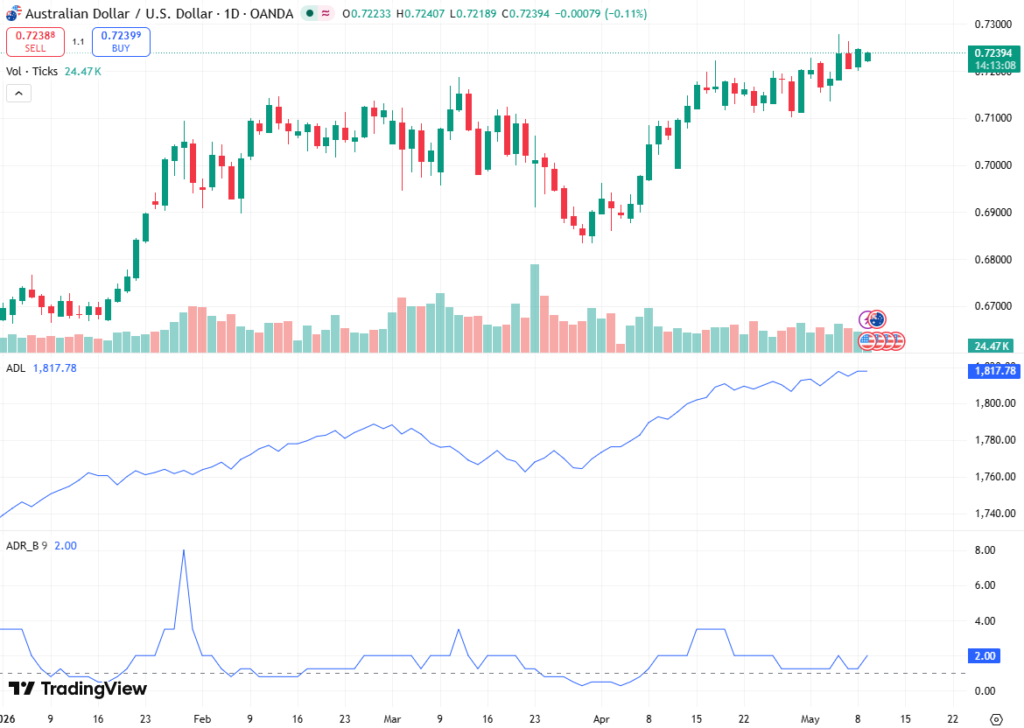
Traders are likely to monitor China’s upcoming economic releases, including industrial production, retail sales, and trade balance data, for signals of sustained inflation or growth momentum. In addition, US economic indicators, such as inflation data and Fed policy guidance, will continue to influence AUD/USD positioning.
Conclusion
In summary, the Australian Dollar remains under pressure due to a combination of strong US Dollar demand, market risk aversion, and geopolitical tensions. Despite China’s CPI and PPI readings exceeding expectations, the AUD has struggled to capitalize on positive economic signals.
Looking ahead, the AUD/USD pair will likely continue to be shaped by global risk sentiment, China’s economic performance, and US labor market dynamics. The intersection of inflation data, geopolitical events, and safe-haven flows creates a complex trading environment, making the AUD/USD highly sensitive to both regional and global developments.
Additionally, market participants are keeping a close eye on commodity prices, particularly iron ore and coal, which are major Australian exports to China. Any sustained price volatility in these commodities could further influence AUD sentiment, as stronger export revenues tend to support the Australian Dollar, while declines could exacerbate downward pressure on the currency.
Investors and currency traders should remain vigilant for new economic releases and policy statements from central banks, which could shift the balance of risk and determine the next direction for the AUD/USD pair.


