
The Swiss Franc (CHF) has weakened against the US Dollar (USD) amid fading optimism over a near-term US-Iran truce. The USD/CHF pair climbed to near 0.7785 during Monday’s Asian trading session, reflecting the US Dollar’s outperformance amid renewed risk-off sentiment as negotiations between Washington and Tehran stall. The brokers at Winseterra provide valuable insights into this topic in this article.
USD/CHF Holds Gains Amid Risk-Off Sentiment
At press time, the USD/CHF maintained its opening gains around 0.7785, mirroring the US Dollar Index (DXY), which tracks the Greenback’s value against six major currencies. The DXY traded 0.25% higher to near 98.10, while S&P 500 futures edged down 0.15% to 7,390, signaling cautious investor sentiment.
The Swiss Franc’s weakness underscores the USD’s relative strength, particularly as risk aversion resurfaces amid geopolitical tensions. Analysts note that the CHF, traditionally viewed as a safe-haven currency, is under pressure when market uncertainty is paired with strong US economic data, such as the April Nonfarm Payrolls (NFP) report.
Iran Rejects US Peace Proposal
Over the weekend, the US President described Iran’s response to the US peace proposal as “totally unacceptable.” Iranian state media reported that Tehran’s counterproposal demands recognition of Iranian authority near the Strait of Hormuz, compensation for war damages, the release of frozen Iranian assets, and the lifting of sanctions.
The Strait of Hormuz is a strategic chokepoint through which nearly 20% of global energy supply transits. As such, any geopolitical tension in the region directly affects energy markets and investor sentiment. Analysts at CNN and other media outlets have highlighted that the failure of negotiations has raised crude oil prices, prompting concerns about inflationary pressures and potential Federal Reserve (Fed) rate hikes later in the year.
Global Markets React to Geopolitical Risks
The fading prospects of a permanent US-Iran truce have contributed to heightened market volatility. The USD/CHF gains reflect a combination of risk-off behavior, strong US economic data, and geopolitical uncertainty.
Oil prices surged over the weekend as investors weighed the risk of a prolonged disruption in the Strait of Hormuz, where Iranian authorities could threaten maritime oil transport. This, coupled with a robust NFP report, strengthens expectations that the Federal Reserve may adopt a hawkish monetary stance.
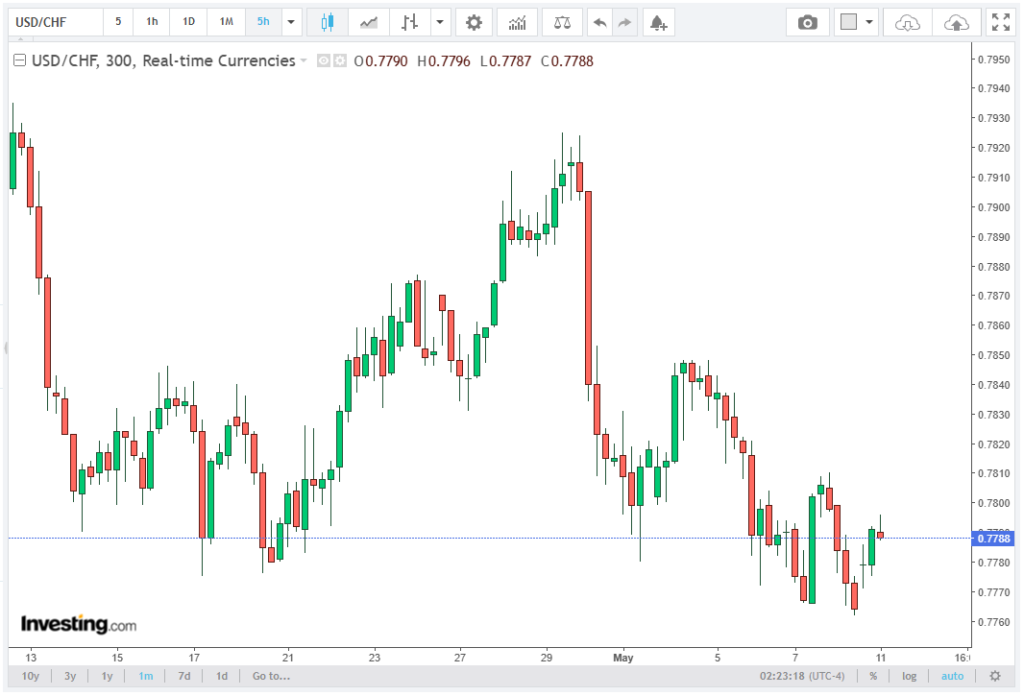
The Swiss Franc, despite its safe-haven status, is sensitive to USD strength. When US macroeconomic data exceeds expectations, the CHF often underperforms, particularly against the Greenback, which benefits from global capital flows toward perceived higher-yielding assets.
Investors Eye US-China Engagement
Market participants are now turning their attention to the US President’s visit to China, scheduled for May 13-15. Analysts anticipate that the US Administration will urge Beijing to leverage its influence over Tehran to achieve a comprehensive ceasefire and stabilize energy markets, particularly in light of Hormuz-related supply risks.
Experts at IG Markets suggest that any progress toward a diplomatic resolution could temper oil volatility and relieve USD strength, which might provide a reprieve for the Swiss Franc. Conversely, failure to secure Chinese cooperation may extend risk-off conditions, further supporting USD/CHF gains.
Technical Outlook for USD/CHF
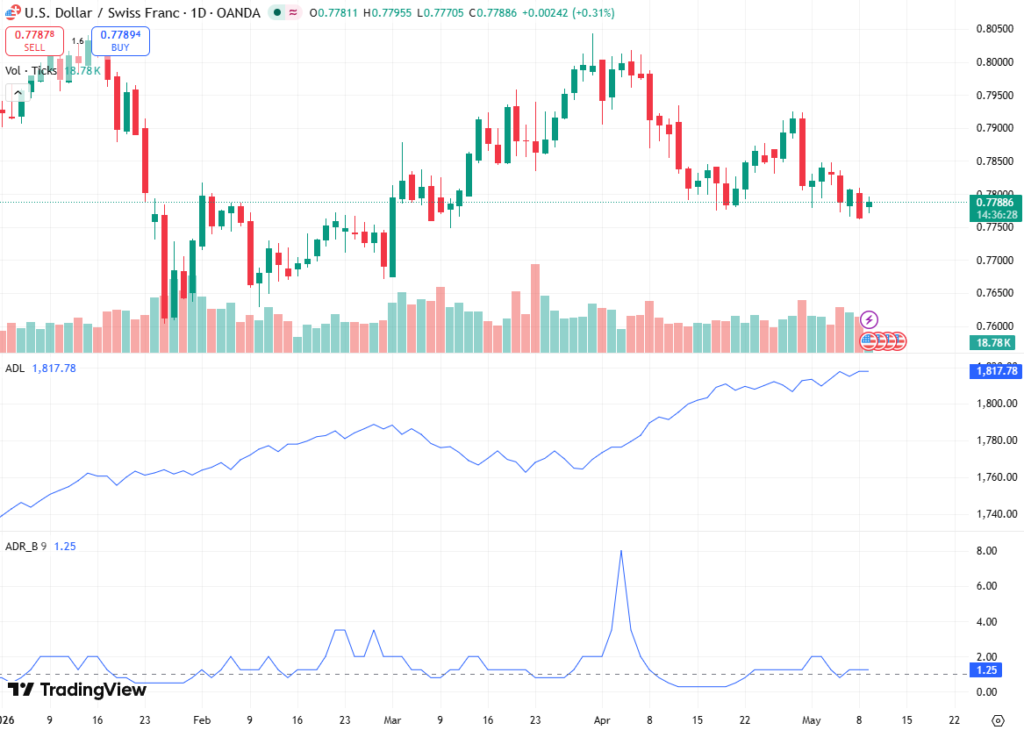
From a technical perspective, the USD/CHF pair is holding above 0.7780, suggesting upside momentum in the near term. Resistance levels are eyed near 0.7800, while support is likely around 0.7750. Traders monitoring the pair will focus on US economic releases, oil price movements, and geopolitical headlines, particularly Iranian-US negotiations and the US’s diplomatic efforts in China.
Analysts caution that CHF weakness may persist if risk-off sentiment continues to dominate and if the USD maintains broad strength across the DXY basket. Conversely, any unexpected diplomatic breakthroughs could trigger a retracement in USD/CHF, providing short-term relief for investors seeking safe-haven exposure.
Implications for Investors
For currency traders, the current USD/CHF dynamics highlight the intersection of geopolitical risk, economic fundamentals, and technical momentum. Investors are advised to monitor real-time developments regarding Iran’s stance, US foreign policy, and macro data, as these factors are likely to drive short-term market fluctuations.
Additionally, energy market volatility and Fed rate expectations remain key determinants of USD/CHF movement. Elevated oil prices could influence inflation expectations, which in turn may prompt market adjustments in interest rate forecasts, affecting currency valuations globally.
Conclusion
In summary, the Swiss Franc has weakened against the US Dollar as hopes of a near-term US-Iran truce fade. The USD/CHF pair, holding around 0.7785, reflects the Greenback’s resilience, fueled by geopolitical tensions, strong US economic data, and renewed risk-off sentiment.
Investors remain vigilant ahead of the US President’s visit to China (May 13-15), which could influence the trajectory of US-Iran relations, energy markets, and currency valuations. Meanwhile, the CHF, though traditionally a safe-haven asset, is vulnerable to broad USD strength and geopolitical uncertainty, making USD/CHF a focal point for traders navigating complex macro-financial landscapes.


