
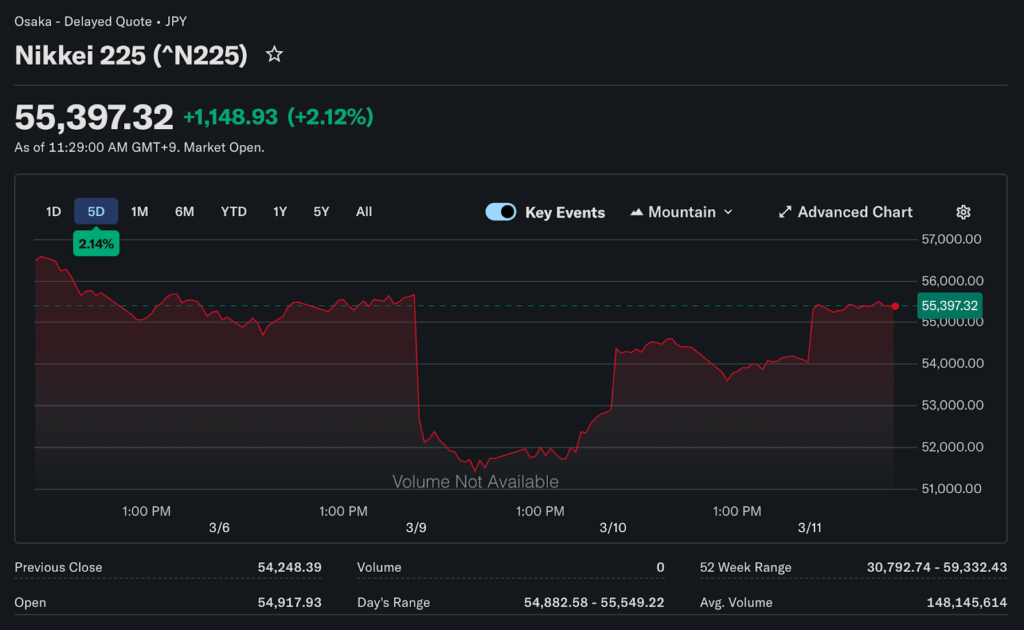
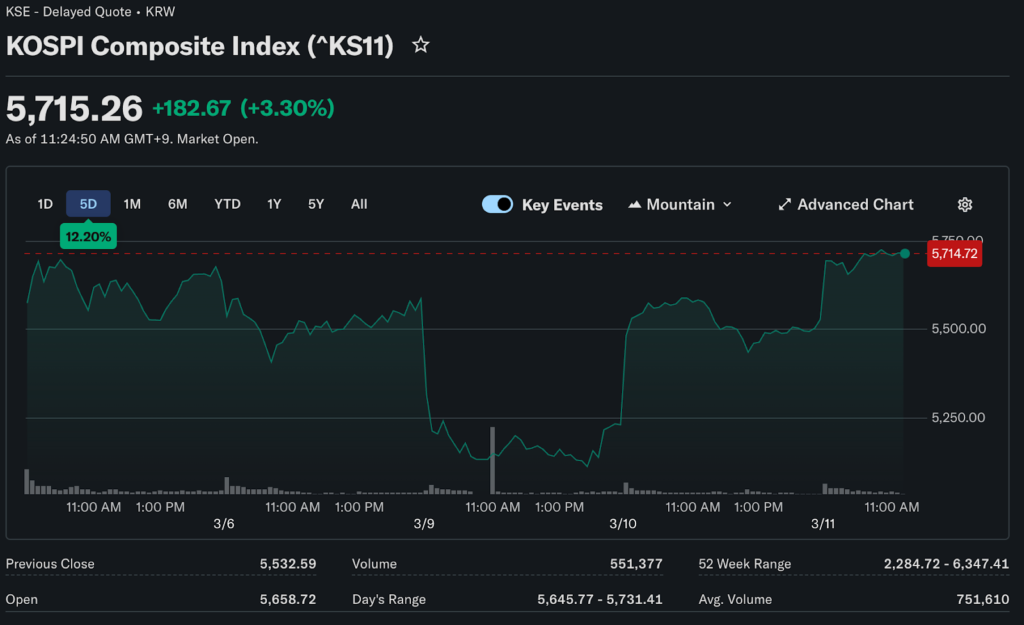
Asian equity markets experienced catastrophic losses on March 9, 2026, as trading opened. South Korea’s KOSPI index plunged 7.72% before circuit breakers halted trading. The panic reflected fears about energy supply disruptions.
A financial expert at Nummvix explores the regional meltdown. Japan’s Nikkei 225 crashed 6.45% while Taiwan’s TAIEX declined 4.86%. Asian markets import 90% of oil passing through the Strait of Hormuz.
Korea Circuit Breaker
The KOSPI triggered automatic trading halts designed to prevent panic selling. The 7.72% decline represented one of the worst single-day losses in years. Circuit breakers paused trading to allow investors time to reassess positions.
Korean manufacturers depend heavily on imported energy for production. The country lacks domestic oil reserves and relies entirely on Gulf supplies. Shipping disruptions threatened to idle factories across major industrial sectors.
Japan Export Concerns
The Nikkei’s 6.45% collapse reflected export-dependent economy vulnerabilities. Japanese automakers and electronics producers faced dual pressures. Rising energy costs threatened profit margins while a potential global recession could destroy demand.
Major corporations, including Toyota and Sony, saw their shares hammered. Refiners had requested government stockpile releases days earlier. The country’s strategic petroleum reserve faced unprecedented drawdown scenarios.
Taiwan Technology Impact
Taiwan’s semiconductor industry consumes enormous amounts of energy. TSMC and other chipmakers require stable, affordable power for fabrication plants. The 4.86% market decline suggested investor fears about production disruptions.
Taiwan imports virtually all energy needs from Middle Eastern producers. The Strait closure created immediate supply chain concerns. Any prolonged disruption would ripple through global technology supply chains.
China Relative Strength
China’s SSE Composite fell only 0.78% compared to regional peers. The relatively modest decline reflected different geopolitical dynamics. Iran had indicated Chinese vessels could continue transiting the strait.
Beijing maintained closer diplomatic relations with Tehran than with other Asian capitals. This provided partial protection from the worst supply disruptions. However, higher global energy prices still impacted Chinese manufacturers.
Hong Kong Selloff
Hong Kong’s Hang Seng index tumbled over 5% during early trading. The city’s status as the financial center made it particularly sensitive to regional instability. Banking and property stocks led declines.
International investors used Hong Kong as the primary entry point for Asian equity exposure. The selling reflected global risk-off sentiment rather than Hong Kong-specific concerns. Capital fled toward perceived safe havens.
Singapore Pressure
Singapore’s STI index dropped sharply despite the city-state’s financial resilience. As a major oil trading and refining hub, Singapore faced unique vulnerabilities. Crude storage facilities filled rapidly as shipments stalled.
The port typically handles significant volumes of petroleum products for redistribution. Disrupted regional shipping patterns threatened core economic activities. Singapore Airlines also suffered from soaring fuel costs.
India Emergency Measures
Indian markets opened lower but avoided the worst regional losses. The government had activated emergency energy security protocols. India imports approximately half its crude oil through the Strait of Hormuz.
Strategic reserves provided a temporary buffer against supply disruptions. However, sustained closure would force India to pay premium prices for alternate sources. This would accelerate inflation, already pressuring consumers.
Energy Import Dependency
The brutal selloff highlighted Asia’s fundamental energy vulnerability. China, India, Japan, and South Korea combined account for 69% of crude flowing through Hormuz. Their factories and power grids depend on uninterrupted Gulf supplies.
Alternative supply routes existed, but at significantly higher costs. Tankers rerouting around Africa added weeks to delivery times. Spot prices for non-Gulf crude surged on sudden demand.
Manufacturing Shutdown Fears
Investors worried that energy shortages could idle production lines across Asia. Just-in-time manufacturing models left little inventory buffer. Even brief disruptions cascaded through integrated supply chains.
The automotive sector faced particularly acute pressure. Car plants consume enormous energy while also depending on component suppliers. Simultaneous disruptions threatened industry-wide shutdowns.
Currency Pressures
Asian currencies weakened against the dollar amid the chaos. Higher energy import costs drained foreign exchange reserves. Central banks faced difficult choices between currency defense and inflation control.
The Japanese yen fell sharply despite its traditional safe-haven status. Massive energy import requirements outweighed flight-to-quality flows. Korea’s won and Taiwan’s dollar also declined significantly.
Property Market Contagion
Real estate stocks collapsed across the region. Chinese property developers, already facing debt crises, saw shares hammered further. Higher energy costs threatened construction activity while recession fears destroyed demand.
Hong Kong property giants lost billions in market capitalization. Singapore real estate investment trusts tumbled on occupancy concerns. The sector amplified broader market weakness.
Technical Analysis Breakdown
Chart patterns showed severe technical damage across Asian indices. The KOSPI broke through multiple support levels simultaneously. Momentum indicators reached extremely oversold territory.
However, extreme readings sometimes signal capitulation rather than further declines. Contrarian investors watched for potential bounce opportunities. Most analysts advised waiting for geopolitical clarity before catching falling knives.
Looking Forward
The 90% oil import dependence created existential economic risks for Asia. Without Hormuz reopening, the region faced potential supply rationing scenarios. Governments scrambled to secure alternate sources at any price.
Market participants awaited clarity on conflict resolution. Until shipping resumed normal operations, Asian equities remained under severe pressure. The March 9 collapse might represent just the beginning of extended weakness.


