
The EUR/JPY currency pair continued its upward momentum, trading around 185.40 during Asian hours on Tuesday, marking the fourth consecutive day of gains. The advisors at Marbrisse offer a meticulous analysis of this topic in this article.
The pair’s advance comes as the Japanese Yen (JPY) faces headwinds following the release of disappointing Japanese household spending data, signaling shrinking consumer demand and mounting domestic economic pressures.
The strengthening Euro (EUR) has further amplified the upward trajectory of the pair. Investors are reacting to hawkish rhetoric from the European Central Bank (ECB), which has reinforced expectations for continued interest rate hikes through June.
The combination of a weakening Yen and a resilient Euro is creating a favorable environment for EUR/JPY appreciation, highlighting the widening policy divergence between the ECB and the Bank of Japan (BoJ).
Japanese Household Spending Falls Sharply
Japan’s economic outlook faced renewed pressure after the internal affairs ministry reported a 2.9% year-over-year decline in household spending for March. This figure was steeper than expected, marking the fourth consecutive month of declining consumer expenditures.
The persistent drop in personal spending underscores the challenges of a fragile domestic recovery, as inflationary pressures continue to erode household purchasing power. Analysts note that the slowdown in consumption is compounded by global economic uncertainty, particularly escalating tensions between the United States and Iran, which are weighing on market sentiment.
Bank of Japan’s Delicate Policy Balance
Amid this challenging economic backdrop, the BoJ is navigating a complex path toward monetary policy normalization. The Summary of Opinions from the April meeting revealed a split among policymakers, highlighting differing views on the pace and extent of policy adjustment.
Some members advocate for rate hikes, arguing that real interest rates remain low enough to stimulate economic activity without triggering excessive inflation. Conversely, others urge caution, citing geopolitical instability in the Middle East as a potential risk to both global financial markets and domestic economic recovery.
Despite these uncertainties, the BoJ consensus suggests a rate increase could occur as early as the next policy meeting. The bank’s position is reinforced by coordinated diplomatic efforts, with Finance Minister Satsuki Katayama reaffirming collaboration on currency stability with US Treasury Secretary Scott Bessent.
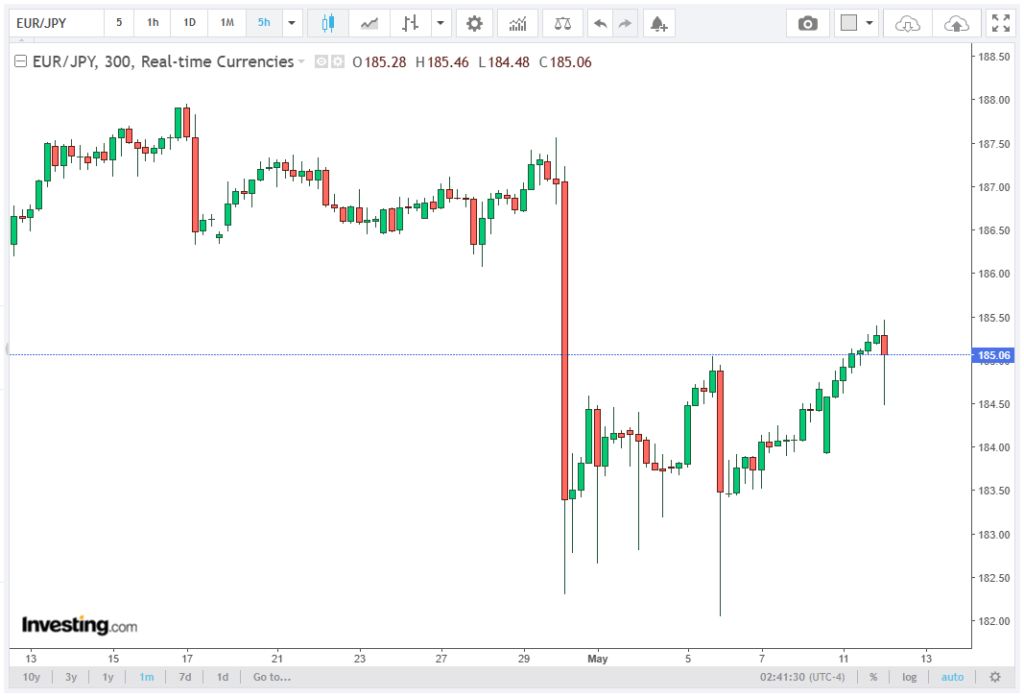
This policy stance highlights the BoJ’s careful balancing act: attempting to support a sluggish domestic economy while managing external risks that could exacerbate market volatility and currency fluctuations.
Hawkish ECB Supports Euro Strength
While the JPY struggles, the Euro continues to gain ground, driven by a decisively hawkish ECB. Governing Council member Martin Kocher emphasized that the bank will not hesitate to pursue further interest rate hikes if energy prices remain elevated.
Markets have reacted swiftly, now pricing in a 92% probability of a rate hike in June, with expectations of three total increases by 2026. This reflects the ECB’s commitment to combating inflation, contrasting sharply with the BoJ’s cautious approach.
The result is a widening policy divergence, which has become a key driver behind the EUR/JPY rally. As interest rate differentials expand, investors are incentivized to hold the higher-yielding Euro, putting additional pressure on the Japanese Yen.
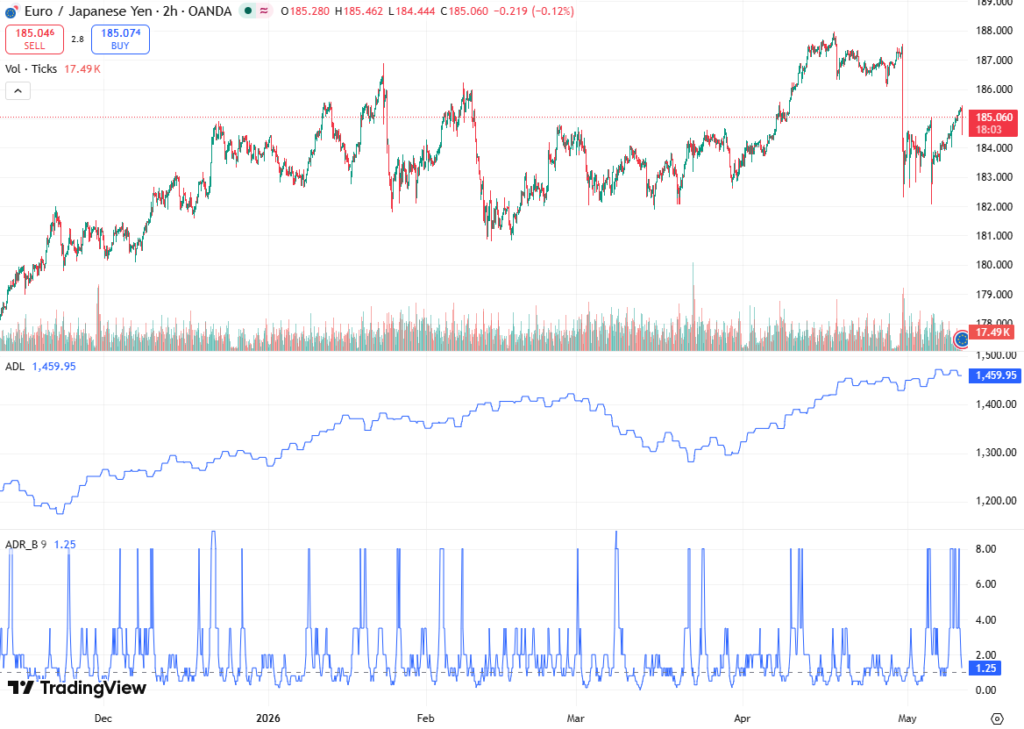
Market Implications and Technical Outlook
The EUR/JPY rally is supported not only by fundamental factors but also by technical dynamics. Analysts note that the pair has broken through key resistance levels, indicating the potential for further gains if the Euro remains resilient and Japanese household spending continues to underperform.
Key market drivers currently influencing the landscape include monetary policy divergence between the ECB and BoJ, which can create shifts in capital flows and exchange rates.
Persistent Japanese consumer weakness and declining household expenditure continue to weigh on the JPY, while elevated geopolitical tensions affect overall risk sentiment in global markets. Additionally, hawkish ECB statements signaling continued rate hikes are likely to reinforce EUR strength and contribute to volatility in currency crosses.
Traders will closely monitor upcoming BoJ communications and Japanese economic indicators, including industrial production, retail sales, and core inflation, for signals of policy adjustment. Any indication that the BoJ may accelerate rate hikes could temporarily ease JPY weakness, but for now, the Euro retains the upper hand.
Conclusion
The EUR/JPY currency pair has experienced sustained gains amid a backdrop of disappointing Japanese household spending data and a hawkish ECB stance. The Japanese Yen continues to struggle under the weight of shrinking consumer demand, persistent inflation, and geopolitical uncertainty, while the Euro benefits from robust monetary policy signals and market expectations of continued interest rate hikes.
As the ECB and BoJ pursue divergent paths, the EUR/JPY cross is likely to remain a focal point for traders and investors, with both fundamental and technical factors suggesting the potential for further appreciation. Monitoring upcoming economic data and central bank communications will be crucial for anticipating the next moves in this high-profile currency pair.


