
The EUR/USD pair experienced a modest decline during the early Asian session on Monday, slipping to around 1.1765 as investors weighed geopolitical developments against recent economic data. Rubizio’s brokers explore the key points of this topic in detail in the article below.
The Euro (EUR) weakened against the US Dollar (USD) amid heightened market caution following the rejection of peace proposals between the United States and Iran, underscoring the ongoing uncertainty in the Middle East.
Geopolitical Tensions Weigh on the Euro
The latest news from Washington and Tehran fueled the Greenback’s safe-haven appeal. Iranian officials emphasized the need to address the conflict across multiple fronts, including Lebanon, and stressed the safety of shipping through the Strait of Hormuz, a critical artery for global energy trade. However, no clear timeline was provided for reopening this strategic waterway, leaving traders cautious.
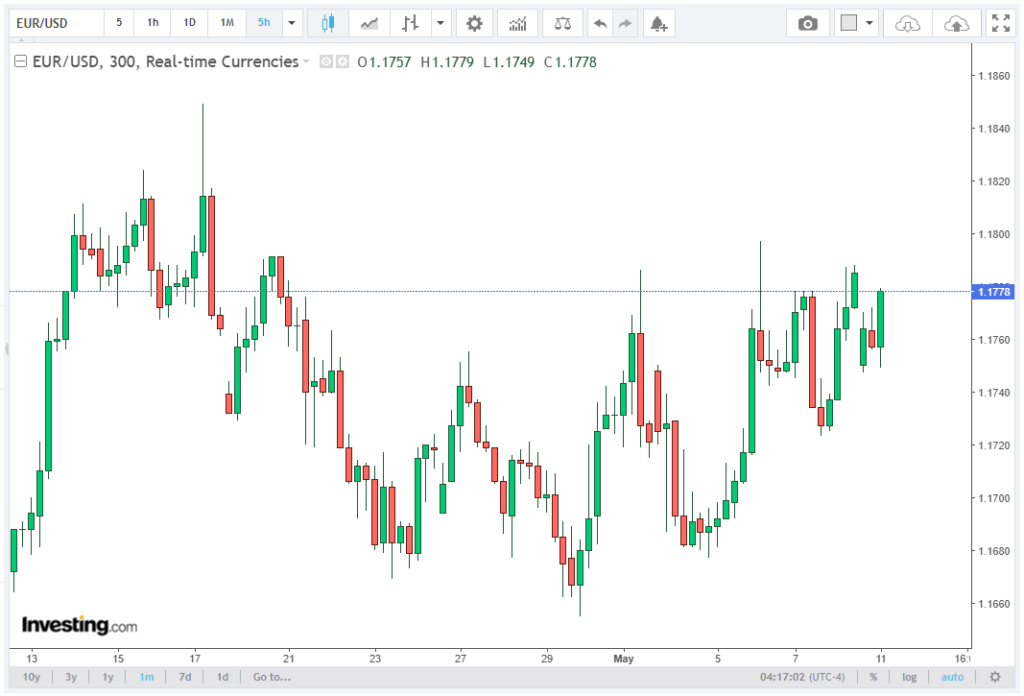
The standoff has reinforced the US Dollar’s safe-haven status, as global markets often turn to the USD amid geopolitical risk. Consequently, the EUR/USD pair lost momentum, testing support levels near 1.1765, as investors reassessed the potential for escalating tensions and their impact on market liquidity.
US Economic Data Provides Mixed Signals
Domestic US economic indicators added further complexity to the trading environment. On Friday, the Bureau of Labor Statistics (BLS) released the Nonfarm Payrolls (NFP) report for April, showing a gain of 115K jobs, a slowdown from March’s 185K but exceeding the forecast of 62K. Meanwhile, the Unemployment Rate remained stable at 4.3%, in line with market expectations.
These figures suggest that while US labor market growth is decelerating, it remains robust enough to support the Federal Reserve’s monetary policy stance. A resilient employment sector tends to reinforce the USD, placing additional near-term pressure on the Euro against the greenback.
ECB’s Hawkish Tone Supports Euro Outlook
Across the Atlantic, the European Central Bank (ECB) continues to maintain a hawkish stance on monetary policy, which may provide a partial cushion to the Euro despite the downward pressure from geopolitical risks. Market participants are increasingly pricing in a 92% probability of a 25 basis point (bps) rate hike at the ECB’s June meeting, with expectations of three total hikes by the end of 2026, according to Reuters.
The anticipation of an early ECB rate increase has the potential to bolster the EUR/USD pair, limiting further losses. Higher interest rates in the Eurozone enhance the yield advantage of the Euro relative to other currencies, making it more attractive to currency traders and institutional investors.
Technical Levels and Market Sentiment
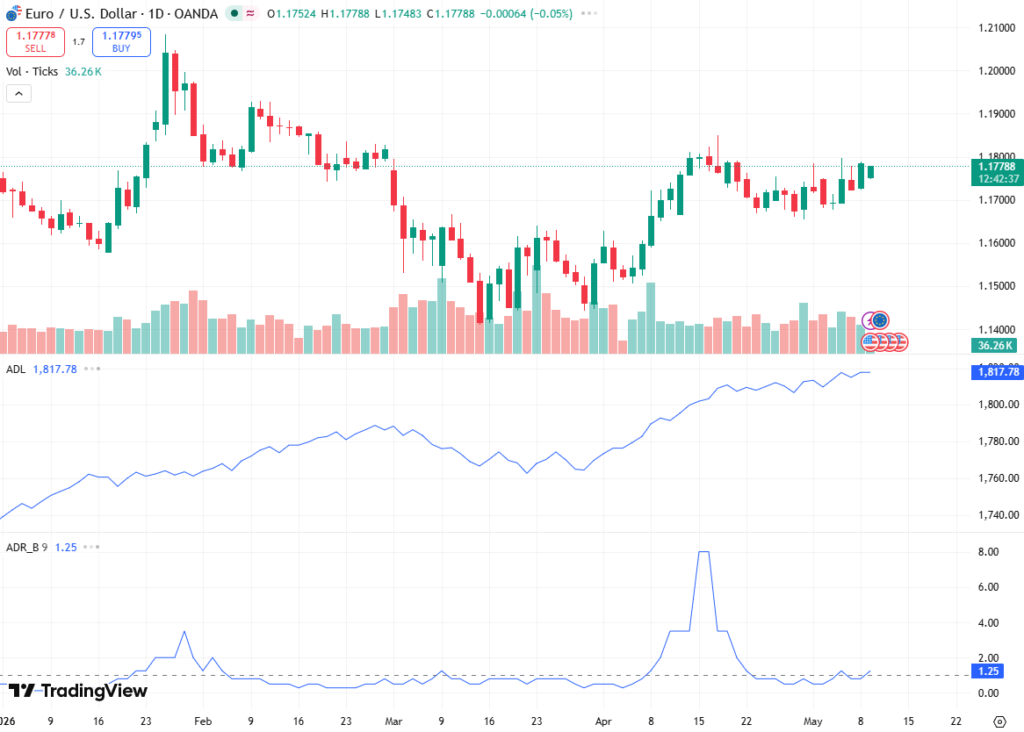
From a technical perspective, the EUR/USD faces immediate support at 1.1750, a level tested in early Asian trading. On the upside, resistance is seen near 1.1800, where sellers may re-enter the market if the Euro attempts a retracement. Short-term momentum indicators suggest that the pair is consolidating, reflecting investor uncertainty amid geopolitical risk and mixed economic signals.
The market remains sensitive to both macro data releases and geopolitical developments, meaning volatility could intensify in the coming sessions. Traders will be closely watching any updates regarding US-Iran negotiations, as well as incoming economic indicators from both the United States and the Eurozone, to gauge the future trajectory of the pair.
Implications for Investors and Traders
For forex traders, the current environment underscores the importance of risk management and careful attention to market news flows. The combination of geopolitical tensions, resilient US labor market data, and anticipated ECB rate hikes creates a dynamic trading landscape where short-term swings may be pronounced.
Investors seeking Euro exposure may find some reassurance in the ECB’s hawkish stance, but must remain vigilant regarding external shocks from the Middle East. Conversely, traders holding USD positions may benefit from the greenback’s safe-haven appeal, particularly in periods of heightened geopolitical uncertainty.
Outlook for EUR/USD
In the near term, the EUR/USD is likely to remain range-bound, with support near 1.1750 and resistance around 1.1800. Sustained geopolitical tension or an unexpected US policy announcement could push the pair lower, while strong economic releases or confirmed ECB rate hikes may provide a floor for Euro losses.
In summary, the EUR/USD continues to navigate a complex environment. The rejection of the latest Iran peace offer by the US Administration has reinforced the US Dollar’s safe-haven appeal, while resilient US labor market data supports the greenback in the near term.
Market participants will continue to monitor both macroeconomic data and geopolitical developments, as these factors collectively shape currency volatility. The interplay between US Dollar strength and Euro resilience in the face of anticipated rate hikes will remain central to the pair’s performance in the coming weeks.


