
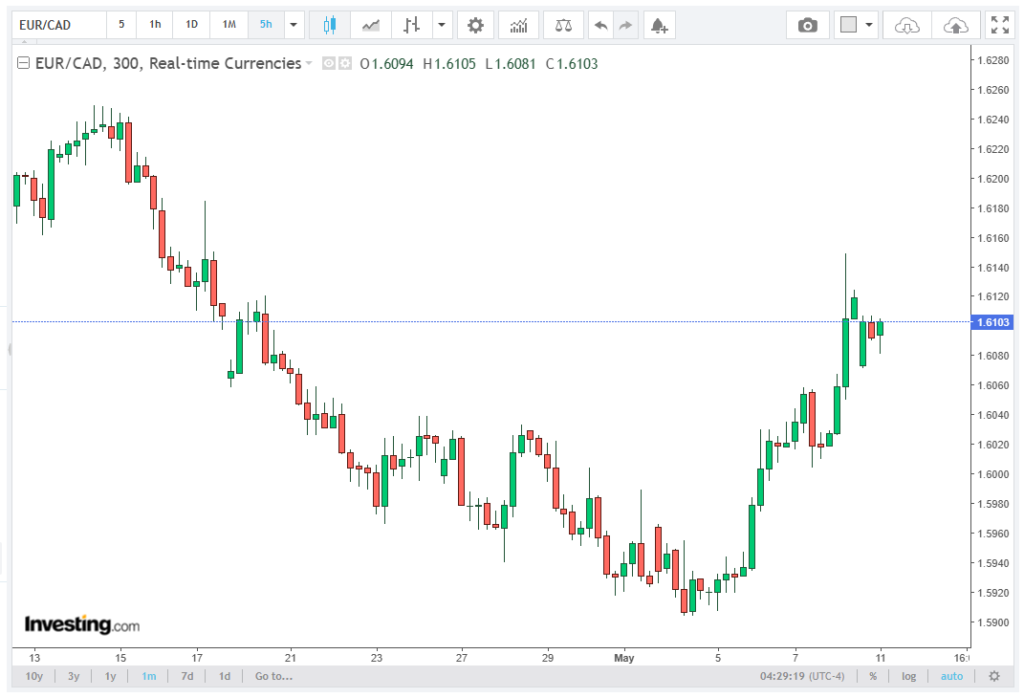
The EUR/CAD currency pair has come under downward pressure as the commodity-linked Canadian Dollar (CAD) strengthens amid rising oil prices. After three consecutive days of gains, the pair edged lower, trading around 1.6090 during Asian trading hours on Monday. This article features a comprehensive overview of the topic, provided by the brokers at Rubizio.
The current weakness in the Euro reflects both external pressures and market anticipation of monetary policy shifts, illustrating the delicate balance between commodity-driven currencies and central bank interventions in shaping global forex trends.
Canadian Dollar Strengthens on Rising Oil Prices
The Canadian Dollar is highly sensitive to crude oil prices due to Canada’s status as the largest crude exporter to the United States (US). This correlation means that when oil prices rise, the CAD often strengthens, attracting foreign investment and improving Canada’s trade balance.
West Texas Intermediate (WTI) crude has surged toward $95.70 per barrel, driven by renewed geopolitical tensions in the Middle East.
The Strait of Hormuz, a crucial chokepoint for global oil shipments, remains effectively closed amid escalating tensions. This disruption in supply chains has driven energy prices higher, creating a direct tailwind for the Canadian Dollar while putting pressure on the Euro. The EUR/CAD cross has thus struggled to maintain its recent gains, as the CAD’s commodity sensitivity outpaces the Euro’s policy-driven support mechanisms.
Geopolitical Developments Amplify Market Volatility
Geopolitical risks are playing an outsized role in the EUR/CAD movement. Investors are closely watching Beijing, where the US President is scheduled to meet Chinese President Xi Jinping. The discussions are expected to cover the Iranian conflict, global trade negotiations, and broader energy security issues.
Historically, geopolitical shocks trigger rapid movements in commodity-linked currencies, particularly those of energy-exporting nations. Rising tensions in the Middle East often push oil prices higher, indirectly strengthening the CAD through improved export revenue expectations. Conversely, the Euro, lacking a direct commodity correlation, becomes more vulnerable in such a context, especially amid global risk-off sentiment.
Market participants are also factoring in the potential for supply chain disruptions and energy shortages in Europe, which could further depress the Euro relative to the Canadian Dollar. These considerations highlight the intertwined nature of currency markets, energy commodities, and geopolitical dynamics.
Euro May Stabilize on Hawkish ECB Outlook
Despite near-term pressures, the Euro (EUR) could find support as investors anticipate a hawkish European Central Bank (ECB) stance. Analysts forecast a 25-basis-point interest rate hike in June, with a total of three hikes expected by the end of 2026. This tightening trajectory could strengthen the Euro by attracting yield-seeking investors and counteracting commodity-driven depreciation pressures.
The ECB’s forward guidance is particularly relevant in shaping market expectations. A hawkish tone, indicating further monetary tightening, can enhance investor confidence in the Euro, even amid geopolitical and energy-related headwinds. If realized, this could provide a floor for the EUR/CAD, limiting the downside and potentially offering trading opportunities for short-term speculators.
Technical Analysis of EUR/CAD
From a technical perspective, EUR/CAD is hovering near 1.6090, testing key support levels. A sustained break below this threshold could expose the pair to further declines, possibly targeting 1.6000 or lower, particularly if oil prices remain elevated and CAD strength persists. Conversely, if the ECB signals firm rate hikes, the Euro could stage a technical rebound, reversing some of the losses experienced over the past sessions.
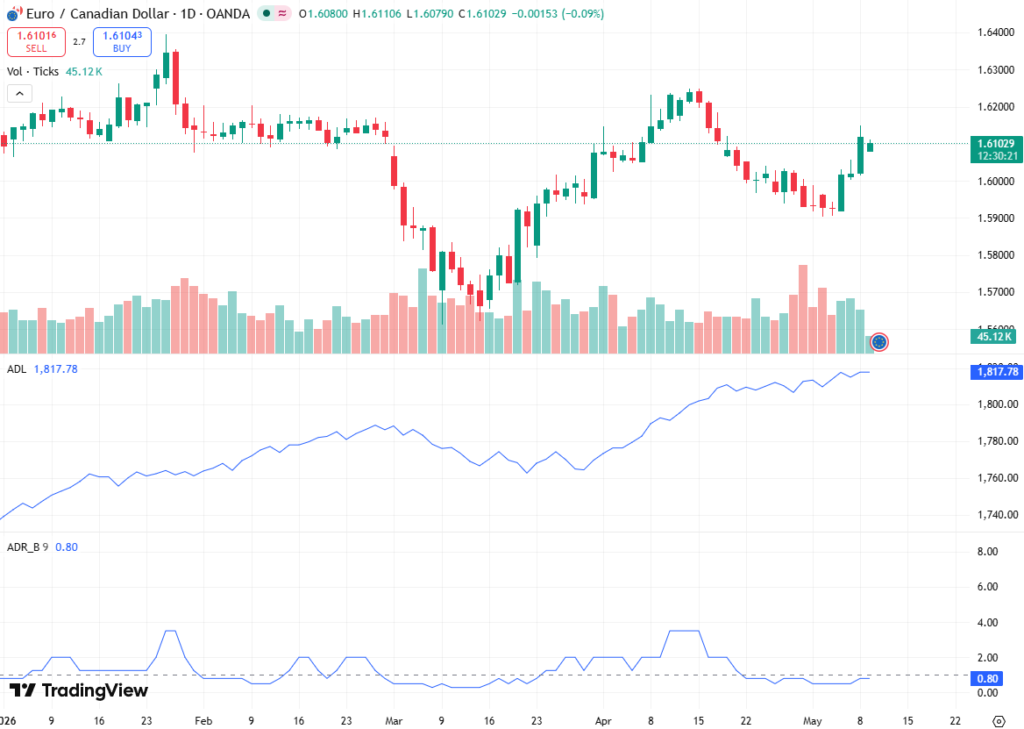
Short-term traders should watch for volatility spikes during Asian and European trading hours, as liquidity conditions can amplify moves in the EUR/CAD. Indicators such as moving averages, Relative Strength Index (RSI), and trendline support levels are essential tools for identifying entry and exit points in the current commodity-sensitive environment.
Broader Market Implications
The EUR/CAD currency dynamics offer insight into the broader interplay between commodity markets, geopolitical risk, and central bank policy. Rising oil prices not only strengthen the CAD but also influence global inflation expectations, which in turn affect monetary policy decisions across major economies.
For investors, the current environment emphasizes the importance of hedging currency exposure, particularly when commodity-linked currencies face geopolitical shocks. Meanwhile, Eurozone policymakers are likely to monitor energy price pressures closely, as sustained commodity inflation could influence the pace and magnitude of future ECB interventions.
Conclusion
The EUR/CAD cross is navigating a complex mix of commodity-driven pressures and policy expectations. Rising oil prices, fueled by Middle East tensions and US-Iran geopolitical developments, have strengthened the Canadian Dollar, pushing the Euro lower. However, the potential hawkish shift by the European Central Bank, with interest rate hikes on the horizon, offers a stabilizing force.
Traders and investors alike should monitor oil prices, ECB guidance, and geopolitical developments closely, as these will remain pivotal in determining the cross’s trajectory over the coming months.


