
Asian equity markets moved broadly higher as investor sentiment strengthened following political developments in Japan and resilient global economic indicators. Market analysts highlight that domestic policy stability and sustained corporate reform expectations are emerging as key drivers of regional equity performance, according to investment researchers at Yureplex.
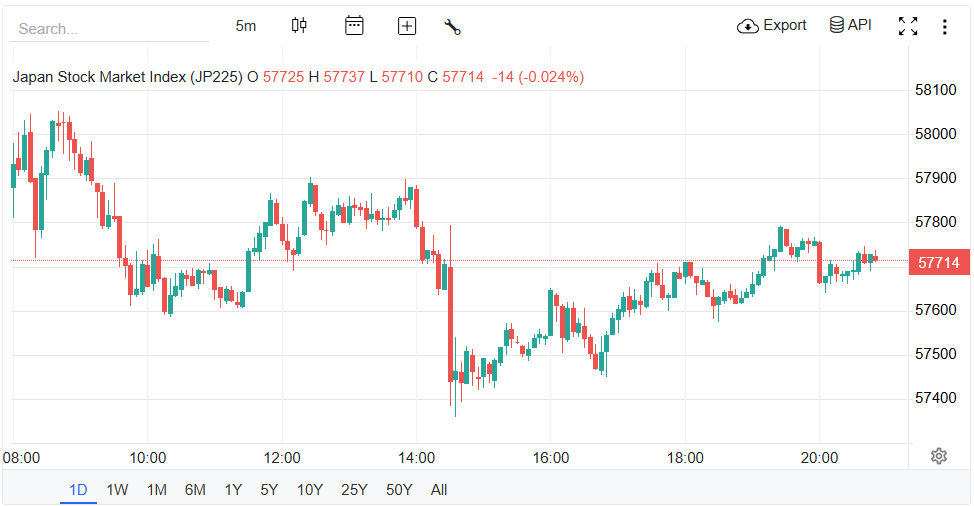
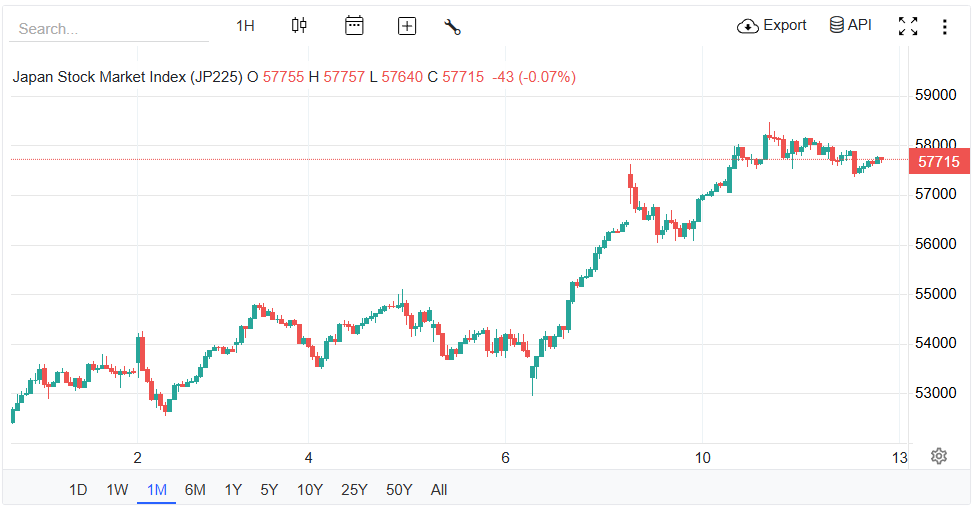
Japan’s benchmark Nikkei 225 reached a historic milestone, climbing above 58,000 points for the first time ever before moderating slightly later in the session. The index ultimately settled near 57,640, reflecting continued strong investor demand despite minor profit-taking.
The broader Topix index also advanced, gaining approximately 0.7%, signaling widespread participation across sectors rather than isolated gains concentrated in a few large-cap companies.
Political Stability Drives Investor Confidence
The latest rally has been strongly linked to renewed political certainty following Japan’s recent election results. Market participants cite growing optimism surrounding the government’s ability to implement long-term economic reforms, fiscal stimulus measures, and corporate competitiveness policies.
Analysts note that the ruling administration’s decisive electoral victory provides an unusually strong multi-year mandate, increasing confidence that structural reforms aimed at boosting productivity, supporting innovation, and strengthening domestic demand will proceed without significant political resistance.
This political clarity has encouraged both domestic and international investors to increase equity exposure, particularly in sectors expected to benefit from industrial modernization, technological investment, and export competitiveness.
Currency Risks Remain A Key Market Variable
Despite the strong equity performance, analysts caution that currency dynamics remain an important risk factor. Market observers warn that potential intervention could occur if the Japanese yen weakens toward 160 against the U.S. dollar, a level viewed as potentially destabilizing for financial markets.
A weaker currency can benefit exporters by improving overseas earnings competitiveness. However, excessive depreciation may increase import costs, fuel inflationary pressures, and trigger policy responses that introduce volatility into both currency and equity markets.
As a result, investors continue closely monitoring exchange rate trends as a critical variable influencing the sustainability of the current market rally.
Regional Markets Show Mixed Performance
Across the broader Asia-Pacific region, markets demonstrated a generally positive trend, though performance varied by country.
South Korea’s Kospi index surged more than 3%, reaching a record high above 5,520 points, driven by strong gains in technology and manufacturing companies. The country’s small-cap Kosdaq index also rose approximately 1%, reflecting improved investor appetite for growth-oriented equities.
Australia’s S&P/ASX 200 posted modest gains of around 0.3%, supported by strength in resource and financial stocks, while Hong Kong’s index declined roughly 0.9%, weighed down by continued uncertainty surrounding China’s economic recovery.
China’s CSI 300 index recorded a slight increase of approximately 0.1%, indicating cautious investor sentiment amid mixed economic signals.
U.S. Economic Data Influences Global Sentiment
Market performance across Asia was also shaped by developments in the United States, particularly stronger-than-expected labor market data.
The U.S. nonfarm payrolls report showed job growth of approximately 130,000 positions, significantly exceeding analyst forecasts of around 55,000. The previous month’s employment figures were also revised lower, highlighting ongoing volatility in labor market trends.
This stronger labor data has reduced expectations that the Federal Reserve will implement near-term interest rate cuts, as sustained employment strength suggests continued economic resilience and persistent inflationary pressures.
U.S. Equity Markets Reflect Policy Uncertainty
After the labor market report was published, U.S. equities moved slightly lower as investors adjusted their expectations. The Dow Jones Industrial Average slipped around 0.1%, while the S&P 500 traded mostly flat. Meanwhile, the Nasdaq Composite edged down, driven by renewed concerns over how higher interest rate conditions could pressure technology stock valuations.
These developments underscore the interconnected nature of global financial markets, where changes in U.S. economic conditions frequently influence capital flows, currency movements, and investor sentiment across Asia and Europe.
Structural Drivers Supporting Japan’s Market Momentum
Corporate governance reforms, increased shareholder return policies, and stronger balance sheet discipline have contributed to improved investor confidence in Japanese companies. Additionally, ongoing modernization initiatives and technology adoption are enhancing productivity across key industries.
Institutional investors have also increased allocations to Japanese equities due to relatively attractive valuations compared to other developed markets, particularly given strong earnings growth potential and improving corporate profitability.
Outlook For Asian Equity Markets
Looking ahead, market participants expect regional performance to remain influenced by a combination of political stability, monetary policy developments, currency movements, and global economic data trends.
Japan’s market outlook appears particularly tied to continued progress in economic reforms, fiscal policy implementation, and corporate competitiveness initiatives. Meanwhile, broader regional markets are likely to remain sensitive to interest rate expectations, global trade dynamics, and macroeconomic growth signals.
Overall, recent market movements suggest that investors are increasingly prioritizing policy clarity, economic resilience, and structural growth opportunities when evaluating equity exposure across Asia-Pacific markets.


