
Japanese equity markets faced heavy selling pressure at the start of the week as rising energy prices and geopolitical uncertainty triggered a sharp reversal in investor sentiment. The sudden surge in oil prices and growing concerns about disruptions in the Middle East energy supply chain have significantly weighed on Japan’s stock market outlook.
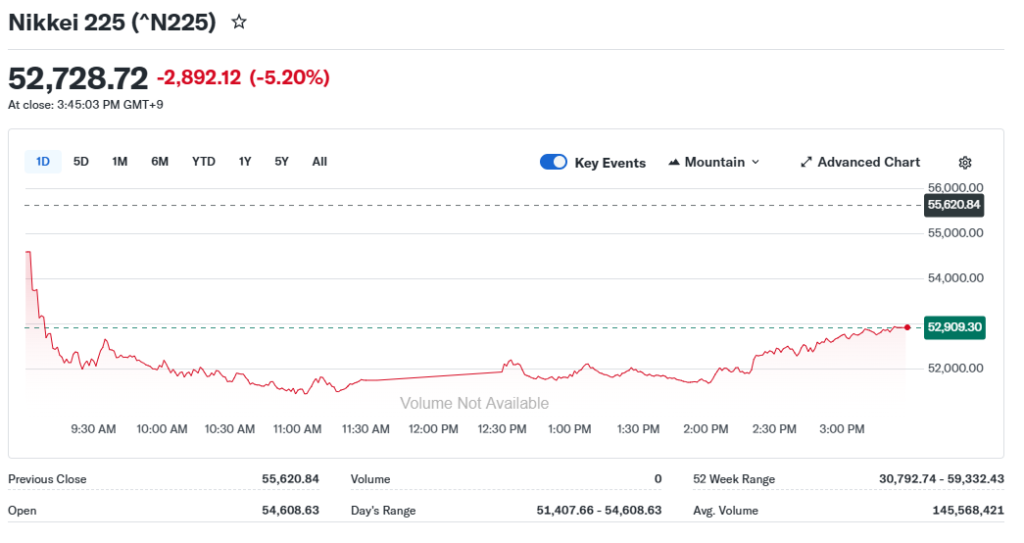
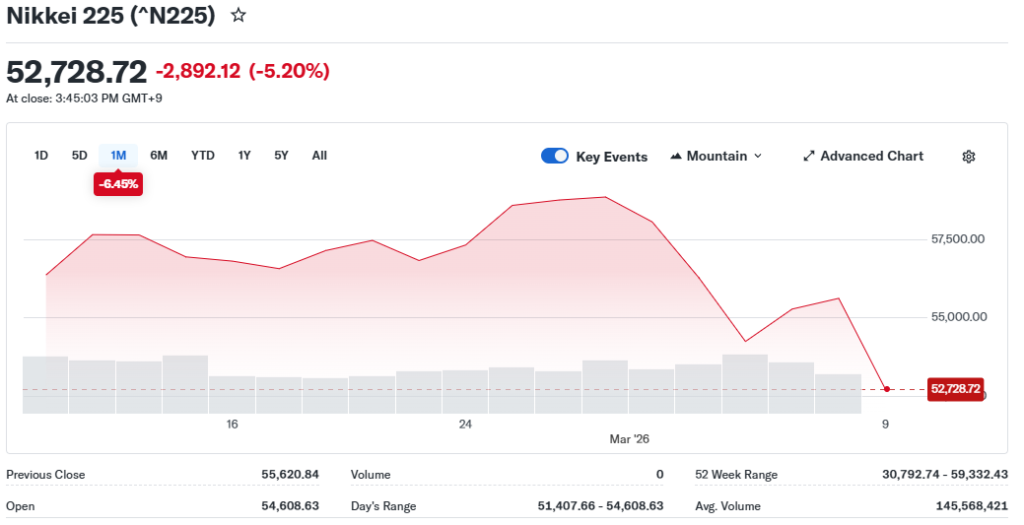
Market analysts at Rubizio noted that the shift in sentiment reflects how sensitive Japan’s export-driven equity market remains to global energy shocks and geopolitical risks. The benchmark Nikkei 225 index dropped 5.2 percent, closing at 52,728.72, marking its steepest single-day decline in several months. The fall pushed the index more than 10 percent below its late-February peak, officially placing the Japanese market in technical correction territory.
Japan’s broader Topix index also declined 3.8 percent, ending the session at 3,575.84, reflecting widespread selling across multiple sectors. Technology companies and financial institutions were among the hardest hit, with major firms including SoftBank Group and semiconductor testing equipment manufacturer Advantest losing more than 9 percent during the session.
Oil Price Surge Sparks Global Market Concerns
The sharp selloff in Japanese equities coincided with a rapid rise in global energy prices. Crude oil prices recently surged above $100 per barrel, fueled by escalating geopolitical tensions and production cuts among several major energy producers.
Higher oil prices tend to create significant economic pressure for energy-importing countries, and Japan remains particularly vulnerable due to its dependence on foreign energy supplies. Analysts estimate that roughly 90 percent of Japan’s oil imports originate from the Middle East, making the country highly exposed to supply disruptions and price volatility.
The spike in energy costs has raised concerns about inflationary pressures, corporate profit margins, and overall economic growth.
Bond Markets and Currency Movements Add to Volatility
The selloff was not limited to equities. Japan’s government bond market also experienced pressure as global investors reduced exposure to fixed-income assets amid rising inflation expectations.
Yields on longer-term Japanese government bonds climbed noticeably, with 30-year and 40-year bond yields rising roughly 11 basis points at one stage during the session. Rising yields typically signal falling bond prices and reflect changing expectations about future interest rates.
Currency markets also reflected growing uncertainty. The Japanese yen weakened against the US dollar, trading near its lowest level since January, as investors sought the relative safety of the US currency during the period of market stress.
Currency weakness can sometimes support export-driven economies like Japan. However, when driven by rising energy prices, it can also increase import costs and place additional pressure on domestic businesses.
Investor Sentiment Turns Cautious
Market turbulence intensified after oil prices surged following ongoing conflict in the Middle East. The situation has raised fears of potential supply disruptions in key global energy shipping routes.
Later in the trading session, Japanese equities managed to recover slightly after reports suggested that Group of Seven nations may consider a coordinated release of strategic oil reserves to help stabilize global energy markets.
Although such measures could provide short-term relief, many analysts believe the underlying supply concerns will persist unless the geopolitical situation improves.
Market volatility indicators also reflected rising uncertainty. The Nikkei’s one-year implied volatility index climbed to its highest level since the pandemic, highlighting growing investor anxiety about the outlook for Japanese stocks.
Strong Start to 2026 Faces New Challenges
The recent selloff is particularly notable given the strong performance of Japanese equities earlier in the year. Before the latest geopolitical tensions emerged, the Nikkei had been outperforming several major global stock indexes throughout early 2026.
The rally had been supported by economic stimulus policies and investor optimism surrounding domestic economic reforms. However, the sudden surge in oil prices has forced many investors to reassess their positions.
Portfolio managers note that many global funds had accumulated significant exposure to Japanese equities during the rally. As market conditions deteriorated, these high-performing positions became prime candidates for short-term profit-taking.
This dynamic can accelerate market declines as investors quickly unwind profitable trades to raise liquidity.
Energy Markets Keep Oil at the Center of Global Risk
Looking ahead, analysts believe the trajectory of oil prices will remain a major factor influencing Japanese equities. If crude prices remain above $100 per barrel, pressure on energy-importing economies like Japan could intensify.
Higher energy costs could affect consumer spending, industrial production, and corporate profitability across multiple sectors.
Global investors are also watching whether energy price shocks begin spreading to other major equity markets. If oil prices remain elevated for an extended period, the ripple effects could extend across global financial markets.
For now, Japan’s stock market faces a challenging environment shaped by geopolitical uncertainty, rising energy prices, and shifting global investment flows. Analysts expect volatility to remain elevated as investors continue monitoring developments in the Middle East and global energy supply routes.


