
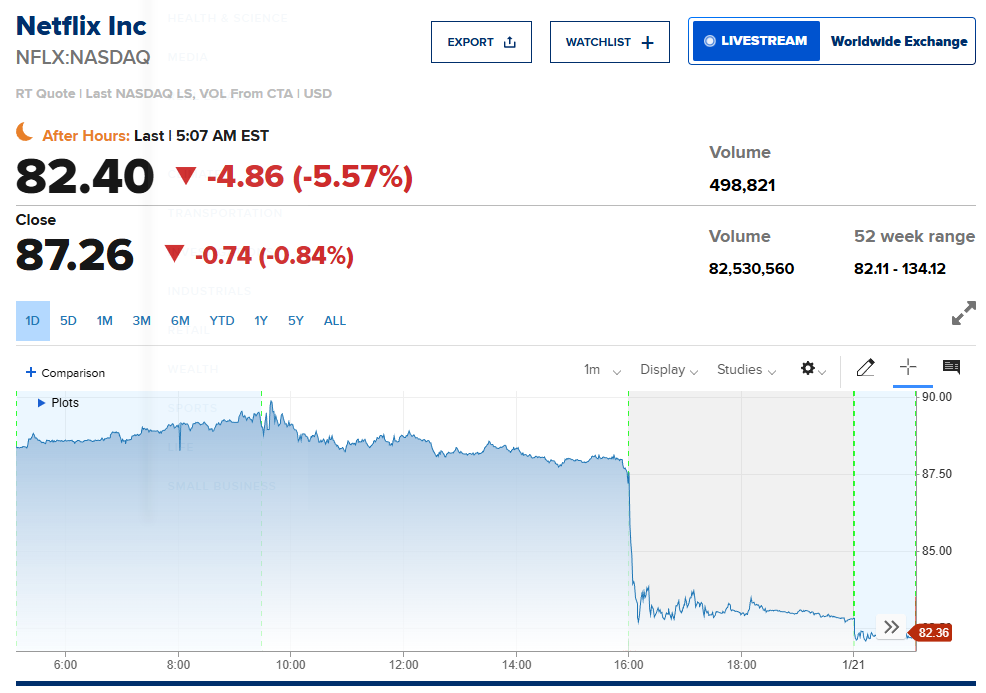
Netflix shares moved lower in post-earnings trading after the company reported fourth-quarter results that exceeded market expectations but signaled a more cautious capital strategy for the year ahead. Investors appeared to focus less on the earnings beat and more on the company’s decision to pause share repurchases while accelerating content investment amid a pending acquisition.
The market reaction reflects growing sensitivity to capital allocation choices rather than headline profitability alone. While revenue and earnings topped forecasts, uncertainty surrounding acquisition execution and rising content costs weighed on sentiment, equity strategists from Altiryus note.
Netflix reported quarterly revenue of $12.05 billion, surpassing consensus estimates of $11.96 billion and marking a sharp increase from $10.25 billion in the same period a year earlier. Earnings per share came in at $0.56, narrowly above expectations of $0.55, reinforcing the company’s ability to maintain margin discipline despite ongoing investment.
Subscriber Scale And Annual Performance Remain Strong
The company disclosed that its global membership base has grown beyond 325 million subscribers, underscoring continued dominance in the global streaming market. Full-year revenue reached $45.2 billion, modestly above expectations and representing 16% year-over-year growth.
Looking ahead, Netflix projected 2026 revenue between $50.7 billion and $51.7 billion, implying 12% to 14% growth. While still robust, the guidance points to a gradual normalization of growth as the company operates at greater scale.
For the first quarter, Netflix forecast revenue of $12.16 billion, reflecting 15.3% growth, alongside adjusted earnings of $0.76 per share. Although these figures exceeded analyst expectations, investors appeared cautious about the sustainability of growth given rising expenses.
Content Spending Set To Accelerate
Management indicated that content investment will increase meaningfully in the year ahead. Engagement during the second half of the year was supported by a 9% increase in viewing of original programming, offset by a decline in non-branded and licensed content.
The reduction in licensed content was attributed to a normalization period following an earlier surge in availability tied to industry-wide production disruptions. As a result, Netflix plans to lean more heavily into internally produced content, which typically carries higher upfront costs but stronger long-term value.
Sector observers note that this shift places renewed emphasis on execution. Original content offers greater control and differentiation, but also raises the stakes around cost management and audience engagement.
Share Buybacks Paused Amid Acquisition Focus
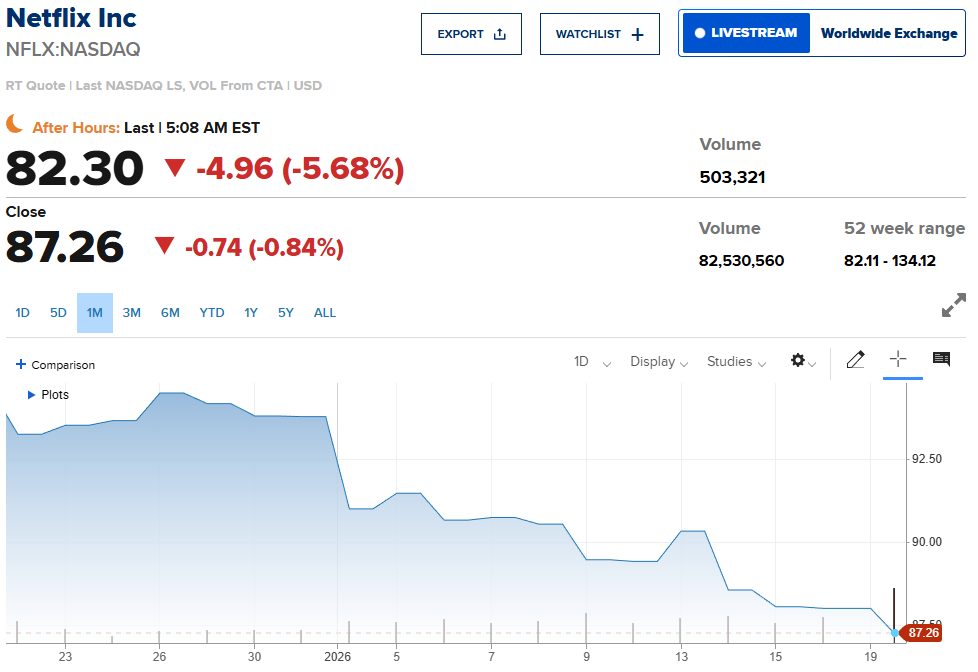
Despite the earnings beat, Netflix shares declined more than 5% in early trading, reflecting concerns tied to its acquisition strategy. The company confirmed it would temporarily pause its share repurchase program while pursuing the purchase of Warner Bros. Discovery’s film and streaming assets.
Netflix revised its bid to an all-cash offer valuing the transaction at approximately $72 billion, or $27.75 per share. The move positions the company against a competing bid with a higher headline valuation but including assets outside core streaming and film operations.
Netflix’s narrower focus suggests a strategic preference for assets that directly strengthen its content library and distribution scale, rather than expanding into adjacent segments.
Market Weighs Strategic Trade-Offs
Investors appear divided over whether the acquisition represents a transformative opportunity or an added layer of execution risk. Combining film and streaming assets could deepen the content portfolio and reduce long-term licensing dependence, but the deal introduces integration complexity and delays capital returns to shareholders.
Pausing buybacks often triggers negative short-term sentiment, particularly when shares are trading near elevated levels. The decline suggests investors are recalibrating expectations around near-term capital efficiency.
Pricing Strategy And Distribution Remain Unchanged
Management reaffirmed that there are no immediate plans to adjust pricing strategy following the earnings release. The company also intends to maintain traditional theatrical release windows, with a 45-day period before titles reach streaming platforms.
This approach reflects a continued effort to balance theatrical relationships while maximizing downstream streaming engagement, keeping distribution flexible across channels.
Regulatory Path And Competitive Landscape
Netflix expressed confidence that regulatory approvals remain on track, emphasizing that the transaction is designed to strengthen competition and expand consumer choice. The broader streaming landscape remains highly competitive, with rising costs, fragmented audiences, and shifting preferences.
As catalogs expand and formats evolve, scale alone is no longer sufficient. Execution, coherence, and adaptability are increasingly critical.
Outlook: Fundamentals Solid, Sentiment More Cautious
While Netflix’s financial performance remains fundamentally strong, the market response highlights a shift in investor priorities. Growth and profitability are increasingly assessed alongside capital discipline, strategic clarity, and execution risk.
Near-term volatility may persist as investors evaluate the balance between aggressive content investment and shareholder returns, particularly as competitive pressures intensify across global streaming markets. Over the longer term, the company’s ability to integrate new assets, manage costs, and sustain engagement will determine whether recent weakness proves temporary.


