
The global oil market is experiencing renewed volatility after major disruptions affected one of the world’s most important energy transport routes. The sharp reduction in shipping traffic through the Strait of Hormuz is pushing crude prices higher and raising concerns about global supply stability.
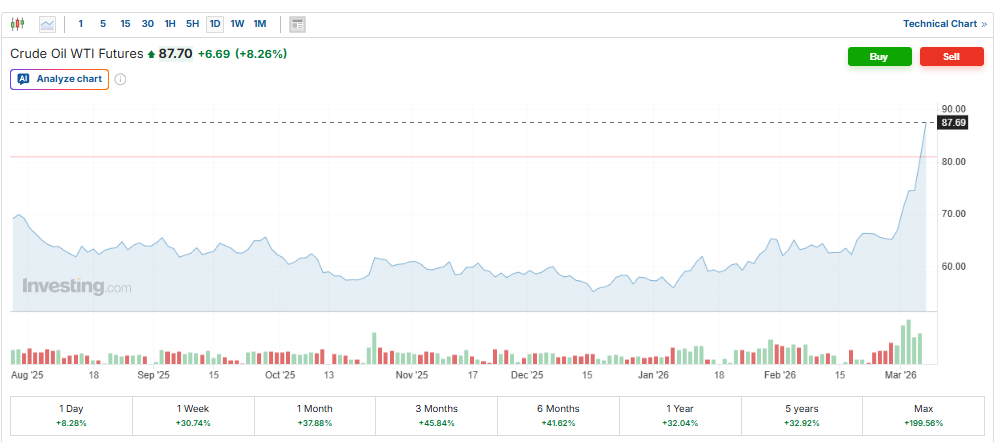
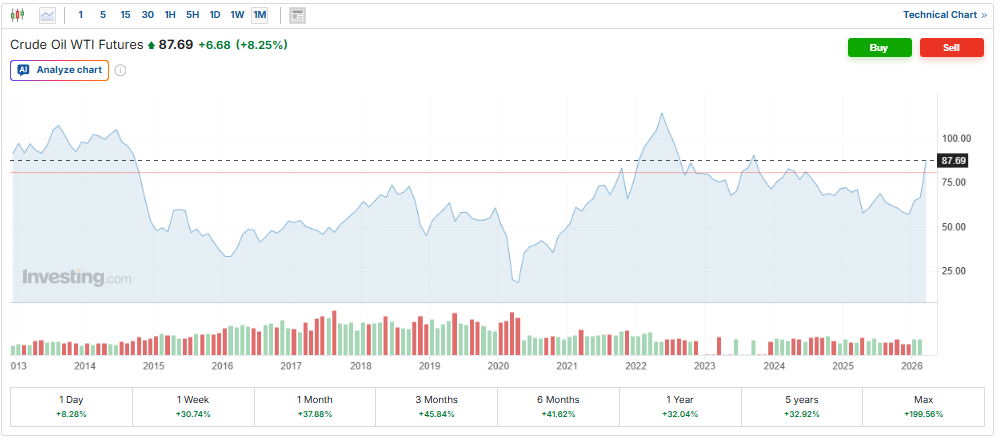
West Texas Intermediate crude futures climbed above $85 per barrel, marking their highest level in nearly two years. The US benchmark advanced by as much as 6.4 %, while the international Brent crude benchmark has surged more than 20 % this week as traders react to tightening supply conditions.
The sharp price movements reflect growing fears that prolonged disruptions in the Middle East could restrict oil flows to global markets, Market strategy experts at Winseterra examine how the global oil market is experiencing renewed volatility after major disruptions affected one of the world’s most important energy transport routes.
Strait of Hormuz Disruptions Shock Energy Supply Routes
The Strait of Hormuz is widely considered one of the most strategically important oil shipping corridors in the world. The narrow waterway connects major Middle Eastern producers with international markets and plays a crucial role in maintaining global energy supply chains.
Recent maritime reports indicate that commercial traffic through the strait has slowed dramatically, with some monitoring agencies describing conditions as a near-total halt in tanker movements.
Security risks, operational uncertainty, and insurance restrictions have contributed to the sudden collapse in maritime activity across the region.
Under normal conditions, approximately 20 million barrels of oil and petroleum products move through the Strait of Hormuz every day, representing nearly one-fifth of global oil supply flows.
Oil Futures Rally as Traders React to Supply Risks
Energy markets responded rapidly as traders priced in the potential for prolonged supply interruptions.
Crude futures surged as market participants attempted to secure near-term supplies while assessing the likelihood that disruptions could persist.
Short-term supply shocks often produce sharp price movements because global oil inventories remain relatively limited compared with total daily consumption.
The rapid rise in prices reflects both physical supply concerns and speculative positioning, as traders attempt to anticipate how the conflict could influence energy flows.
The impact has also extended to refined fuel markets.
European diesel futures have recorded gains exceeding 50 % this week, representing one of the most significant weekly increases on record.
Oil Price Forecasts Point Toward Higher Levels
Energy strategists have warned that prices could continue climbing if tanker traffic remains restricted.
Some forecasts suggest crude prices could approach $100 per barrel if shipping disruptions persist for several weeks.
More extreme scenarios indicate that oil could potentially reach $150 per barrel if maritime transport through the Strait of Hormuz remains heavily constrained.
Such projections have increased concern among policymakers and central banks about the possibility of renewed inflation pressures driven by rising energy costs.
Higher oil prices often feed into transportation expenses, manufacturing costs, and consumer fuel prices, creating ripple effects throughout the global economy.
Governments and Refineries Respond to Tightening Supply
The supply disruptions have already begun affecting global trade flows and refinery operations.
Several energy-importing countries have taken precautionary steps to secure additional crude supplies from alternative sources.
Some governments are prioritizing domestic fuel needs by limiting exports of refined petroleum products.
These actions are intended to stabilize domestic markets as uncertainty around Middle Eastern exports continues.
Strategic Reserves Could Help Stabilize Markets
Policymakers are also evaluating the potential use of strategic petroleum reserves to offset supply shortages.
Strategic reserves consist of large stockpiles of crude oil stored specifically for use during supply disruptions or energy emergencies.
Coordinated releases from multiple countries could help increase supply temporarily and moderate price spikes.
Oil Market Indicators Signal Tight Supply Conditions
Several financial indicators within oil markets are reflecting tightening supply conditions.
One of the most closely watched signals is the prompt spread, which measures the price difference between near-term and later futures contracts.
Currently, Brent crude’s prompt spread has widened to approximately $5.11 per barrel, compared with roughly $0.58 one month ago.
This market structure is known as backwardation, which typically indicates strong demand for immediate oil deliveries.
Global Energy Markets Face Heightened Uncertainty
The disruption in the Strait of Hormuz highlights the vulnerability of global energy markets to geopolitical developments.
Oil remains one of the most heavily traded commodities in the world, and interruptions in major transport routes can rapidly influence prices across international markets.
If shipping flows remain constrained, the consequences could extend far beyond crude markets, potentially affecting inflation, transportation costs, and economic growth.
Energy traders and policymakers will continue monitoring maritime activity in the region closely to determine whether tanker traffic begins to normalize.
The coming weeks will likely determine whether the recent surge in crude prices represents a temporary supply shock or the early stages of a prolonged energy market disruption.


