
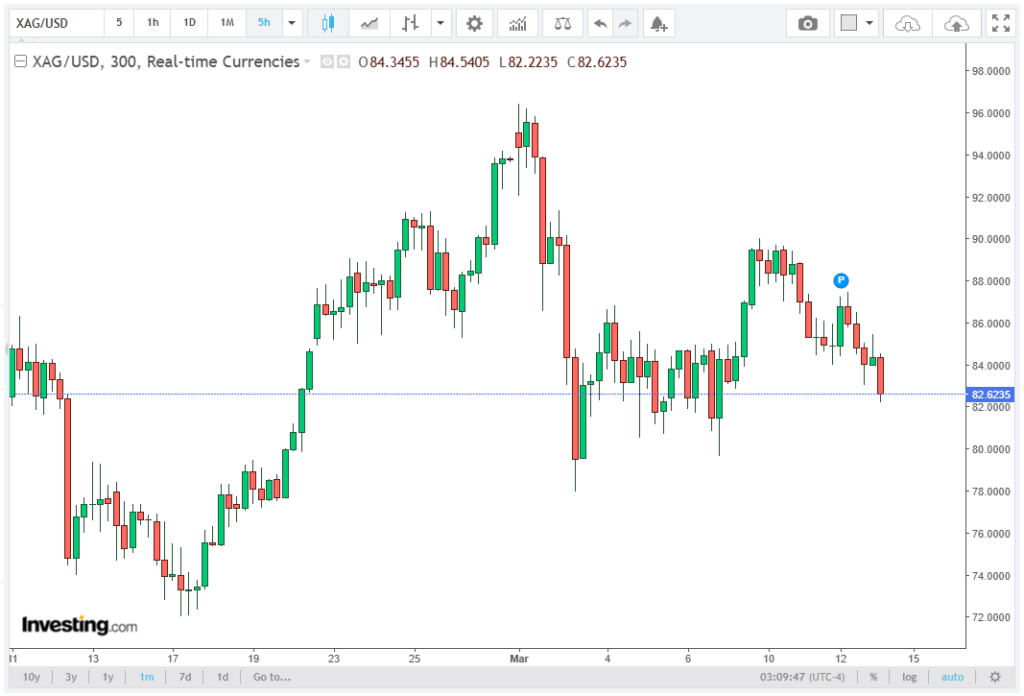
The Silver price (XAG/USD) is under moderate selling pressure during the early European session on Friday, drifting toward the $83.60 level as the US Dollar (USD) strengthens across major currency pairs. The brokers at Nummvix provide a comprehensive breakdown of this topic in this article.
The white metal, which is typically priced in USD, often reacts negatively when the Greenback appreciates, making dollar-denominated commodities more expensive for foreign investors.
Market participants are currently navigating a complex mix of macroeconomic drivers, including geopolitical tensions in the Middle East, inflation concerns, and shifting expectations surrounding the US Federal Reserve’s monetary policy. While the stronger USD is exerting downward pressure on Silver, persistent geopolitical risks are limiting the downside for the precious metal.
Investors are also positioning ahead of the US Personal Consumption Expenditures (PCE) Price Index report, which is widely considered the Federal Reserve’s preferred inflation gauge. The data release later on Friday is expected to play a crucial role in shaping near-term interest rate expectations and could drive further volatility in precious metals markets.
Strong US Dollar weighs on Silver
One of the primary drivers behind the recent pullback in Silver prices is the resilient performance of the US Dollar Index (DXY). As the Greenback strengthens, it reduces the relative attractiveness of commodities priced in USD, including Silver and Gold.
The USD rally has been supported by persistent inflationary pressures in the United States, which are forcing markets to reassess expectations for Federal Reserve rate cuts. Earlier in the year, investors anticipated that the Fed could begin easing monetary policy as early as July. However, recent economic data and rising energy prices have pushed those expectations further into the future.
Financial markets are now increasingly pricing in the possibility that rate cuts may not begin until September, reflecting concerns that inflation could remain elevated for longer than previously expected. Higher US interest rates tend to support the Dollar, while simultaneously weighing on non-yielding assets such as Silver.
In this environment, short-term traders are reducing exposure to precious metals, contributing to the modest decline in XAG/USD toward the $83.60 area.
Middle East tensions provide safe-haven support
Despite the downward pressure from the stronger US Dollar, Silver’s losses remain relatively contained due to escalating geopolitical tensions in the Middle East. The precious metal is widely viewed as a safe-haven asset, meaning it often attracts investors during periods of global uncertainty and geopolitical instability.
Recent developments in the region have significantly increased market anxiety. The US President reiterated that preventing Iran from acquiring nuclear weapons and protecting stability in the Middle East is of far greater importance than concerns about oil price increases.
At the same time, Iran’s new supreme leader, Mojtaba Khamenei, has delivered strong rhetoric suggesting that the Islamic Republic may escalate its strategic response. Khamenei warned that Iran would attempt to ensure the Strait of Hormuz remains effectively closed, a move that could severely disrupt global energy supplies.
The Strait of Hormuz is one of the most critical oil transit chokepoints in the world, responsible for transporting a significant portion of global crude exports. Any disruption in this corridor could trigger sharp spikes in oil prices, intensify global inflationary pressures, and increase financial market volatility.
Such conditions typically boost demand for safe-haven assets, including Silver, Gold, and US Treasuries.
Focus turns to the US PCE inflation report
Looking ahead, the US Personal Consumption Expenditures (PCE) Price Index will be the central market catalyst for Silver traders. This report is closely monitored because it reflects the Federal Reserve’s preferred measure of inflation and often influences future policy decisions.
If the PCE data shows stronger-than-expected inflation, markets may further delay expectations for Fed rate cuts, which could boost the US Dollar and place additional downward pressure on XAG/USD.
Conversely, a softer inflation reading could revive expectations for earlier monetary easing, potentially weakening the Greenback and providing short-term support for Silver prices.
Silver Price Outlook
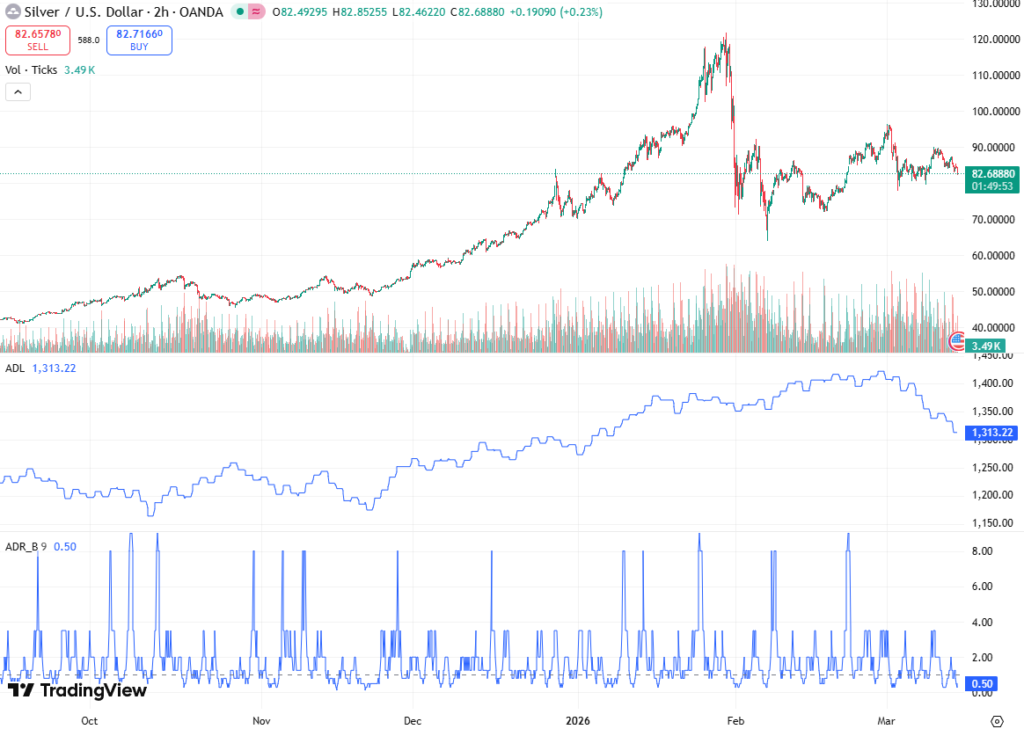
From a technical and macroeconomic perspective, Silver remains trapped between competing forces. The strong US Dollar and shifting Fed policy expectations are currently weighing on the metal, pushing XAG/USD toward the $83.60 region. However, escalating geopolitical tensions, inflation concerns, and energy market disruptions are helping to limit deeper declines.
In the near term, Silver price movements will likely depend on the interaction between US inflation data, Federal Reserve policy signals, and developments in the Middle East conflict.
As uncertainty persists across global financial markets, Silver could remain volatile, with investors balancing safe-haven demand against the impact of higher US interest rates and a stronger Dollar.


