
Financial markets endured a brutal week as simultaneous employment weakness and energy price spikes revived stagflation concerns. Senior financial analysts at Nummixo examine how the S&P 500 materials sector plunged 7%, marking the worst weekly performance since April, while broader indexes suffered the largest declines since October. The dangerous combination of economic contraction and inflation acceleration creates a policy nightmare for the Federal Reserve, lacking effective tools.
Citi strategist Scott Chronert warned that the risk of a shorter-term recession is likely to increase as the Iran conflict generates unintended economic consequences. Markets are processing the reality that monetary policy optimized for either inflation or recession proves ineffective against stagflation dynamics.
Asian Markets Signal Global Contagion
South Korea’s KOSPI index experienced its worst single-day decline in history on Wednesday, plummeting 12.1% before staging a partial recovery on Thursday, gaining 9.6%. The extreme volatility reflects investor panic about energy-dependent Asian economies.
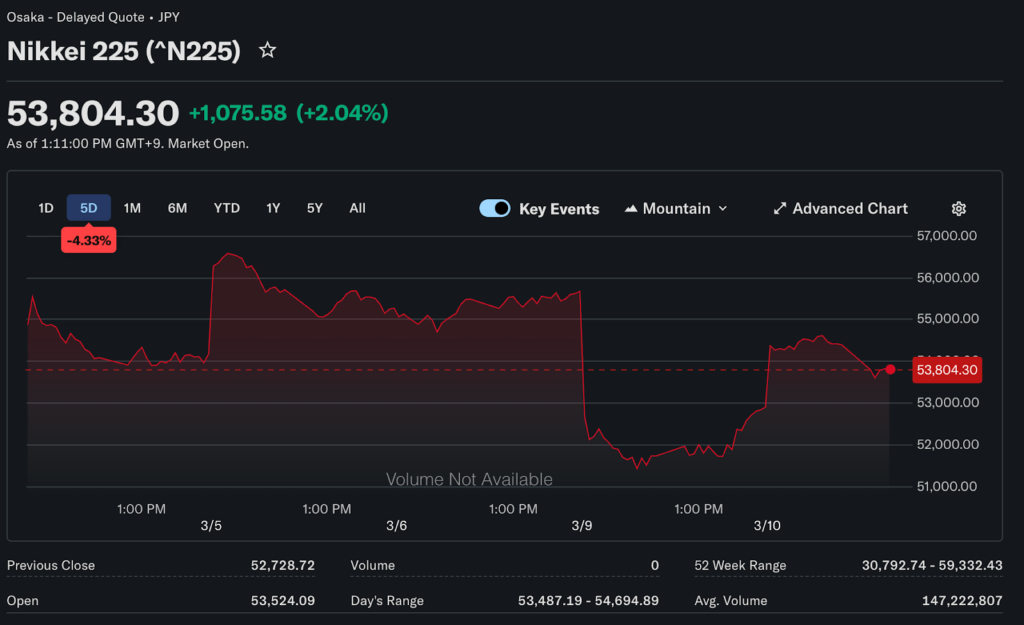
Japan’s Nikkei 225 declined 6.45% on Friday, adding to weekly losses exceeding 8% in total. Taiwan’s TAIEX dropped 4.86% despite semiconductor sector strength. China’s SSE Composite showed relative stability, declining only 0.78%, benefiting from state intervention.
European Markets Extend Losses
Pan-European Stoxx 600 headed for a 4.6% weekly decline, representing the deepest losses since April. Energy costs hit European economies particularly hard, given dependence on imported oil and natural gas.
London’s FTSE 100 declined 1.2% Friday, with luxury goods and automotive sectors leading losses. German DAX and French CAC 40 indexes both suffered significant weekly declines as manufacturing economies face rising input costs.
Banking sector weakness reflects concerns about loan quality deterioration. Credit cycle turning negative creates provisions increases, threatening earnings across financial institutions.
Federal Reserve Policy Paralysis
Central bank policymakers confront impossible choices between competing priorities. Weak employment data argues for rate cuts supporting economic growth. However, surging energy prices threaten to reignite inflation, requiring tighter monetary policy.
Traditional economic models assume a negative correlation between unemployment and inflation. The current environment breaks this relationship, creating stagflation dynamics last seen during the 1970s oil shocks.
The Federal Reserve lacks tools to simultaneously address recession and inflation. Rate cuts risk accelerating inflation while rate increases deepen economic contraction. Officials are likely maintaining the current policy, hoping supply-side improvements resolve energy pressures.
Recession Probability Surges
Economist forecasts shifting dramatically toward recession scenarios for 2026. Atlanta Federal Reserve GDPNow model tracking first-quarter growth plunged to 2.1% from 3.0% estimate just weeks earlier.
Leading economic indicators are uniformly negative across employment, manufacturing, and consumer confidence measures. Corporate earnings forecasts face widespread downward revisions. Energy costs and weakening demand destroy margin assumptions underlying previous guidance.
Consumer spending, representing 68% of the US economy, shows clear weakening. Retail sales declining while credit card delinquencies rising signal household financial stress intensifying.
Historical Stagflation Comparisons
The current situation evokes memories of 1970s stagflation, when oil shocks combined with easy monetary policy created a decade of economic malaise. However, important differences exist between periods.
The 1970s featured entrenched inflation expectations and wage-price spirals. Current inflation expectations remain relatively anchored despite recent increases. Federal Reserve credibility is substantially higher than in the 1970s era, preventing expectations from becoming unmoored.
Energy dependence has reduced compared to the 1970s through efficiency improvements and domestic production expansion. However, global oil markets still transmit price shocks throughout the economy.
Commodity Market Disruptions
Beyond crude oil, the broader commodity complex is showing extreme volatility. Aluminum surged 9.75% for the week, representing the largest gain since January 2023, now up 15% year-to-date.
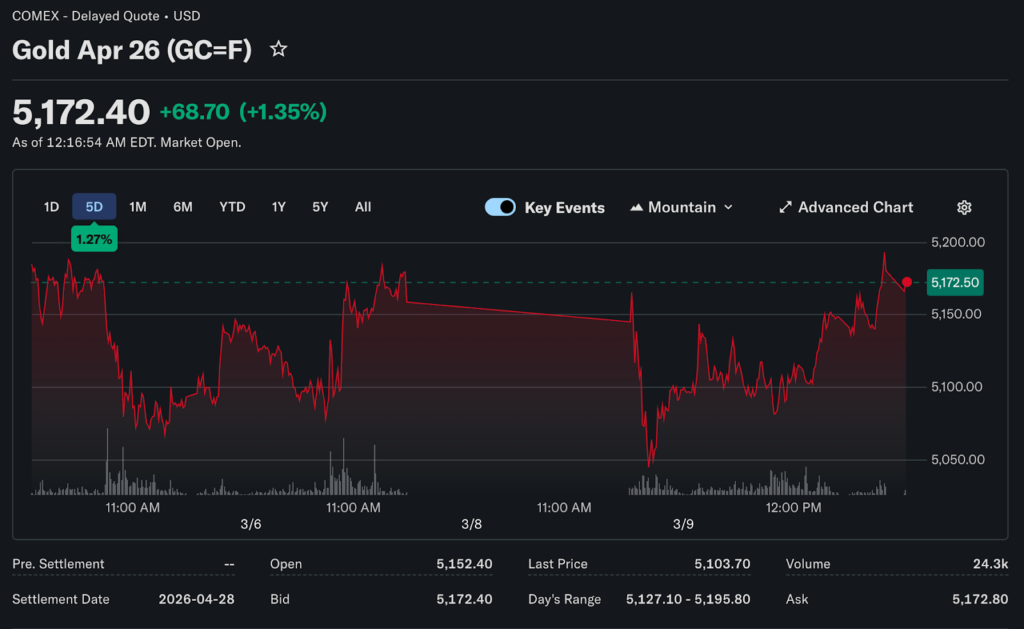
Gold exhibited unusual weakness, declining 1.7% for the week, marking its first weekly loss in five. Silver plunged 9.63% for the week, showing volatility amplification.
Companies face margin compression from multiple sources. Energy costs are rising while pricing power weakens. The manufacturing sector reports increasing order cancellations. Service sector margins squeezed by wage pressures.
Credit Market Stress Emerges
Corporate bond spreads are widening, reflecting default risks. Commercial real estate weakness is spreading, creating losses for debt holders. Banking sector credit quality concerns are mounting as loan portfolios age into a weakening economy.
Households are adjusting their spending in response to uncertainty. Discretionary categories cut first. Trading down behavior evident. Premium brands are losing share. Services spending is weakening. Savings rates are rising as precautionary behavior increases.
The global economy lacks growth engines offsetting US weakness. China is facing a property crisis. Europe is dealing with energy security issues. Emerging markets are vulnerable to dollar strength. Trade volumes are declining.
Market Positioning Turns Defensive
Investors are rotating toward recession-resistant sectors and defensive positioning strategies. Utilities, consumer staples, and healthcare are showing relative strength as growth sectors decline.
Cash levels are rising as risk appetite diminishes across the investor base. Money market fund assets are surging as investors prioritize capital preservation over returns during uncertainty.
Volatility is expected to remain elevated through the coming quarters as economic data evolves. Long-term investors are facing difficult decisions about maintaining equity exposure versus preserving capital through defensive positioning. Historical experience suggests staying invested is generally optimal, but psychological challenges mount during sustained market stress, creating behavioral risks.


