
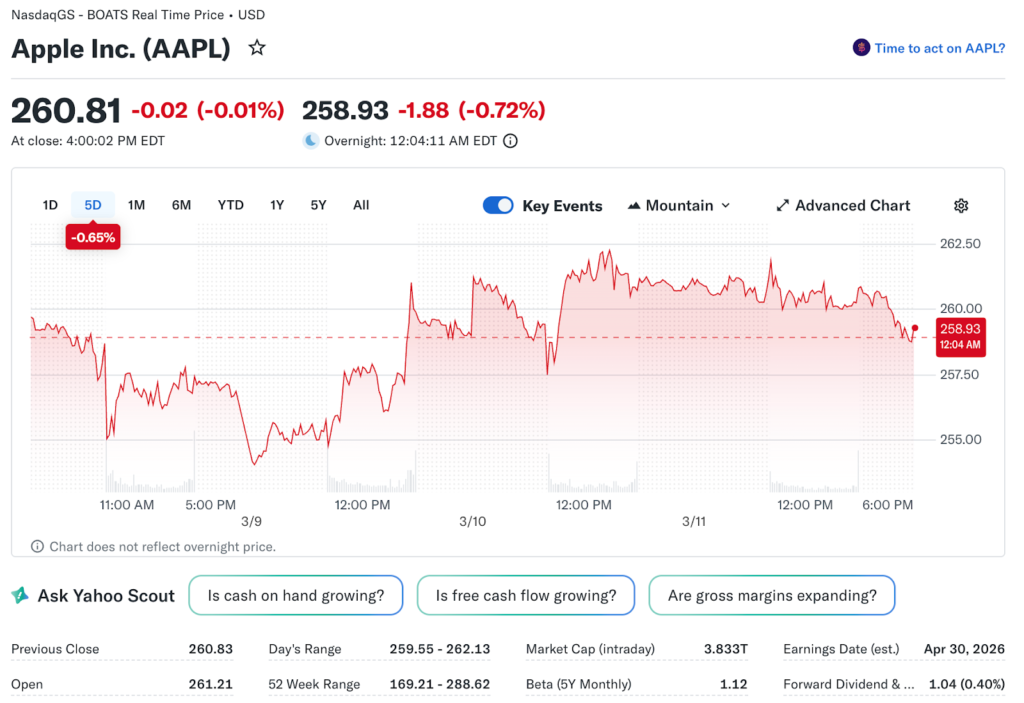
Apple is worth $3.83 trillion, and it has held that valuation through multiple product cycles, intense competitive pressure, and a leadership transition that many analysts predicted would derail the company within a few years. In a recent CBS Sunday Morning interview, CEO Tim Cook gave the clearest public account yet of how that transition was managed and what core principles have kept Apple compounding value long after its co-founder stepped away. The brand’s junior brokers at Marbrisse highlight what this means for investors and business observers following Apple closely in March 2026.
The Advice That Shaped the Transition
Before stepping away, Jobs called Cook over and offered him the CEO role with one clear condition: lead as an individual, not as an imitation. The instruction was rooted in a real organizational risk that Jobs had observed firsthand at Disney, where leadership spent years in a state of institutional paralysis after Walt Disney passed away, unable to make decisions without filtering them through the question of what Walt would have chosen.
Jobs experienced that same pattern through his work at Pixar, which Disney acquired in 2006. Having watched it play out in real time, he had no interest in Apple falling into the same trap. The directive he gave Cook was direct and deliberate: do not ask what Jobs would have done, simply do the right thing and lead accordingly. That clarity of mandate is something most succession processes fail to provide, and it gave Cook the freedom to act decisively from the start.
What This Means for Apple as a Business
The leadership structure Jobs built before his passing in October 2011 was intentionally designed to transfer culture rather than personality. The principles Cook has since described publicly, including radical collaboration, systematic focus, and the relentless pursuit of genuinely excellent work rather than merely acceptable work, were embedded deeply enough in Apple’s operating model to survive the transition without losing their effect.
Cook joined Apple in 1998 after stints at Compaq and IBM, worked under Jobs for over a decade, and was appointed COO in 2005. By the time he assumed the CEO role, he had spent years absorbing the operational principles of the business without needing to replicate its founder’s personality or public persona. That distinction between absorbing principles and imitating a person has proven to be one of the most structurally valuable aspects of Apple’s post-Jobs continuity.
The Collaboration Culture That Still Runs Apple
The collaborative approach Jobs championed, built on the belief that rigorous debate and genuine disagreement between smart people produce better outcomes than deference to any single voice, is still visibly embedded in how Apple develops products across hardware, software, and services simultaneously. It is not simply a cultural value that gets mentioned in interviews. It shows up in the actual structure of how Apple’s product teams interact and how decisions get made across divisions.
Cook has spoken publicly about the specific areas where Apple has built on that foundation in distinctive ways, particularly around privacy, accessibility, and education technology. These are not areas Jobs focused on heavily, which illustrates exactly the kind of independent leadership the succession was designed to enable. Cook is not managing Apple as Jobs would have. He is managing it according to the principles Jobs established while making his own decisions about where to take the business.
Lessons That Go Beyond Silicon Valley
The broader implication of Apple’s succession story is relevant to any organization navigating a transition from a founding-era leader. When a company becomes synonymous with a single individual, every decision after that person’s departure risks being evaluated against an impossible standard rather than on its own merits. Jobs solved this proactively by transferring principles rather than preferences, giving Cook something concrete enough to act on without needing constant reference to a hypothetical standard.
Other executives who worked with Jobs or sought his guidance have described similar patterns. Marc Benioff of Salesforce credited Jobs with the strategic clarity that led directly to the creation of AppExchange, which became the foundation of Salesforce’s platform business and significantly influenced the broader app economy.
Former Starbucks CEO Howard Schultz received pointed advice during the 2008 crisis that proved accurate despite seeming extreme at the time, demonstrating Jobs’ consistent tendency to diagnose organizational problems with directness rather than diplomacy.
What Apple’s Valuation Reflects
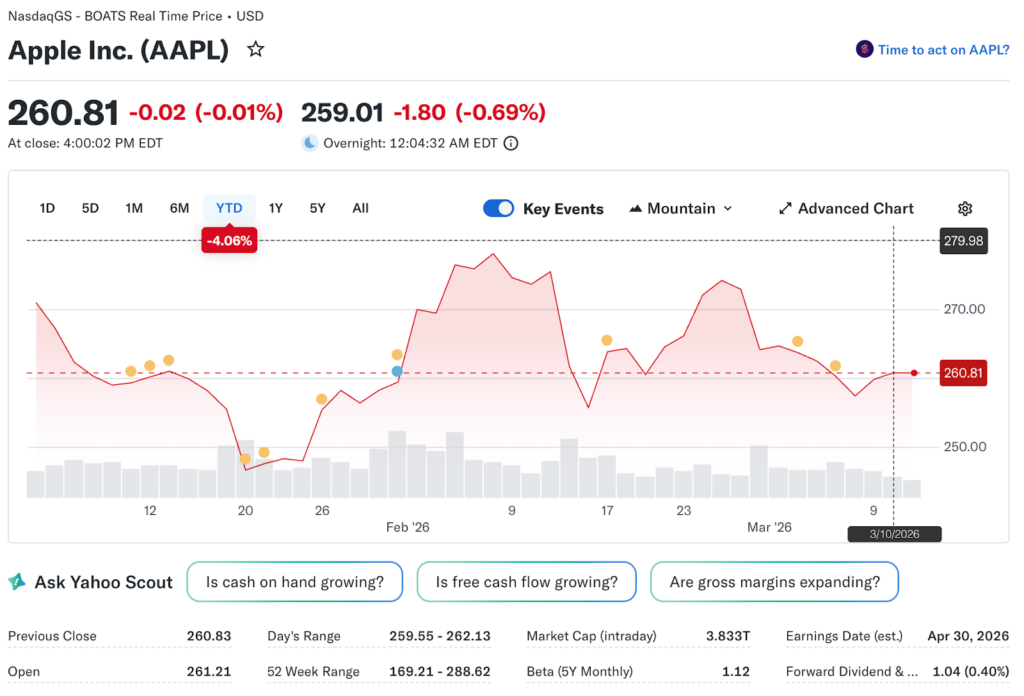
At $3.83 trillion, Apple’s market capitalization is pricing in not just the current product lineup but the institutional capacity to keep generating genuinely new revenue streams on a consistent basis. That capacity is the direct inheritance of the operational framework Jobs transferred to Cook before stepping away. Investors tracking iPhone upgrade cycles, services revenue growth rates, and AI integration timelines are monitoring the right surface-level metrics.
But the deeper and more durable driver of Apple’s long-term value is whether the leadership culture remains intact and capable of producing the next generation of high-margin products and services. Based on the consistency of results under Cook’s tenure, that answer continues to look favorable heading into the rest of 2026.


