
Zoox has spent the better part of a decade building autonomous vehicle technology largely outside the mainstream ride-hailing conversation. That changed on Wednesday. The Amazon-owned company announced a multi-year partnership with Uber Technologies to deploy its purpose-built robotaxis through the Uber platform, marking the first time Zoox has worked with a third-party ride-hailing operator.
A financial analyst at Nummixo takes a closer look at why this deal carries implications well beyond the two companies involved and what it signals about the pace of autonomous vehicle commercialization heading through 2026.
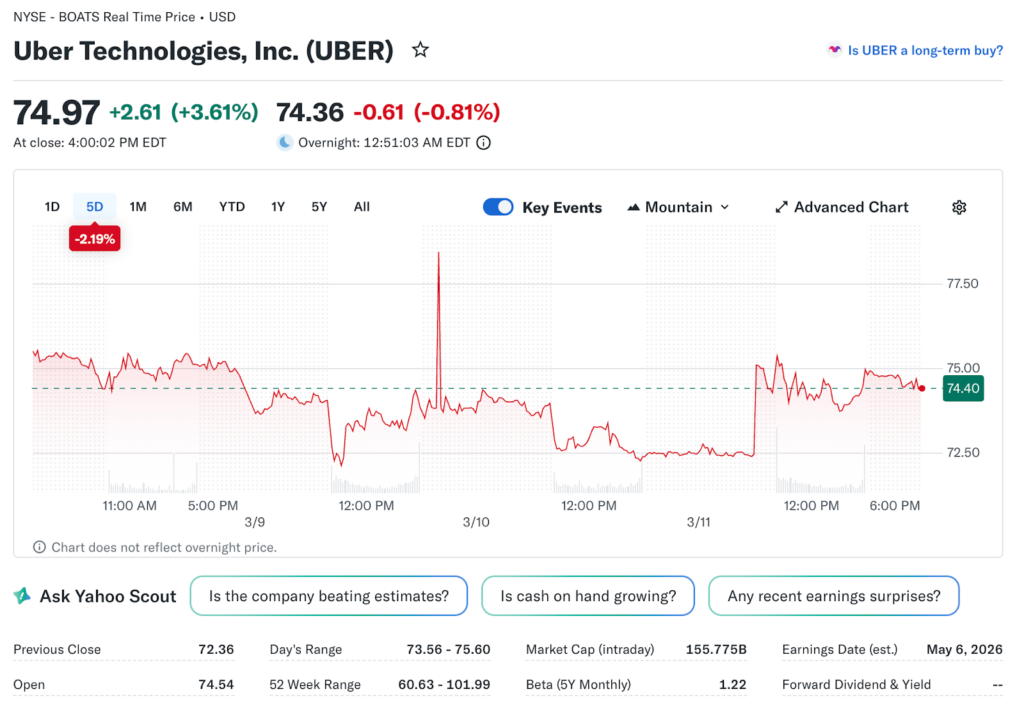
Distribution Is the Problem This Deal Solves
Technology development has never been the binding constraint on the autonomous vehicle industry’s commercial progress. The harder problem has always been distribution: getting enough vehicles in front of enough paying passengers to build the operational data, brand recognition, and revenue base needed to justify the capital already deployed and attract the capital still required.
The Uber partnership addresses that constraint directly. Instead of relying solely on its own app and its own marketing efforts to attract riders, Zoox gains access to a platform with hundreds of millions of existing users who already have payment information on file and habitual ride-booking behavior.
The first time a passenger in Las Vegas opens the Uber app and sees a Zoox robotaxi as an available option, no separate download, no new account, and no new habit is required. That frictionless access to an established user base is something Zoox could not replicate independently, regardless of how well its technology performs.
Where and When the Partnership Launches
The initial deployment is scheduled for Las Vegas this summer, which is a strategically sensible starting market. Zoox has already been running limited services in Las Vegas, which means the infrastructure, operational knowledge, and regulatory relationships needed to support a broader launch are already partially in place. Scaling from an existing operational base is meaningfully less complex than entering a new city from scratch.
The next major geographic milestone is a planned rollout in Los Angeles by mid-2027. Los Angeles represents a substantially more demanding operating environment than Las Vegas, with higher traffic density, greater route complexity, more varied road conditions, and a regulatory environment that will require its own specific navigation. How Zoox performs in that market will be closely watched by investors, competitors, and regulators as an indicator of whether the technology is genuinely ready for top-tier urban deployment at commercial scale.
Separately, the company confirmed earlier this week that testing will expand to Dallas and Phoenix, along with the launch of a fleet operations command hub in Arizona. The simultaneous expansion across multiple markets suggests Zoox is moving toward broader commercialization on a faster timeline than its relatively low public profile might have suggested.
The Design Choice That Sets Zoox Apart
Most autonomous vehicle programs have taken an adaptation approach, modifying existing consumer or commercial vehicle platforms to incorporate self-driving technology. Zoox made a different decision at the founding level. Its vehicle was designed entirely from the ground up for autonomous passenger transport, with no steering wheel, no pedals, and a bidirectional layout that allows it to travel equally well in either direction without turning around.
That design philosophy produces a cabin optimized for passenger comfort and space efficiency rather than one constrained by the architecture of a vehicle built for human drivers. Whether that design advantage translates into superior economics at scale has not yet been proven at commercial volume, but it creates a product differentiation that is genuine rather than incremental. In a market where multiple well-funded competitors are working with broadly similar adapted vehicle platforms, Zoox’s ground-up design represents a distinct strategic choice.
The Competitive Context Around Waymo
Alphabet’s Waymo continues to hold the leading position in the autonomous ride-hailing market by most operational measures. Waymo has been running fully driverless commercial services in multiple cities for longer than any competitor, and the accumulated miles and operational experience that come with that head start represent a genuine and substantial advantage in safety validation and system refinement.
Zoox is not yet operating at a comparable scale, but the Uber partnership meaningfully changes the competitive narrative. Zoox has logged more than one million autonomous miles and served over 300,000 riders to date. The company was founded in 2014 and acquired by Amazon for $1.3 billion in 2020, giving it access to Amazon’s engineering resources, logistics expertise, and financial strength as it scales toward commercial deployment.
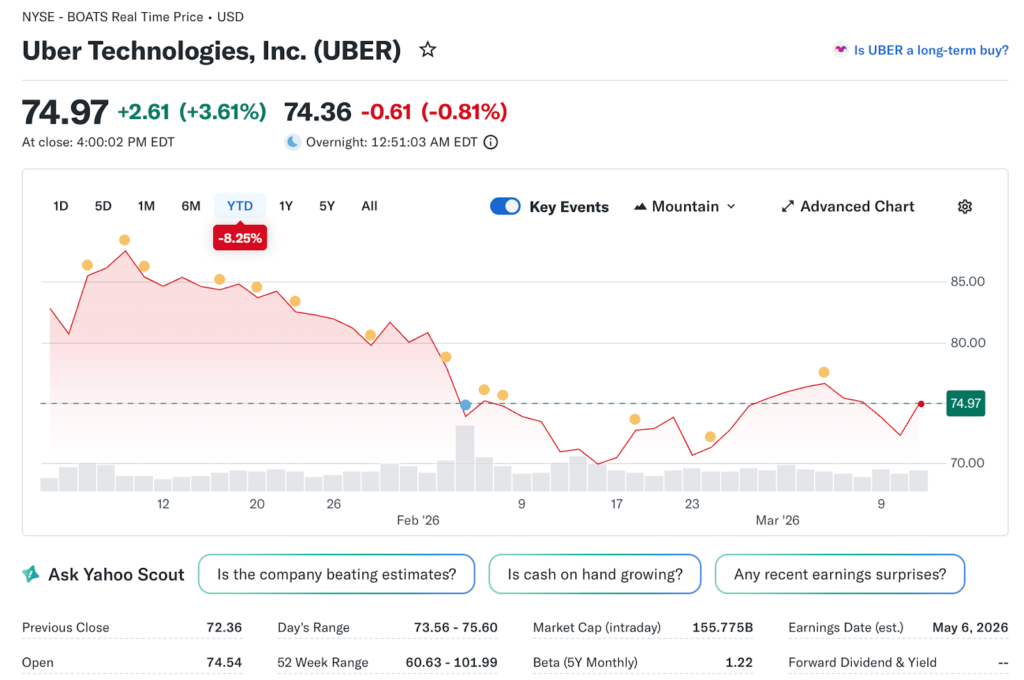
The Broader Industry Shift This Deal Represents
That ambition positions Uber as the dominant distribution infrastructure for the autonomous vehicle industry rather than a technology developer competing directly with Waymo or Zoox. The commercial logic is sound. By partnering broadly across multiple AV platforms simultaneously, Uber captures the economic upside of autonomous ride-hailing without concentrating its bet on any single underlying technology.
For the AV developers, Uber’s platform offers distribution at a scale that would take years and billions of dollars to replicate independently. The speed at which these commercial arrangements are forming in early 2026 suggests the industry is transitioning from the technology development phase to the commercial scaling phase faster than many observers anticipated.


