
The DXY, which measures the value of the US Dollar (USD) against a basket of six major global currencies, opened the day in negative territory. Market participants note that the US Dollar remains resilient, supported by escalating geopolitical tensions in the Middle East.
Safe-haven demand is a primary driver behind the Greenback’s strength, as investors weigh risk-off scenarios in light of the latest developments involving the US, Israel, and Iran. According to the brokers at Winseterra, this article provides a clear and detailed overview of the subject.
The current market sentiment reflects a mix of profit-taking near the 100.00 threshold and heightened risk awareness from geopolitical uncertainties. Analysts note that while the DXY has retreated slightly intraday, the broader trend remains bullish, underpinned by safe-haven flows and expectations that US monetary policy may stay tighter for longer due to inflationary pressures.
Middle East Tensions Boost Safe-Haven Flows
Rising geopolitical tensions across the Middle East continue to strengthen the US Dollar’s safe-haven demand. Officials from the Pentagon and the National Security Council (NSC) admitted they had misjudged Iran’s readiness to block the Strait of Hormuz following US military operations.
The possibility of restrictions in this critical global oil transit route has intensified market uncertainty, as traders fear supply disruptions in global energy markets. Such risk-driven conditions typically boost demand for the US Dollar, reinforcing its status as a defensive currency during geopolitical instability.
Iran’s supreme leader, Mojtaba Khamenei, recently emphasized that the Strait of Hormuz should remain closed and indicated that Tehran will continue its attacks on Persian Gulf neighbors. Such geopolitical risks tend to boost demand for the US Dollar, particularly against currencies perceived as more vulnerable to risk shocks, including the Euro (EUR) and the Japanese Yen (JPY).
US Monetary Policy and Rate Expectations
Market participants are closely monitoring the Federal Reserve (Fed) for signals on its policy trajectory. Recent developments in oil markets and geopolitical uncertainty have reduced expectations for Fed rate cuts in the near term. Traders now anticipate that the Fed may maintain a tight monetary stance longer than previously projected, given the potential for oil-driven inflation to persist.
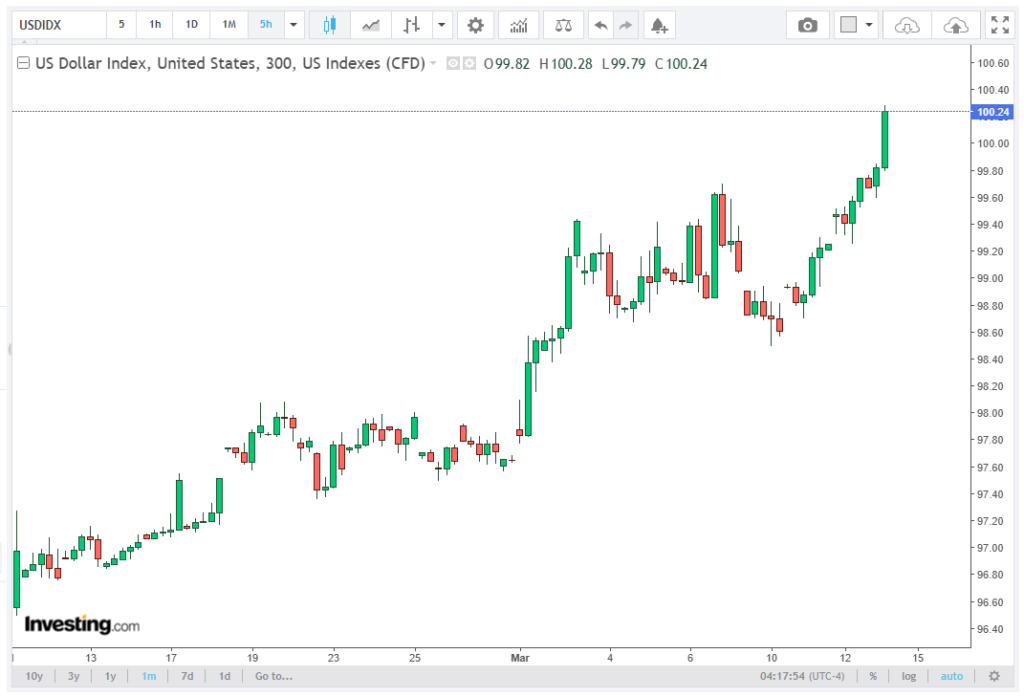
The US Dollar has historically benefited from hawkish Fed policy, as higher interest rates increase the appeal of USD-denominated assets. Conversely, any signals from the Fed suggesting a more accommodative approach could weigh on the Greenback. Consequently, all eyes are on Friday’s US PCE report, which is widely considered a key determinant of future Fed policy decisions.
US PCE Inflation Data in Focus
The US Personal Consumption Expenditures (PCE) Price Index is scheduled for release later on Friday, and it is expected to provide crucial guidance for traders and policymakers. The headline PCE is projected to increase by 2.9% year-over-year (YoY) in January, while the core PCE, which excludes volatile food and energy components, is forecasted to rise by 3.1% YoY.
Financial analysts emphasize that inflation data can have an immediate impact on USD valuation. Should the report show softer-than-expected inflation, the Greenback may face downward pressure in the short term, as markets could anticipate a less aggressive Fed stance. Conversely, a higher-than-expected print would reinforce the case for continued monetary tightening, likely supporting the DXY in the near term.
Technical Outlook for the DXY
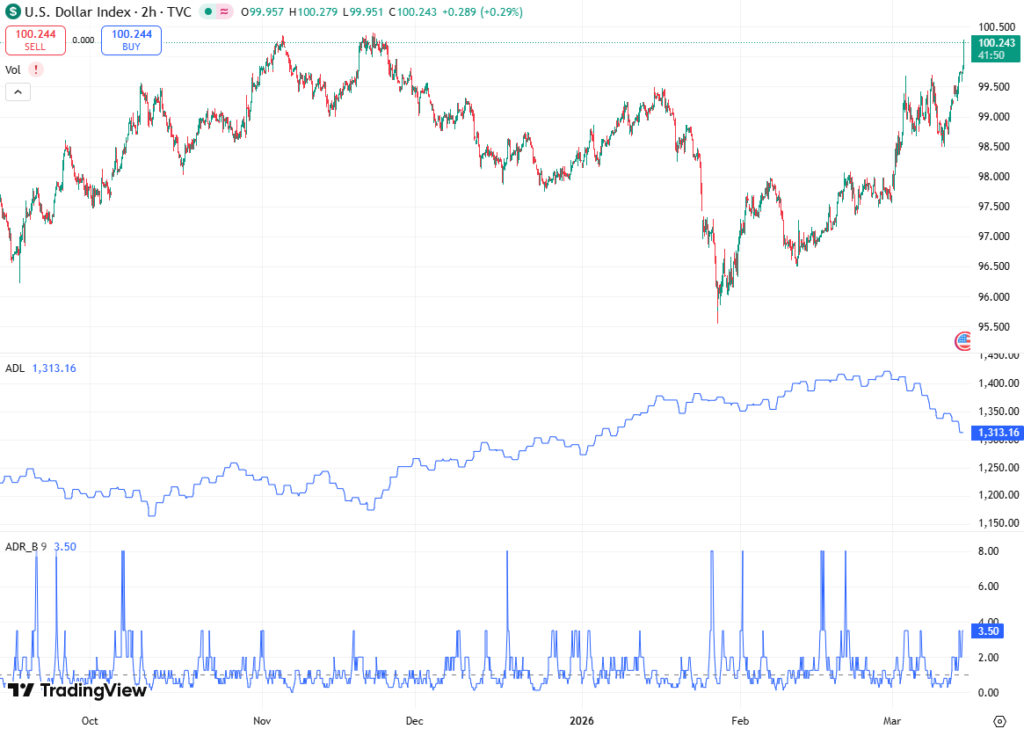
From a technical perspective, the DXY remains above key support levels near 99.50, providing a buffer against further intraday weakness. The 100.00 psychological level acts as a resistance zone, where profit-taking and short-term positioning may occur.
Traders are likely to focus on intraday price action, broader risk sentiment, and upcoming PCE readings to determine the next directional move. Momentum indicators show a mixed picture, suggesting that while near-term bullishness is intact, upside may be capped unless the DXY decisively breaks above 100.00.
Support levels in the 99.50–99.60 range could offer buying opportunities, while a sustained break below this area might signal a more significant retracement toward the 99.00 zone. Conversely, a successful breach of 100.00 could open the door for testing the next resistance cluster around 100.30–100.50, potentially attracting renewed speculative interest.
Conclusion
In summary, the US Dollar Index is trading slightly below 100.00, around 99.70, in Friday’s Asian session, with geopolitical tensions and monetary policy expectations driving its performance. Escalating Middle East hostilities continue to provide safe-haven support, while the upcoming US PCE inflation report for January will be the primary catalyst for the DXY’s near-term trajectory.
Market participants should watch the headline and core PCE numbers, as any deviation from expectations could trigger sharp moves in the USD and broader forex markets. Traders will remain attentive to both geopolitical developments and inflation data, making this a critical juncture for the US Dollar amid a volatile global backdrop.


