
The global financial community is currently sharpening its focus on the upcoming quarterly results of the world’s most prominent electric vehicle manufacturer, as internal revenue dynamics suggest a significant pivot in corporate strategy.
According to an equity researcher at Marbrisse, the company’s energy generation and storage division is expected to significantly outshine its core automotive business when it reports its latest earnings this week.
This shift is being viewed by market analysts as a crucial sign of institutional resilience at a time when the primary vehicle segment faces mounting challenges.
While the corporation continues its steady progression toward a future centered on robotics and autonomous driving technology, the immediate financial stability of the enterprise is increasingly being underpinned by its massive battery systems and utility scale infrastructure projects.
The Fiscal Transition From Automotive Credits To Grid Solutions
For a long period, the automotive division of the company enjoyed a position of market dominance, supported by high profit margins and a consistent flow of regulatory credits.
These credits once served as a major pillar of the firm’s quarterly profitability. However, recent data suggests that this particular revenue stream is beginning to encounter significant headwinds.
Market specialists have observed that high margin regulatory credits have entered a period of decline. This trend follows recent policy adjustments within the United States government, where shifting administrative priorities have modified the frameworks that previously incentivized certain aspects of zero emission vehicle production.
The development of new assembly lines and the scaling of humanoid robot production are expected to require an investment of $20 billion throughout the 2026 fiscal year. This massive capital expenditure is the primary reason why analysts are predicting the company’s first quarter of negative cash flow in over 24 months, with an estimated cash burn of $1.44 billion for the current reporting period.
Analyzing The Robust Growth Of The Energy Storage Segment
In stark contrast to the tightening margins seen in the transportation sector, the energy storage business is characterized by rapid growth and superior profitability. Financial experts note that this division is currently expanding at a rate that is nearly double that of the core automotive segment.
This surge in performance is largely attributed to the increasing global demand for large scale battery systems, which are essential for stabilizing power grids and supporting the massive energy requirements of modern data centers.
As more industries move toward sustainable energy management, the company’s storage solutions have become a critical component of the global technological infrastructure.
Current market projections for this division are exceptionally positive. Wall Street specialists estimate that the energy storage unit will generate approximately $18.3 billion in total revenue for the 2026 calendar year. This represents a substantial increase from the $12.8 billion in revenue recorded during 2025.
Furthermore, the gross profit for the energy unit is expected to reach roughly $5.3 billion, with gross margins maintaining a strong position near 29%. These figures indicate that the energy division will contribute nearly 20% of the firm’s total expected revenue for the year, providing a much needed financial buffer.
Scalability Factors And The Success Of Industrial Megapacks
The internal success of the energy division is centered on the utility scale Megapack. During the first quarter of 2026, the company reported that its total energy storage deployments reached 8.8 gigawatt-hours.
Although this number reflects a 15% decrease compared to the previous year, the financial outlook remains bright as the company focuses on more lucrative utility scale contracts which offer significantly better returns than smaller residential systems.
Investors are looking for specific details in the earnings report scheduled for April 22. Analysts estimate that the energy business will grow by 25% for the quarter, easily outpacing the projected 12% increase in automotive revenue.
By prioritizing these larger installations, the company is effectively mitigating the impact of declining vehicle margins and creating a more diversified revenue base. This strategy allows the firm to maintain its aggressive investment in artificial intelligence and robotics without compromising its long term financial integrity.
Long Term Implications For Market Valuation
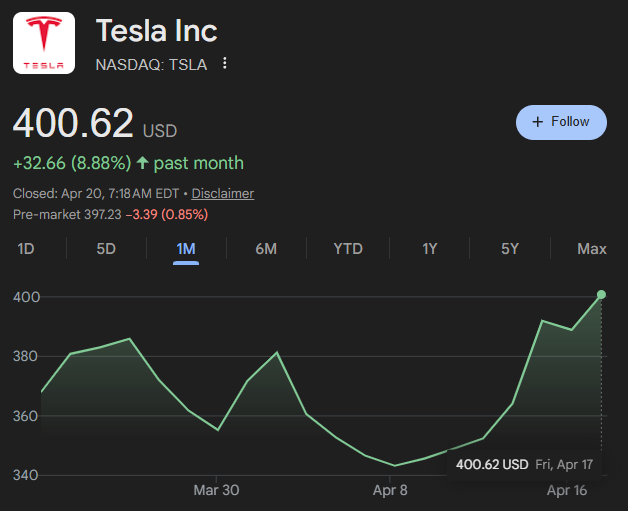
The current valuation of the company, estimated at $1.5 trillion, is heavily dependent on the successful commercialization of future products like autonomous vehicles. However, the energy storage division is proving to be the bridge that connects current manufacturing with that high tech future.
While some analysts caution that the energy business can be lumpy, the general trajectory is one of sustained expansion. The ability of the storage segment to cushion the blow of margin erosion in the automotive sector is a testament to the company’s diversified approach.
For those monitoring TSLA, the evolution of the storage division represents a vital shift from a vehicle centric model to a holistic energy solutions provider capable of maintaining growth regardless of automotive trends.


