
The cryptocurrency market has entered a phase of consolidation, with Bitcoin (BTC) pausing near the $80,000 mark. While the market has enjoyed a remarkable rally over recent months, sentiment indicators now point to neutral territory, signaling that investors are weighing potential risks and opportunities.
Meanwhile, Ethereum (ETH) and other digital assets continue to attract interest, especially amid ongoing trends in tokenisation and institutional adoption. In this article, the team at Byronixel breaks down the issue thoroughly.
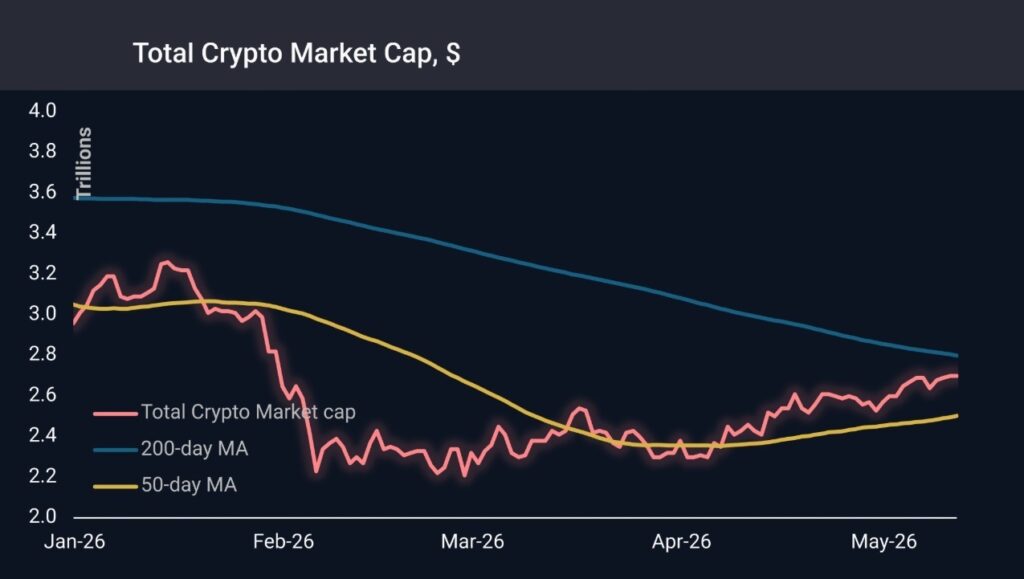
Crypto Market Stalls at $2.7 Trillion
The total crypto market capitalisation currently hovers around $2.7 trillion, reflecting a temporary plateau in investor enthusiasm. Bitcoin, as the leading cryptocurrency, has struggled to break above resistance levels near $80K, creating a consolidation phase that often precedes the next significant move.
This market pause is compounded by macroeconomic factors, including rising risk aversion in global financial markets. Investors appear cautious amid profit-taking after Bitcoin’s recent surge and the strengthening US dollar, which historically weighs on cryptocurrency demand.
Among the notable performers in the past 24 hours, Theta (THETA) surged 8.5%, Toncoin (TON) rose 4.9%, and NEAR Protocol advanced 2.1%. These movements highlight the market’s uneven performance, with altcoins reacting differently to both technical triggers and macro pressures.
Sentiment Close to Neutral
The crypto sentiment index, a key gauge of market psychology, has hovered just below the midpoint, recording readings of 47, 48, and 49 over the past three days. Such readings indicate neutral sentiment, suggesting neither bulls nor bears dominate.
This equilibrium underscores the difficulty the market faces in maintaining sustained momentum at the upper end of the spectrum. A predominance of bearish signals emerges whenever Bitcoin struggles to surpass critical levels, such as the 200-day moving average (DMA), which has historically served as a key technical barrier.
Bitcoin Momentum Falters
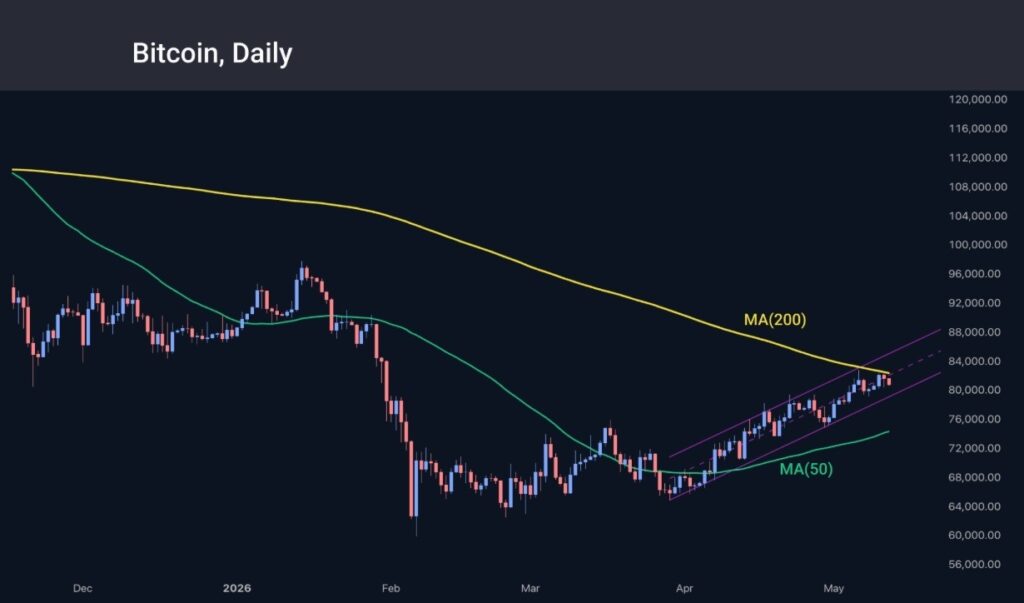
Bitcoin’s recent price action shows that the cryptocurrency has lost upward momentum as it approached the 200-DMA, which, despite trending downwards, remains a significant resistance line. Over the past six days, BTC has failed to breach this level, signaling a period of price consolidation.
Importantly, the current decline is modest, resembling a temporary breather following a strong rally rather than a full-fledged correction. This dynamic leaves room for potential growth, especially if institutional inflows and market confidence continue to strengthen.
Institutional Inflows Surge
Recent data from CoinShares reveals that global investments in crypto funds rose by $858 million last week. Notably, Bitcoin led the inflows with $706 million, followed by Ethereum with $77 million, Solana (SOL) with $48 million, and XRP with $40 million.
Moreover, Bitcoin short positions experienced a notable outflow of $14 million, marking the largest reduction of the year. These flows highlight the growing institutional appetite for digital assets despite market consolidation, reflecting confidence in long-term value rather than short-term speculation.
The uptick in investments coincides with regulatory developments, particularly the proposed CLARITY Act, which addresses stablecoin yields. The Senate Banking Committee is expected to review the bill next week, potentially adding regulatory clarity that could further stimulate investor interest.
Strategy Expands Bitcoin Holdings
Institutional strategies continue to influence market dynamics, exemplified by Strategy, which purchased 535 BTC for $43 million last week at an average price of $80,340 per coin. The company skipped its prior weekly acquisition in anticipation of a quarterly report, but has now resumed aggressive accumulation.
With total holdings reaching 818,869 BTC, acquired for $61.86 billion at an average cost of $75,540 per coin, Strategy remains committed to maintaining a net long position. Michael Saylor, the company’s founder, emphasized that the strategy is to end each year with more coins than at the start, reinforcing a philosophy of long-term accumulation over short-term trading.
Ethereum Benefits from Tokenisation
While Bitcoin consolidates, Ethereum has benefited from the ongoing tokenisation trend, which encompasses decentralized finance (DeFi), non-fungible tokens (NFTs), and enterprise blockchain solutions. Increased interest in ETH-based protocols and tokenised assets continues to attract institutional and retail capital, complementing BTC’s role as a digital gold analogue.
Conclusion
The crypto market remains at a critical juncture, with a total capitalisation of approximately $2.7 trillion and Bitcoin consolidating near $80K. Neutral sentiment, modest price corrections, and growing institutional inflows paint a nuanced picture of market health.
While bulls temporarily lose steam and BTC struggles to break higher, the long-term accumulation strategies of institutions like Strategy suggest confidence in future growth. Simultaneously, Ethereum benefits from tokenisation, highlighting the diversified opportunities within the broader digital asset ecosystem.
Investors should monitor key technical levels, institutional flows, and regulatory developments, which are likely to determine the next phase of crypto market expansion. For now, Bitcoin’s pause at $80K reflects a period of measured consolidation, not capitulation, setting the stage for the next potential upswing in the crypto cycle.


