
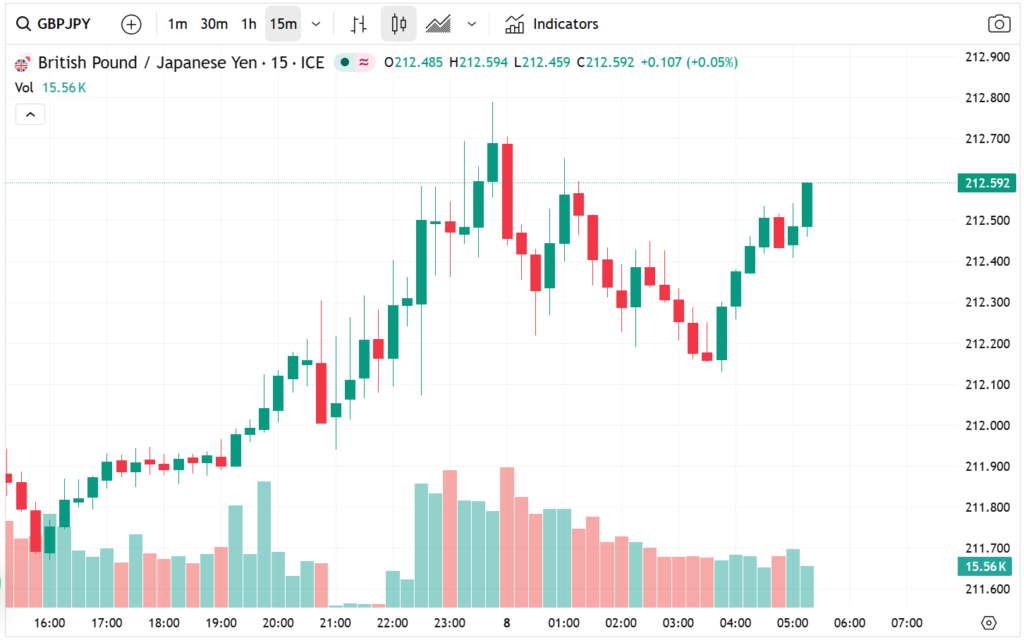
The GBP/JPY currency pair has recently demonstrated a resilient bullish tone, recovering after an initial gap lower at the start of the trading week. The brokers at Fondesia offer a detailed analysis of this topic in their article.
This early weakness was quickly absorbed by buyers, suggesting that underlying demand remains strong. The ability of the market to reverse early losses is often interpreted as a sign of continuing upward momentum, particularly in pairs driven by interest rate differentials and carry trade dynamics.
At present, the pair appears to be attempting to break out of a minor consolidation range, with traders closely monitoring key technical levels to determine the next directional move. The broader structure indicates that buyers are still in control, although short-term volatility remains elevated.
Importance of the 210 Yen Level
One of the most critical technical zones in the current market structure is the ¥210 level, which continues to act as a major support region. This level holds significant importance due to its role in previous price reactions, making it a key area of market memory.
From a technical standpoint, the 210 level functions as a “line in the sand”, helping traders distinguish between bullish and bearish conditions. As long as the price remains above this threshold, the market bias is likely to remain constructively bullish. Conversely, a sustained break below this level could signal a shift in sentiment, potentially opening the door for deeper corrections.
The repeated defense of this zone reinforces the idea that institutional participants may be accumulating positions near this level, further strengthening its significance.
Role of the 50-Day EMA and Interest Rate Differential
Another important factor supporting the GBP/JPY upside potential is the interaction with the 50-day Exponential Moving Average (EMA). The pair is currently hovering around this indicator, which often acts as a dynamic support level in trending markets.
In addition to technical considerations, the interest rate differential between the British pound and the Japanese yen continues to play a crucial role. The Bank of England’s relatively higher rates compared to the Bank of Japan’s ultra-loose monetary policy create a favorable environment for carry trades. This means traders are effectively paid to hold long GBP/JPY positions, reinforcing a buy-on-dips strategy.
Over the longer term, this structural advantage suggests that the pair is likely to attract consistent buying interest, particularly during periods of temporary weakness.
Carry Trade Dynamics and Positioning
The carry trade appeal of GBP/JPY cannot be overstated. Traders holding long positions benefit from positive swap payments, which accumulate daily and provide a financial cushion against short-term volatility.
However, it is important to note that swap costs and position sizing must be carefully managed. While the positive carry is attractive, the pair is known for being highly volatile and noisy, which can lead to sharp intraday fluctuations.
As a result, traders are advised to maintain reasonable position sizes and avoid excessive leverage. This ensures that they can withstand temporary drawdowns while still benefiting from the long-term yield advantage.
Monitoring the 215 Yen Resistance
On the upside, the ¥215 level stands out as a key resistance zone. This area corresponds to a recent swing high formed in February, making it a natural focal point for traders.
A decisive breakout above 215 could act as a catalyst for accelerated bullish momentum, potentially triggering trend-following strategies and attracting additional market participants. In such a scenario, the pair could experience a rapid expansion in price, driven by both technical breakout traders and carry trade inflows.
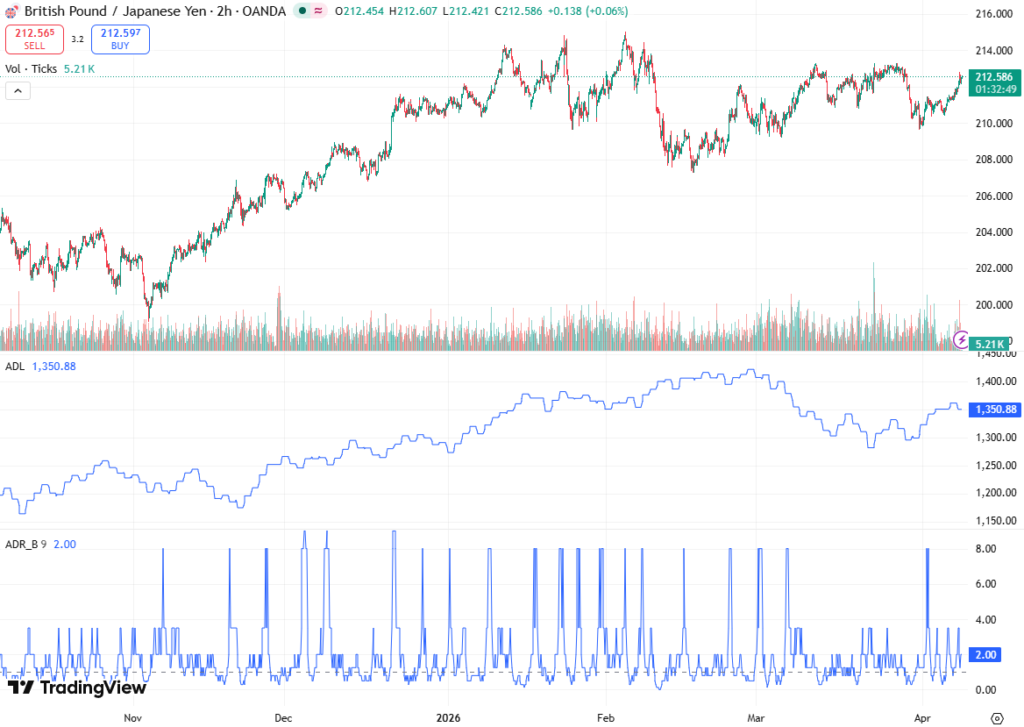
Until that level is breached, however, the market may continue to exhibit range-bound behavior, with traders buying near support and taking profits near resistance.
Short-Term Trading Scenarios
In the near term, traders are closely watching the ¥211.50 level as an intermediate trigger point. A break above this level could signal renewed bullish momentum, providing an opportunity to initiate long positions with a favorable risk-reward profile.
Alternatively, a pullback toward the 210 support zone may offer another entry point, particularly if the market shows clear signs of support, such as bullish candlestick formations or increased buying volume.
These scenarios highlight the importance of price action confirmation, as the pair’s volatility can lead to false breakouts and whipsaw movements.
Conclusion
In summary, the GBP/JPY pair is showing signs of attempting to break higher from a minor consolidation range, supported by strong technical levels and favorable macroeconomic conditions. The ¥210 support level remains critical in defining the market’s directional bias, while the ¥215 resistance level serves as a key upside target.
With the 50-day EMA providing dynamic support and the interest rate differential favoring long positions, the overall outlook leans bullish, particularly for traders employing carry trade strategies. However, given the pair’s inherent volatility, disciplined risk management and position sizing are essential.


