
Pressure is building around Palantir Technologies as its stock declines amid rising concerns over competition in the enterprise artificial intelligence space. The move reflects growing investor sensitivity to competitive dynamics as AI adoption accelerates.
The decline follows increased attention on alternative AI platforms that are gaining traction with businesses seeking more efficient and cost-effective solutions. An investment analyst at Rubizio noted down that rising competition in AI is reshaping expectations, with investors closely evaluating scalability, pricing models, and long-term differentiation.
As the AI landscape evolves, companies are facing greater scrutiny regarding their ability to maintain growth momentum and justify valuation levels.
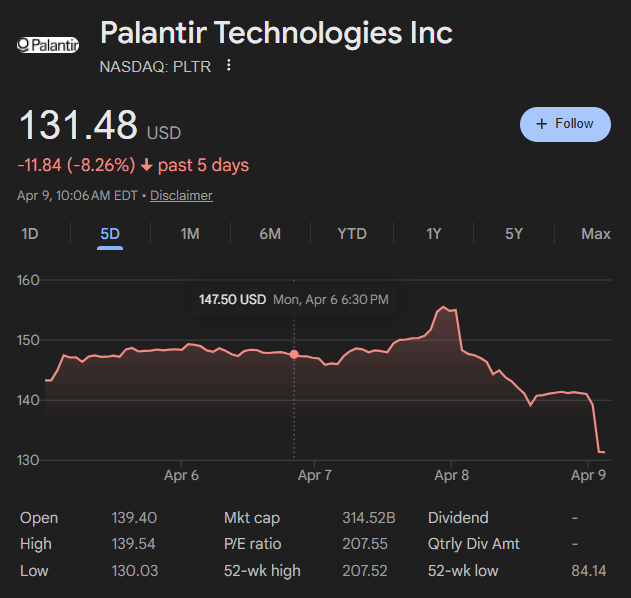
Stock Declines Amid Competitive Concerns
Palantir shares dropped by approximately 6% in a single trading session, reflecting investor reaction to shifting dynamics in the AI sector. The pullback highlights sensitivity to competitive developments and changing market narratives.
Despite strong historical performance, recent price action indicates that investors are becoming more cautious, particularly as new entrants and technologies challenge established players.
Short-term volatility remains elevated, with the stock showing frequent large price swings over recent periods.
Emerging AI Solutions Challenge Traditional Models
New developments in enterprise AI are introducing alternative approaches that could disrupt traditional software models. Advanced AI systems are increasingly capable of performing complex, multi-step tasks autonomously, reducing the need for manual input.
These systems offer greater efficiency and flexibility, which may appeal to businesses seeking to optimize operations and reduce costs.
As a result, companies relying on traditional software delivery models may face pressure to adapt or evolve their offerings to remain competitive.
Valuation Levels Remain Under Scrutiny
One of the key concerns surrounding the stock is its valuation. The company continues to trade at elevated earnings multiples compared to industry averages, which can limit tolerance for execution challenges.
High valuations often reflect strong growth expectations, but they also increase sensitivity to negative news or slower-than-expected performance.
Investors are therefore closely monitoring whether the company can sustain its growth trajectory and justify its current market positioning.
Strong Growth Story Still Supports Long Term Outlook
Despite recent challenges, the company continues to benefit from strong demand for its data analytics and AI platforms, particularly in government and enterprise sectors.
Recent partnerships and contract expansions highlight ongoing interest in its technology, supporting the case for continued revenue growth.
This dual dynamic of strong fundamentals and rising competition is contributing to diverging views among investors.
Market Volatility And Investor Reaction
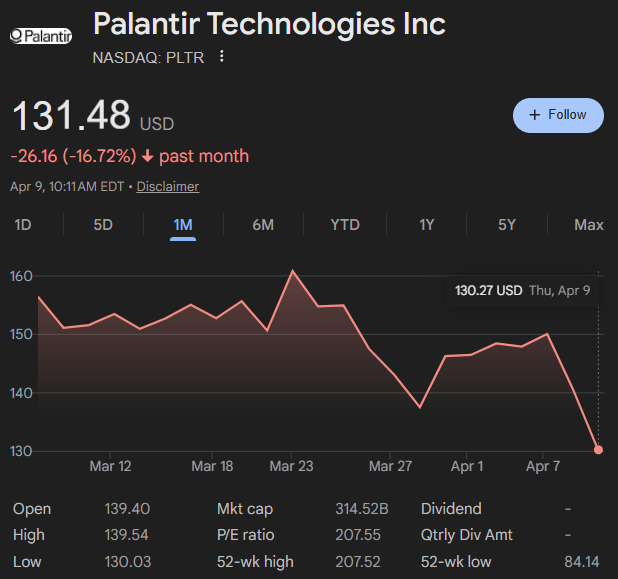
The stock has demonstrated significant volatility, with multiple price movements exceeding 5% over short periods, reflecting how sensitive it is to news and market sentiment. Such fluctuations indicate that investors are actively reacting to both positive developments and potential risks, rather than maintaining a stable outlook.
Rapid changes in price can create both opportunities and challenges, particularly for short-term traders. At the same time, long-term investors may view volatility as part of the growth cycle, focusing instead on underlying fundamentals.
This environment highlights the importance of risk management and disciplined investment strategies when navigating highly dynamic technology stocks.
Recent Performance Highlights Mixed Momentum
While the stock has faced recent declines, it has also experienced periods of strong upward movement, reflecting inconsistent but active investor interest.
Year-to-date performance shows a decline of approximately 16%, while the stock is trading around 32% below its recent peak levels. These figures indicate that the company is still in a correction phase following earlier gains.
At the same time, longer-term investors have seen significant returns, highlighting the stock’s historical growth potential despite volatility.
Industry Competition Reshapes Investor Expectations
The increasing pace of innovation in artificial intelligence is forcing companies to continuously evolve. New platforms offering simplified, scalable, and lower-cost solutions are reshaping how businesses adopt AI technologies.
This shift is influencing investor expectations, with greater emphasis on efficiency, adaptability, and long-term competitiveness.
Companies that can successfully navigate these changes are more likely to maintain market leadership and investor confidence.
Strategic Outlook Amid AI Competition And Market Sensitivity
Looking ahead, the company’s performance will depend on its ability to adapt to intensifying competitive pressures, sustain consistent growth, and continue delivering measurable value to customers across its platforms. The rapidly evolving AI landscape will remain a key factor, shaping both market positioning and long-term strategic direction.
While recent volatility reflects a degree of uncertainty, the underlying demand for AI-driven solutions, automation, and data analytics remains strong across industries. This creates a balance of opportunity and risk, depending on how effectively the company executes its strategy and differentiates itself from emerging competitors.
In addition, factors such as innovation pace, customer adoption, and operational scalability will play an important role in determining future performance. Overall, the stock remains highly sensitive to market sentiment, technological developments, and competitive dynamics, making it a closely watched name within the fast-changing AI sector.


