
Gold prices are showing resilience as global markets navigate a mix of geopolitical uncertainty and upcoming economic data, both of which are shaping short-term investor sentiment. The precious metal remains relatively stable despite recent volatility, reflecting a cautious but balanced market environment.
The current pricing behavior highlights how gold continues to act as a safe-haven asset during periods of uncertainty, particularly when geopolitical tensions remain unresolved. Macroeconomic experts from Rubizio highlights that gold’s stability reflects investor hesitation, with markets waiting for clearer signals from both global events and economic indicators.
As traders evaluate risk conditions, gold is holding within a defined range rather than showing a strong directional move.
Gold Prices Stabilize After Recent Volatility
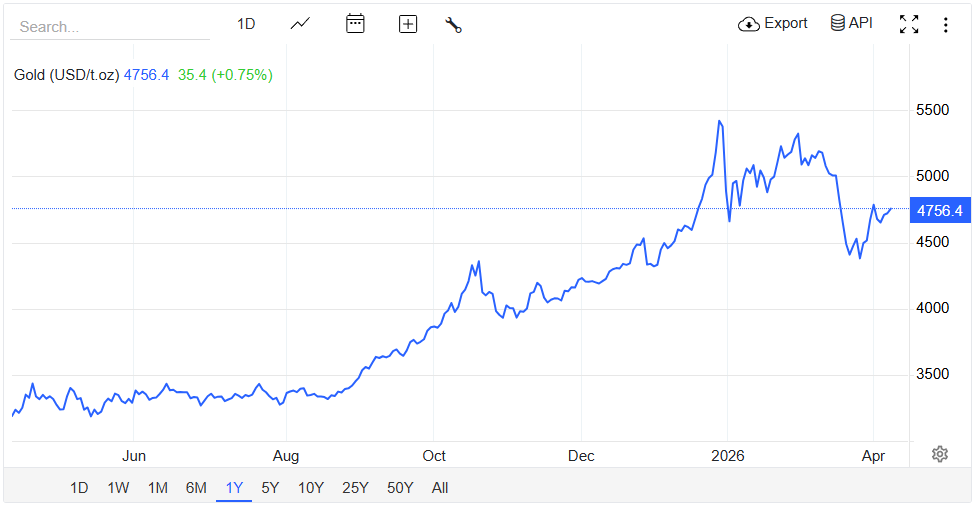
Gold is currently trading around $4,750, after recently reaching levels above $4,800, marking a three-week high. The slight pullback from recent peaks reflects profit-taking and cautious positioning, rather than a full reversal in trend.
This stabilization suggests that investors are maintaining exposure to gold while avoiding aggressive positioning ahead of key developments. The current range-bound behavior indicates a neutral short-term outlook, with neither strong bullish nor bearish dominance.
Market participants are now waiting for clear catalysts before committing to a stronger directional move.
Geopolitical Uncertainty Supports Safe Haven Demand
Ongoing uncertainty surrounding the ceasefire in the Middle East continues to influence gold prices. Concerns about the durability of the agreement have raised questions about potential escalation and broader regional impact.
Conflicting interpretations of ceasefire terms and warnings of possible withdrawal have contributed to heightened market caution. This uncertainty is helping sustain demand for gold as a defensive asset during periods of instability.
As long as geopolitical risks remain unresolved, gold is likely to retain underlying support from risk-averse investors.
Oil Prices Add Complexity To Inflation Outlook
Movements in energy markets are also playing a key role in shaping gold’s trajectory. Oil prices have shown signs of rebounding after recent declines, reintroducing concerns about inflation.
Higher energy costs can contribute to persistent inflationary pressures, which in turn influence expectations for monetary policy. This dynamic creates a complex environment where gold can benefit from both inflation hedging and safe-haven demand.
At the same time, rising inflation expectations may limit central bank flexibility, adding another layer of uncertainty to market conditions.
Federal Reserve Outlook Remains Uncertain
Recent signals from policymakers reflect a divided outlook on interest rates, with competing risks influencing future decisions. On one hand, prolonged geopolitical tensions could weigh on economic growth, potentially supporting rate cuts.
On the other hand, sustained inflation pressures, particularly from rising energy prices, could justify maintaining or even increasing rates.
This two-sided perspective is contributing to uncertainty in financial markets, as investors attempt to anticipate the next policy move.
Key Economic Data In Focus
Market attention is now shifting toward upcoming economic releases, which are expected to provide important insights into inflation and economic performance.
Key data points include Personal Consumption Expenditure (PCE) inflation, GDP figures, jobless claims, and consumer spending metrics. These indicators will play a critical role in shaping expectations for both monetary policy and currency movements.
The outcome of these reports could drive short-term volatility in both gold and the US dollar, depending on whether the data supports or challenges current expectations.
Investor Positioning And Market Sentiment
Current market behavior suggests that investors are maintaining a balanced and cautious approach, with limited conviction in either direction. Many participants are holding positions while waiting for clearer signals from both geopolitical developments and economic data. This has resulted in range-bound price action and reduced volatility compared to earlier sessions. Institutional investors, in particular, are likely adjusting exposure gradually rather than making aggressive moves.
This type of positioning reflects a market environment where uncertainty remains elevated, and decision-making is driven by risk management and data dependency rather than strong directional conviction.
Technical Outlook Signals Neutral Bias
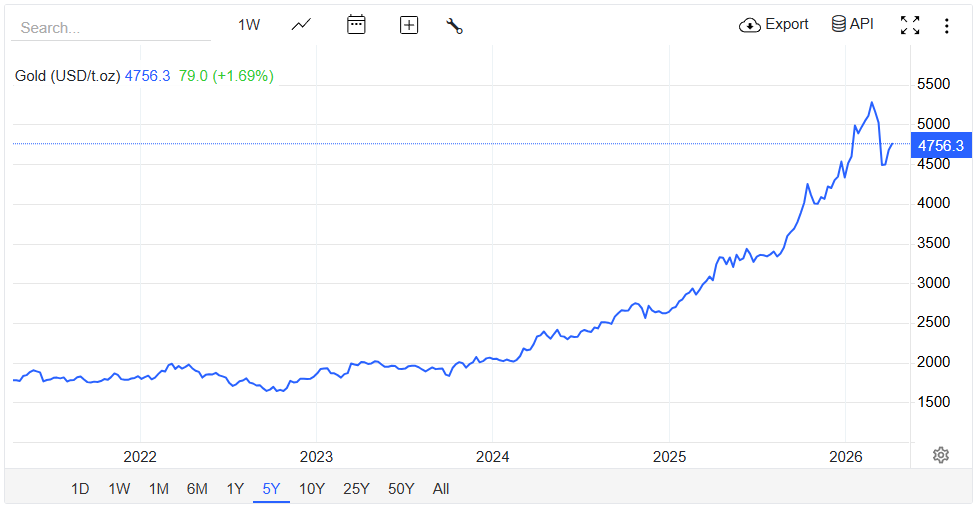
From a technical perspective, gold is trading within a defined range, positioned between key moving averages. Prices remain above the 100-day moving average near $4,673, while staying below the 50-day moving average around $4,914.
This positioning suggests a neutral near-term bias, with no clear breakout in either direction. Momentum indicators also support this view, with readings reflecting balanced market conditions rather than strong trends.
Resistance levels remain near $4,900, while support is seen around $4,670, creating a range that traders are closely monitoring.
Where Gold Is Headed Next
The near-term outlook for gold will depend on a combination of geopolitical developments, energy market trends, and economic data releases. If uncertainty persists, gold could continue to benefit from safe-haven demand and inflation concerns.
Overall, gold remains in a position of strategic importance within global markets, with its role as both a hedge and a defensive asset continuing to shape investor behavior in uncertain conditions.


