
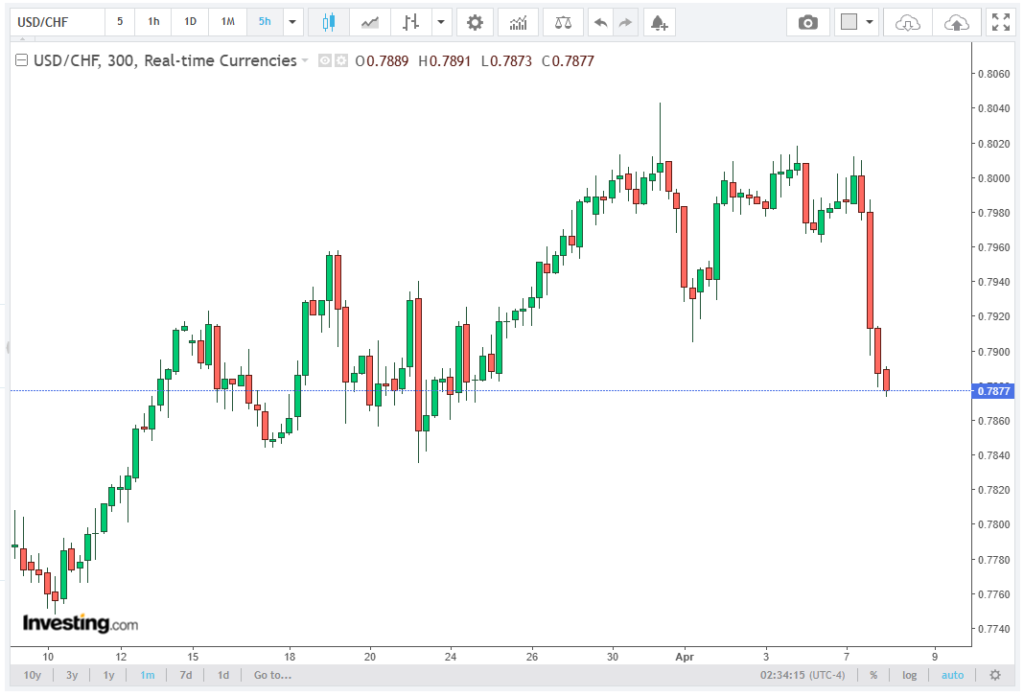
The USD/CHF currency pair slumped to around 0.7890 in the early European session on Wednesday, as geopolitical developments and upcoming central bank events dominated market attention. In the article, Fondesia brokers deliver a well-structured analysis of the topic.
Investors reacted to reports of a potential two-week ceasefire between the United States (US) and Iran, which weighed heavily on the US Dollar (USD).
Market participants are now closely monitoring the release of the Federal Open Market Committee (FOMC) Minutes later in the day, which could provide critical insight into the Federal Reserve’s (Fed) policy stance amid recent energy shocks.
US’s Ceasefire Remarks Drag on the Dollar
The US Dollar came under pressure after the US President announced a tentative ceasefire with Iran via a post on Truth Social. He described Tuesday as “a big day for world peace,” highlighting the potential for the US to aid with traffic management in the Strait of Hormuz and signaling opportunities for economic gains as Iran begins reconstruction.
According to the US President, the ceasefire agreement includes suspending attacks on Iran, contingent on Tehran fully reopening the Strait of Hormuz, a critical chokepoint for global oil shipments. This development prompted a swift reaction in forex markets, with the USD/CHF pair sliding below 0.7900 as risk sentiment improved slightly.
Iranian Foreign Minister Seyed Abbas Araghchi confirmed that the Iranian military would coordinate maritime passage during the ceasefire period. Diplomatic talks between the US and Iran are scheduled to continue in Islamabad, Pakistan, on Friday to finalize operational details.
FOMC Minutes in Focus
Market participants are shifting attention to the FOMC Minutes from the March Federal Reserve meeting, scheduled for release later on Wednesday. Analysts expect the report to offer insights into how policymakers are responding to recent energy price volatility triggered by Middle East tensions.
Any signals of a hawkish Fed stance, such as an emphasis on inflation control or further interest rate hikes, could provide near-term support for the US Dollar. Conversely, if the Minutes suggest a dovish approach or concerns about global growth risks, the USD/CHF could face further downside pressure.
Swiss Inflation Adds to CHF Support
The Swiss Franc (CHF) has benefited from domestic economic developments as well. Switzerland’s inflation rate accelerated in March, reaching the fastest pace in a year. This increase was largely driven by rising energy costs, including higher heating oil prices amid geopolitical tensions in the Middle East.
Hotter Swiss inflation reduces the pressure on the Swiss National Bank (SNB) to maintain negative interest rates, adding fundamental support to the CHF. Investors are increasingly viewing the Swiss currency as a safe-haven asset, particularly when the USD faces headwinds from geopolitical risk or uncertainty in US monetary policy.
Technical Outlook for USD/CHF
From a technical perspective, the USD/CHF pair has broken below the critical 0.7900 level, indicating a potential continuation of bearish momentum in the short term. The immediate support zone now lies between 0.7880 and 0.7875, where traders may look for temporary stabilization or a short-term bounce.
On the upside, resistance is likely to emerge around 0.7915–0.7920, which could act as a key barrier for any recovery attempts. Overall, price action suggests that sellers currently maintain control, but attention to economic data releases and broader market sentiment could influence the pair’s next moves.”
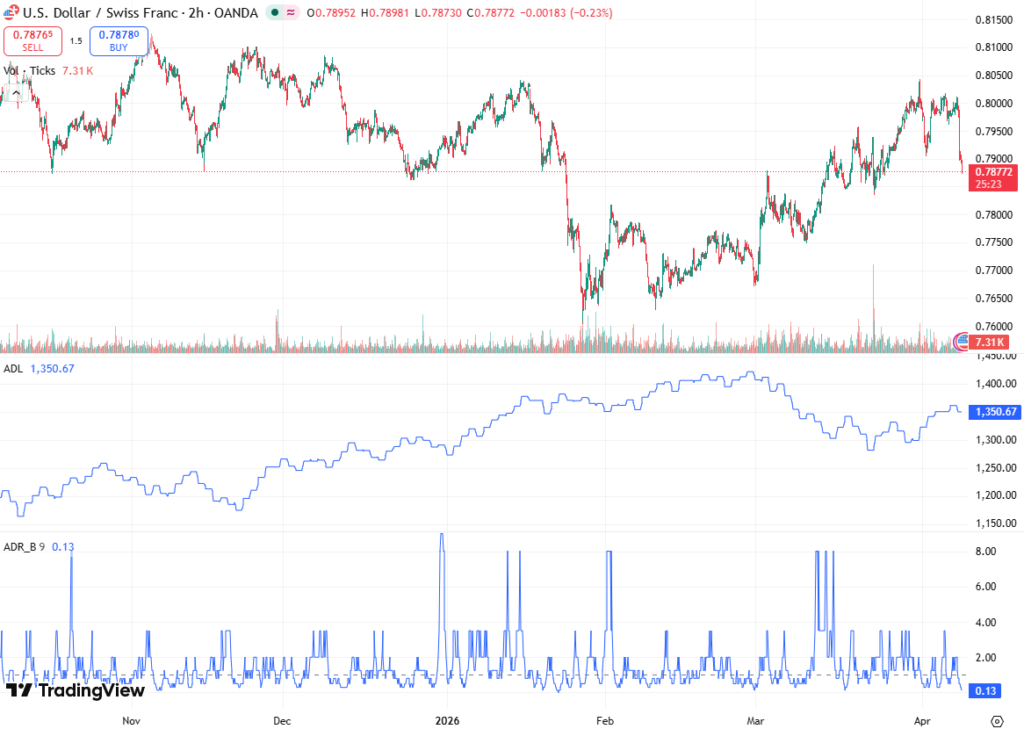
Traders are likely to remain cautious ahead of the FOMC Minutes, as any unexpected commentary on interest rates or inflation forecasts could trigger sharp intraday swings. Meanwhile, geopolitical developments in the Middle East remain a key driver for USD/CHF volatility, as even incremental progress toward peace or conflict escalation can heavily influence risk sentiment.
Market Implications
The combination of the US’s ceasefire announcement, rising Swiss inflation, and anticipation of the FOMC Minutes creates a complex landscape for USD/CHF traders. Key implications include dollar weakness, as the ceasefire reduces geopolitical risk, diminishing demand for the USD as a safe-haven currency.
Meanwhile, CHF strength is supported by rising Swiss inflation and reduced pressure for negative interest rates, enhancing its appeal in the current environment. Finally, volatility ahead is expected with the release of the FOMC Minutes, which may trigger sharp market reactions depending on the Fed’s policy outlook and any commentary on energy-related inflation.
Conclusion
The USD/CHF pair has reacted sharply to geopolitical and domestic developments, dropping to near 0.7890 amid optimism over a potential two-week ceasefire between the US and Iran. The market now awaits the FOMC Minutes for further direction, while Switzerland’s rising inflation adds underlying support to the CHF.
As geopolitical dynamics continue to evolve, combined with central bank guidance from the Fed, traders should prepare for a potentially volatile session for USD/CHF, closely monitoring both technical levels and macroeconomic indicators.


