
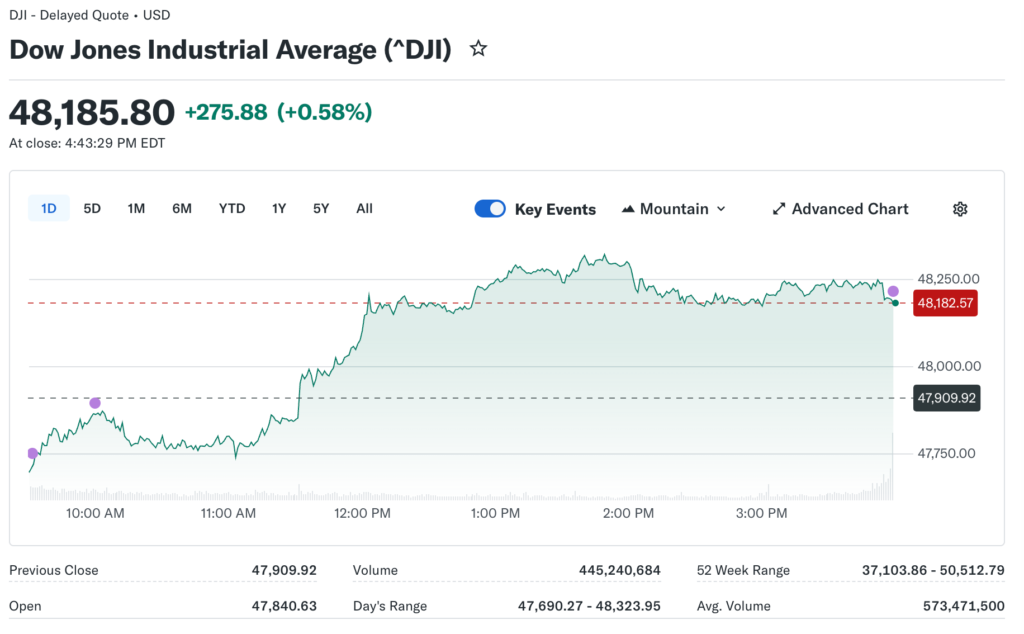
The Dow Jones Industrial Average achieved a remarkable milestone, turning positive for 2026 after months of losses. The 30-stock blue-chip index gained to close at 48,185.80 points, putting it ahead for the year. This psychological victory demonstrated the power of relief rallies when binary geopolitical risks resolve favorably.
The Dow climbed 6.9% from its March 30 war-driven bottom, erasing approximately $2 trillion in market value losses. Byronixel financial analysts deep dive into how the index now trades just 2.8% below its January 27 record close. This rapid recovery compressed months of decline into a single week of powerful gains.
The Comeback Mathematics
Wednesday’s session alone contributed 1,325.96 points to the rally, marking the best single day since April 2025. That previous surge occurred when the administration softened its stance on initial tariff proposals. Both rallies shared the characteristic of reversing policy-driven selloffs through unexpected dovish pivots.
Component stocks contributed unevenly to the index’s recovery, given its price-weighted methodology. High-priced shares like UnitedHealth Group and Goldman Sachs wielded disproportionate influence. This structural quirk meant a handful of stocks drove a substantial portion of the movement.
The Industrial Strength
Industrial companies within Dow posted exceptional gains as recession fears dissipated completely. Caterpillar jumped sharply on expectations for construction equipment demand continuing to grow. Boeing rallied despite ongoing production challenges as airline orders remained robust.
3M and Honeywell benefited from diversified business models spanning multiple economic sectors. Their balanced exposure to different markets provided stability during volatility that investors valued. This diversification premium became apparent as uncertainty remained elevated despite the near-term rally.
The Financial Sector Contribution
JPMorgan Chase and Goldman Sachs led financial sector gains as investment banking pipelines refilled. Merger activity, postponed during peak crisis uncertainty, looked set to resume. Deal calendars filled rapidly as companies rushed to execute before a potential setback.
Visa and American Express benefited from payment volume growth as consumer confidence stabilized. Cross-border transaction fees surged as international travel resumed after weeks of disruption. The normalization of global commerce boosted these network-based businesses disproportionately.
The Technology Divergence
Apple posted modest gains despite conflicting reports about foldable iPhone development timelines. Analysts noted the company is gaining Android market share regardless of new product delays. iPhone sales remained robust as upgrade cycles continued despite economic uncertainty.
Microsoft advanced on continued Azure cloud growth and AI infrastructure spending by enterprises. The company’s diversified revenue streams across productivity software, gaming, and cloud provided stability. Investors valued predictable subscription revenues during uncertain times when visibility remained limited.
The Healthcare Resilience
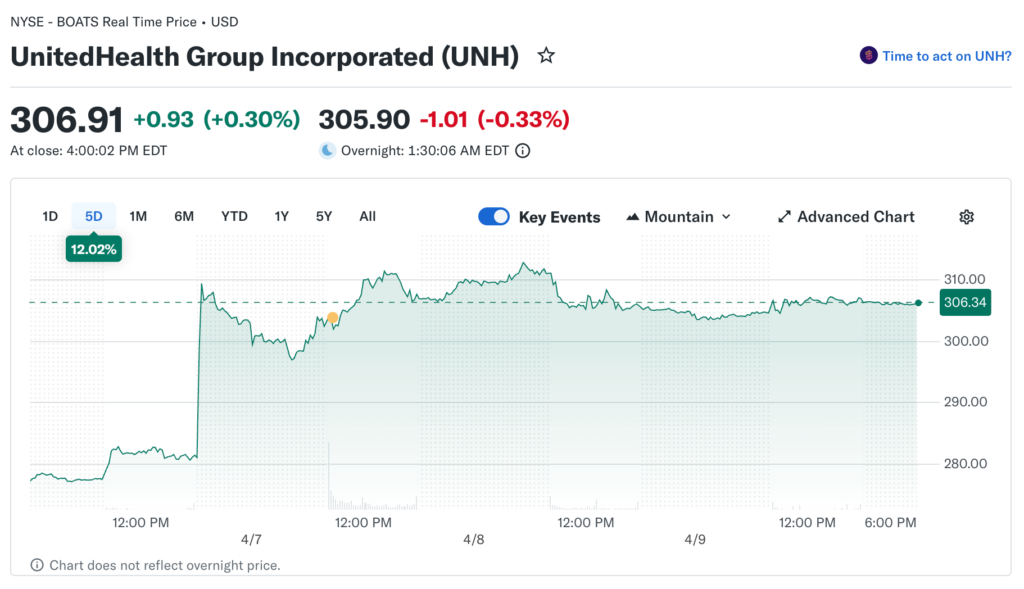
UnitedHealth Group surged following positive developments on Medicare Advantage payment rates exceeding expectations. The healthcare giant’s stock price heavily influences Dow performance, given its high absolute price. Favorable regulatory decisions directly translated to index point gains, boosting the overall benchmark.
Johnson & Johnson and Merck demonstrated defensive characteristics, attracting investors seeking stability. Pharmaceutical companies provided non-cyclical earnings growth insulated from economic fluctuations. This resilience justified premium valuations during volatile periods when growth became harder.
The Energy Sector Drag
Chevron declined sharply as crude oil collapsed, creating significant headwind for Dow performance. The integrated energy giant’s troubles demonstrated sector rotation away from crisis winners. Investors who bought energy stocks as an inflation hedge now faced a reversal.
The price-weighted index methodology meant Chevron’s absolute stock price mattered more than capitalization. This quirk gave the energy sector outsized influence despite representing a small portion of the economy. The structural bias created tracking differences versus market-cap weighted indices.
The Consumer Discretionary Rebound
Nike and Home Depot rallied on an improved consumer spending outlook as gasoline stabilized. Lower fuel costs freed household budgets for discretionary purchases like apparel and renovations. Retailers positioned to capture this spending shift as consumers regained confidence.
McDonald’s demonstrated resilience of value-oriented dining options during economic stress affecting lower-income households. Consumers traded down from casual dining to fast food chains seeking affordable options. This trading pattern benefited companies positioned at affordable price points.
The Defensive Positioning
Procter & Gamble and Coca-Cola participated in the rally despite defensive characteristics normally shunned. Consumer staples provided ballast for portfolios while maintaining upside participation. This unusual pattern suggested investors remained cautious despite aggressive positioning in cyclicals.
Walmart benefited from market share gains as consumers sought value amid inflationary pressures. The retail giant’s low-price positioning attracted shoppers across the income spectrum during difficult times. Strong same-store sales growth validated the investment thesis around retail dominance.
The Path Forward
The Dow’s return to positive territory represented a psychological victory, but its sustainability remained uncertain. Weekend diplomatic talks created a binary catalyst that could extend the rally or trigger a reversal. Prudent investors recognized achievement while maintaining appropriate caution about what comes next.
Valuation levels for many Dow components remained elevated despite recent volatility compressing multiples. Forward earnings multiples assume economic conditions normalize without recession materializing in the coming quarters. Any disappointment on growth or inflation fronts could pressure these assumptions.


