
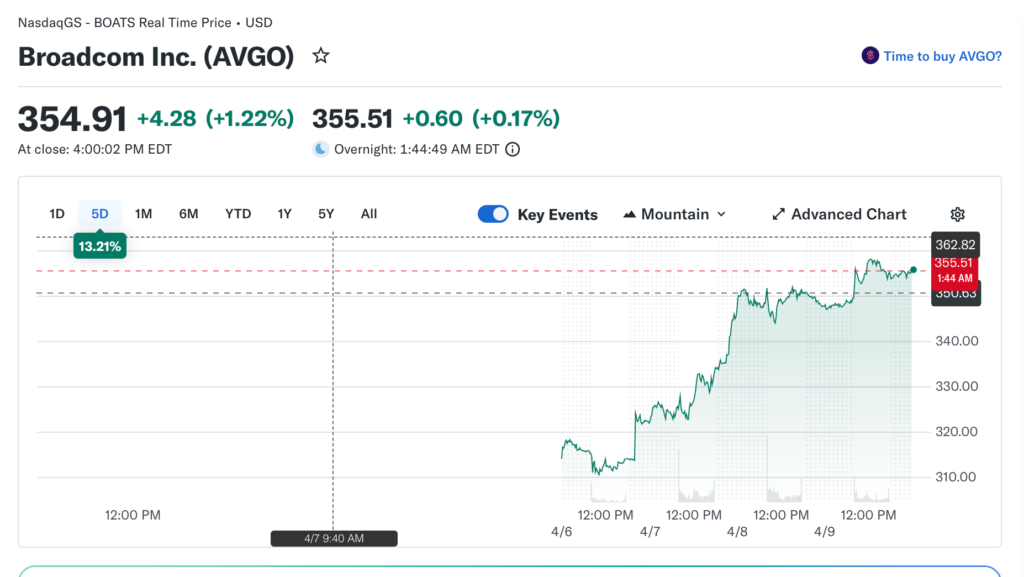
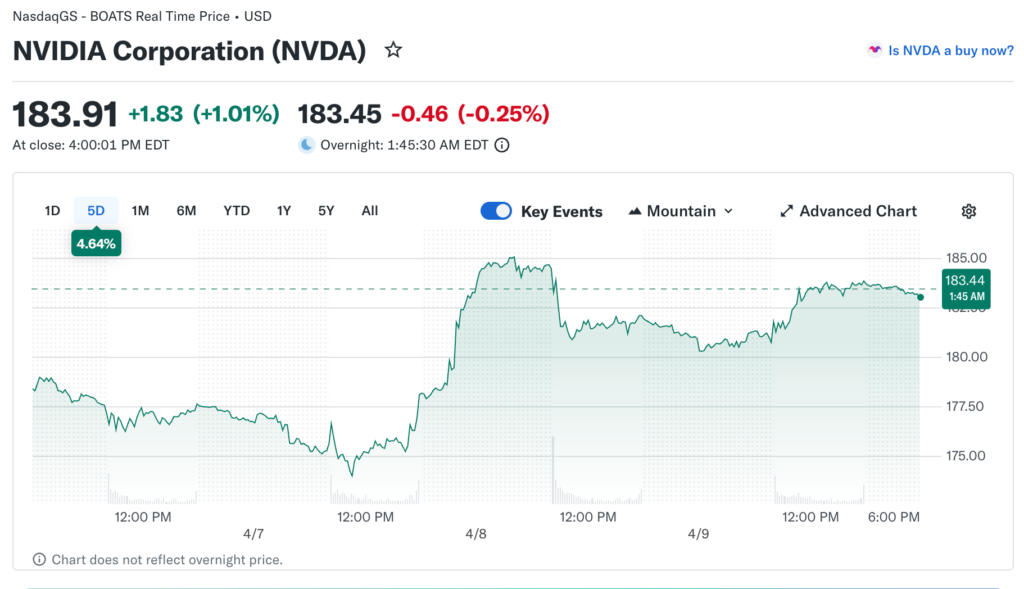
Semiconductor stocks led market gains during the ceasefire-driven rally as investors rotated into technology. Broadcom jumped 5% while Nvidia advanced solidly despite recent production headwinds. The sector benefited from renewed confidence about AI infrastructure spending continuing despite economic uncertainty.
Broadcom surged following news of expanded custom chip orders from major technology companies. Byronixel junior financial analysts break down how Anthropic placed $21 billion worth of orders for AI accelerators through 2027. This massive commitment validated Broadcom’s strategy focusing on application-specific integrated circuits versus general-purpose processors.
The Custom Silicon Opportunity
Major cloud providers are developing proprietary chips to reduce dependence on Nvidia’s dominant GPUs. Google, Amazon, and Microsoft all invested heavily in custom silicon programs. Broadcom positioned itself as a go-to partner for companies lacking internal chip design expertise.
Application-specific integrated circuits optimized for particular workloads offered better price-performance than general chips. The customization came at the cost of longer development cycles and reduced flexibility. Customers accepted these tradeoffs when volume justified the economics of dedicated designs.
The NVIDIA Dynamics
Production delays for next-generation Rubin GPUs created uncertainty about supply timelines. High Bandwidth Memory certification issues with SK Hynix and Micron pushed mass production later. Analysts revised production estimates downward from 2 million units to approximately 1.5 million for 2026.
Despite near-term challenges, demand for Nvidia technology remained exceptionally strong across customers. Data center revenues are expected to grow substantially, driven by AI model training and inference. The company’s software ecosystem advantages created switching costs, protecting its market position.
The Competitive Landscape
Advanced Micro Devices gained share in certain market segments but remained far behind Nvidia overall. Intel’s attempts at competing in AI accelerators struggled against entrenched competitors. The competitive moats around leading positions proved difficult to overcome despite enormous investments.
Taiwan Semiconductor Manufacturing Company benefited regardless of which chip designs won customer adoption. The foundry’s manufacturing leadership meant most cutting-edge processors came from its facilities. This positioning provided diversified exposure to semiconductor growth across applications.
The Infrastructure Spending
Hyperscalers announced combined AI infrastructure investments exceeding $400 billion for 2026. This extraordinary capital allocation dwarfed spending in any previous technology buildout. The scale reflected conviction about AI’s transformative potential across industries.
Network equipment providers like Broadcom benefited from data center upgrades supporting AI workloads. Tomahawk Ethernet switches delivered industry-leading low latency and high throughput. These specifications proved critical for distributed training across thousands of GPUs.
The Memory Shortage
High Bandwidth Memory supply remained severely constrained, limiting GPU production independently. Micron and SK Hynix struggled to scale HBM capacity fast enough for demand. The secondary bottleneck created additional revenue opportunities for memory manufacturers.
Micron projected $33.5 billion in quarterly revenues, reflecting strong pricing power. Demand-supply imbalance for HBM chips pushed prices higher, benefiting producers. The tight market conditions are expected to persist through 2026 as capacity additions lag behind demand.
The Valuation Question
Semiconductor stocks traded at premium multiples reflecting growth expectations embedded in prices. NVIDIA’s forward price-to-earnings ratio of 37 seemed reasonable given projected revenue growth. However, any disappointments could trigger sharp corrections given elevated expectations.
Broadcom’s expected EBITDA margin of 68% demonstrated extraordinary profitability from AI products. The pricing power and operational efficiency justified a premium valuation versus historical norms. Investors questioned the sustainability of margins as competition potentially intensified.
The Geopolitical Risks
Taiwan Semiconductor’s dominance created a concentration risk if China invaded Taiwan. The geopolitical vulnerability threatened global semiconductor supply chains catastrophically. Governments recognized this exposure, driving efforts to build domestic manufacturing capacity.
Export restrictions to China limited the addressable market for leading-edge chips. NVIDIA designed special versions meeting regulatory requirements but sacrificing performance. The bifurcated market created complexity and reduced economies of scale.
The Technology Roadmap
Next-generation architectures promised dramatic improvements in performance per watt. Energy efficiency became critical as power consumption limited data center expansion. Chip designers focused on optimization beyond pure performance gains.
Advanced packaging techniques enabled combining multiple chips into a single high-performance module. This approach overcame the physical limits of transistor scaling. The innovation extended Moore’s Law economic benefits even as traditional scaling slowed.
The Demand Sustainability
Bears questioned whether AI infrastructure spending could maintain its current pace indefinitely. Revenue generation from AI applications is needed to justify massive capital investments. The disconnect between spending and monetization created vulnerability if sentiment shifted.
Bulls argued AI represented a foundational technology shift comparable to the internet or mobile. The infrastructure buildout phase required heavy investment before applications matured. Historical precedents suggested patient investors earned exceptional returns through such transitions.
The Forward Outlook
Bank of America forecasts semiconductor sales surpassing $1 trillion annually in 2026. The milestone reflected industry maturation and expanded addressable markets. AI represented the primary growth driver, but automotive and industrial applications contributed meaningfully.
Analysts highlighted companies with dominant market shares typically exceeding 70% in respective categories. These moats protected against competition and justified premium valuations. The concentration of leadership positions created winner-take-most dynamics across segments.


