
Global financial markets are beginning to reflect a shift in investor sentiment as geopolitical tensions ease. It’s reflecting a clear shift in investor sentiment. A temporary ceasefire in the Middle East has reduced uncertainty, leading to a noticeable decline in U.S. Treasury yields as investors adjust expectations around inflation and interest rates.
The bond market responded quickly, with increased demand for government securities pushing yields lower across multiple maturities. Economic strategists from Winseterra note that this movement highlights how closely fixed income markets react to geopolitical risk and energy price changes.
As energy markets stabilize and inflation concerns begin to ease, investors are reassessing positions, resulting in a broad decline in borrowing costs across the yield curve.
Yields Fall Across Key Maturities
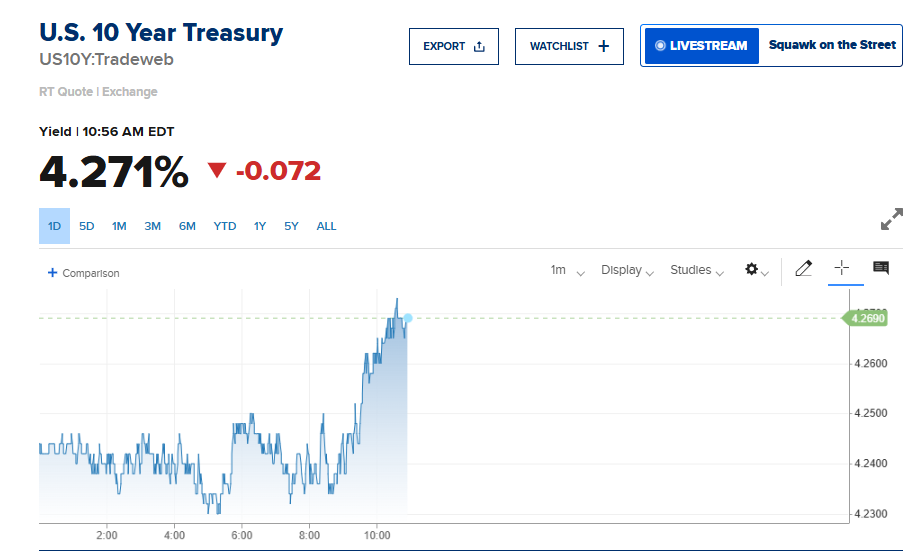
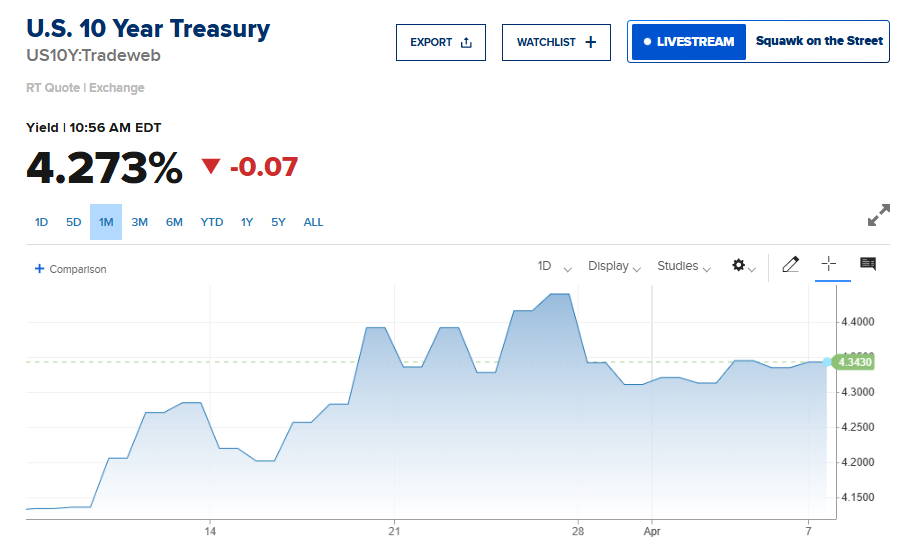
U.S. Treasury yields moved sharply lower following the ceasefire announcement, with the benchmark 10-year yield dropping by around 10 basis points to approximately 4.24%. This decline reflects a shift toward safer assets as market conditions stabilize.
Shorter-term and longer-term yields followed the same direction. The 2-year Treasury yield declined by about 10 basis points to around 3.73%, while the 30-year yield fell by roughly 7 basis points to near 4.84%.
These synchronized movements indicate a broad-based adjustment across the yield curve, signaling that investors are recalibrating expectations for both short-term policy rates and long-term economic outlook.
Bond Prices Rise As Demand Increases
The decline in yields corresponds with a rise in bond prices, as investors increase allocations to safe-haven assets. This inverse relationship remains a core principle of fixed income markets, where higher demand directly leads to lower yields.
The recent shift suggests investors are prioritizing stability and capital preservation after a period of heightened volatility. As geopolitical risks ease, confidence improves, encouraging a reallocation toward lower-risk instruments.
This movement also reflects expectations that inflation pressures may begin to moderate, reducing the need for elevated yields.
Energy Price Decline Drives Market Reaction
A major driver behind the drop in yields is the sharp decline in global energy prices. Oil markets reacted strongly to the ceasefire, with key benchmarks falling significantly.
Brent crude dropped below $100 per barrel, reaching around $93.78, marking a decline of more than 14%. U.S. West Texas Intermediate crude fell even further, dropping approximately 16% to around $94.77 per barrel.
Lower energy prices are critical because they directly influence inflation expectations, transportation costs, and overall economic pricing pressures, which in turn impact bond markets.
Inflation Expectations Begin To Ease
The decline in oil prices has led to a noticeable easing of inflation concerns, which had previously pushed yields higher. During inflationary periods, investors demand higher returns to offset purchasing power erosion.
With energy costs stabilizing, expectations for future inflation are becoming more balanced. This shift has reduced pressure on the bond market and contributed to the downward movement in yields.
The connection between energy pricing and inflation trends remains one of the most influential factors shaping market behavior.
Focus Turns To Monetary Policy Signals
As conditions evolve, attention is shifting toward monetary policy direction and interest rate expectations. Investors are closely monitoring signals that could indicate potential adjustments in policy.
The recent decline in yields suggests that markets are beginning to price in a softer inflation outlook, which could influence future rate decisions. If inflation continues to ease, this may create room for more accommodative policy conditions.
Upcoming economic data, including housing indicators and borrowing rates, will play a key role in shaping expectations.
Investor Sentiment and Current Market Direction
The drop in Treasury yields reflects a broader improvement in market sentiment, supported by reduced geopolitical risk and stabilizing energy prices.
However, uncertainty has not been fully removed. Investors remain cautious, recognizing that both geopolitical developments and economic data can quickly shift market direction.
The next few trading sessions will be critical in determining whether the current trend continues or if volatility returns.
Investor positioning may also shift as portfolio managers rebalance allocations between equities and fixed income in response to evolving market conditions. A sustained decline in yields could encourage increased demand for bonds as a defensive strategy, while any rebound in energy prices or renewed inflation pressures may quickly reverse current trends. This dynamic environment reinforces the need for flexible strategies and close monitoring of cross-market signals.
The sharp decline in U.S. Treasury yields highlights the strong relationship between geopolitical events, energy prices, and financial markets. As inflation concerns ease, demand for bonds has increased, leading to lower borrowing costs across the economy.
While current conditions suggest improving stability, continued monitoring of energy markets, inflation trends, and central bank signals will be essential. The balance between stability and uncertainty will continue to shape investor behavior in the near term.


