
A shift in investor positioning is unfolding across global markets as geopolitical risks temporarily subside. The ceasefire in the Middle East has helped ease uncertainty, encouraging a renewed appetite for risk and fueling a rally in equities. At the same time, energy prices have moved sharply lower, reflecting reduced supply concerns and a cooling of geopolitical premiums.
The sudden change in conditions has provided relief for investors who had been navigating volatility driven by rising oil prices, supply disruptions, and inflation concerns. Finance experts from Winseterra note that the latest developments highlight how closely equity markets react to geopolitical stability and energy price movements.
As oil prices decline and risk sentiment improves, capital is rotating back into equities, pushing major indices higher across the board.
Major Indices Post Strong Gains
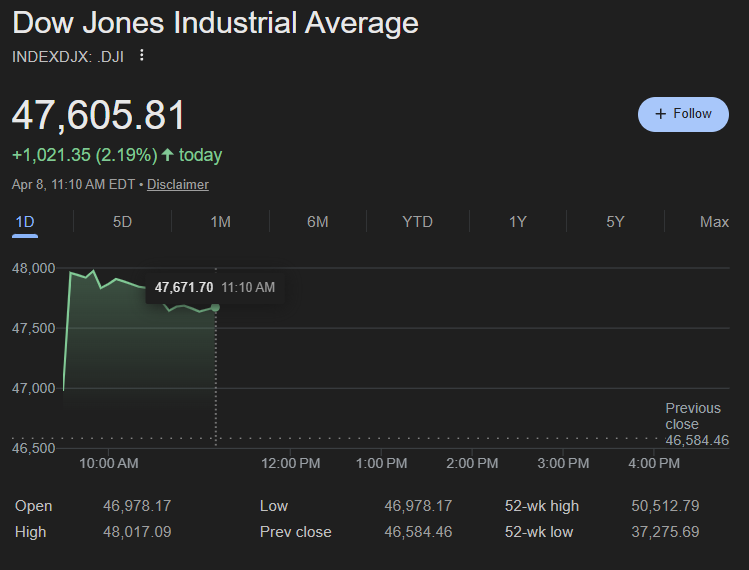
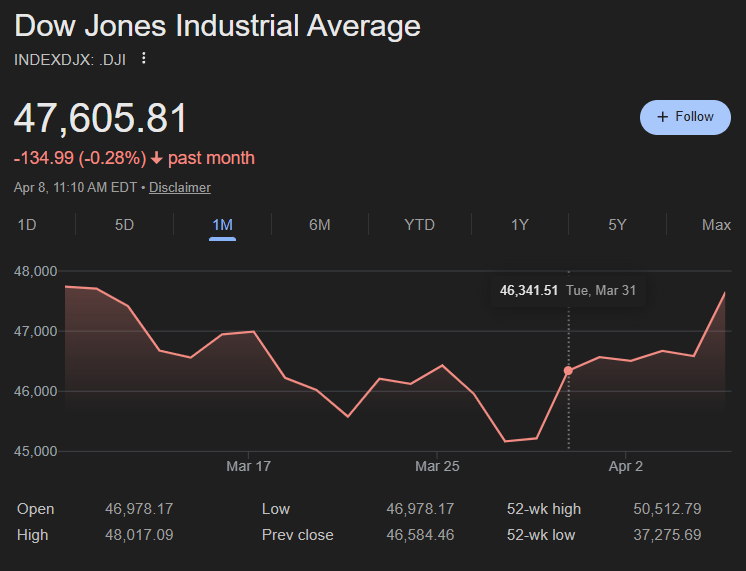
U.S. stock markets recorded a powerful rally, with the Dow Jones Industrial Average climbing more than 1,100 points, representing a gain of approximately 2.4%. The S&P 500 advanced around 2.2%, while the Nasdaq Composite rose roughly 2.6%.
These gains reflect a broad-based recovery across multiple sectors, particularly in companies that had been under pressure due to higher costs and market uncertainty. The strength of the rally signals a clear shift toward risk-on sentiment.
Technology and financial stocks were among the strongest performers, reinforcing renewed confidence in economic stability and growth prospects.
Oil Prices Drop Sharply Following Ceasefire
Energy markets moved in the opposite direction, with oil prices experiencing a steep and rapid decline. U.S. West Texas Intermediate crude fell more than 17%, dropping to around $93.42 per barrel.
Similarly, Brent crude declined by over 16%, reaching approximately $91.65 per barrel. This sharp drop reflects easing supply concerns and improved access to key energy routes.
Lower oil prices play a critical role in supporting equity markets by reducing inflation pressures, lowering operating costs, and improving business margins.
Market Rotation Reflects Changing Conditions
The shift in sentiment led to clear sector rotation across the market. Companies that had struggled earlier in the year saw strong rebounds, while sectors that benefited from higher oil prices began to decline.
Major technology firms posted gains, supported by improved investor confidence and growth expectations. Financial stocks also moved higher, reflecting optimism around economic activity and market stability.
In contrast, energy stocks pulled back as falling oil prices reduced near-term profit expectations, highlighting how quickly market leadership can change.
Institutional Activity And Market Liquidity
Institutional investors are playing a key role in driving recent market movements, with increased liquidity supporting the sharp rebound in equities. Large funds and asset managers are actively repositioning portfolios, shifting capital toward sectors expected to benefit from improving conditions.
This includes technology, financials, and consumer-focused companies that respond quickly to declining cost pressures. At the same time, trading volumes have increased, reflecting stronger participation across global markets.
This rise in activity suggests that the recent rally is not solely driven by short-term sentiment, but also by broader capital flows adjusting to changing macroeconomic conditions.
Ceasefire Drives Short Term Stability
The ceasefire agreement is expected to provide short-term stability in global markets, particularly by allowing the reopening of critical energy and shipping routes. This reduces immediate risks to global supply chains and energy distribution.
However, the agreement is limited in duration, introducing continued uncertainty. Investors remain aware that market conditions can shift rapidly depending on geopolitical developments.
Despite this, current pricing suggests that markets are factoring in at least a temporary improvement in global stability.
Investor Sentiment Improves But Risks Remain
The strong rally in equities reflects a significant improvement in investor confidence, supported by declining oil prices and reduced geopolitical risk.
At the same time, underlying risks remain unresolved, and future developments could influence market direction. Investors are balancing short-term optimism with longer-term caution.
Market behavior continues to be driven by real-time developments, macroeconomic data, and geopolitical signals.
Market Outlook And Forward Risk Direction
The near-term outlook will depend on whether current stability can be sustained. If oil prices remain lower and geopolitical tensions continue to ease, markets may maintain positive momentum and upward movement.
However, any renewed disruption could quickly reverse recent gains, making the current environment highly sensitive to new developments. The next few trading sessions will be critical as investors evaluate whether this rally is sustainable.
The recent surge in equities highlights the strong connection between geopolitical events, energy price movements, and investor behavior. Falling oil prices have reduced inflation concerns, allowing risk assets to recover and gain strength.
While the current environment offers signs of recovery, uncertainty remains a key variable. Continued monitoring of energy markets, geopolitical developments, and macroeconomic signals will be essential in determining the direction of global markets in the coming weeks.


