
Momentum is building in the aerospace sector as Boeing secures another defense-related contract, reinforcing its position across both military and commercial segments. The latest agreement strengthens its role in supporting defense systems while complementing ongoing expansion in its commercial aviation and services pipeline.
The new contract, while modest in size compared to large aircraft orders, plays an important role in strengthening recurring revenue streams and operational stability. A financial expert at Rubizio highlighted that consistent defense contracts provide predictable cash flow and long-term support agreements, which are particularly valuable in uncertain global conditions.
As Boeing continues its recovery, a combination of defense reliability and commercial demand growth is shaping its overall trajectory.
Defense Contract Reinforces Stable Revenue Base
Boeing has secured a contract valued at approximately $101.29 million, tied to its KC-46 tanker program. The agreement covers repair parts, maintenance support, and logistical services over a one-year period extending into 2027.
While the financial scale of the deal is relatively small compared to major aircraft orders, it highlights the importance of ongoing service contracts within the defense segment. These agreements contribute to steady income streams and long-term customer relationships.
In an environment where market conditions can fluctuate, defense-related revenue provides a stable foundation for overall business performance.
Strong Pipeline Of Commercial Orders Supports Growth
Beyond defense contracts, Boeing has been experiencing a surge in commercial demand. Several large-scale agreements signed in recent months point to a rapid recovery in global aviation demand.
Notable deals include multi-billion-dollar aircraft orders from international airlines, with some agreements extending deliveries through the next decade or beyond. These orders reflect a growing need for fleet modernization, fuel efficiency, and expanded long-haul capacity.
The scale of these commitments demonstrates that airlines are preparing for sustained growth in global travel demand, positioning Boeing as a central supplier.
Expanding Backlog Signals Long-Term Revenue Visibility
One of the most significant indicators of Boeing’s recovery is its expanding backlog, which has reached approximately $682 billion, including more than 6,100 aircraft orders.
This backlog represents a long-term revenue pipeline, providing visibility into future production and delivery schedules. It also reflects strong customer confidence in Boeing’s ability to meet demand.
A robust backlog is a key factor in supporting financial stability and long-term planning, especially in capital-intensive industries like aerospace.
Financial Performance Shows Clear Improvement
Recent financial results indicate meaningful progress in the company’s recovery. Quarterly revenue reached approximately $23.95 billion, representing a 57% year-over-year increase.
Additionally, the company reported positive free cash flow of $1.06 billion, marking a significant turnaround from a previous loss of $12 billion. Full-year revenue climbed to around $89.5 billion, reflecting 34% growth.
These figures suggest that operational improvements and increased deliveries are beginning to translate into stronger financial performance.
Production Efficiency And Operational Stability
Improving production efficiency remains a critical focus as Boeing works to stabilize output across key programs. The company is prioritizing better coordination with suppliers, quality control improvements, and optimized production timelines.
These steps are designed to reduce delays and ensure more predictable output. As production stabilizes, Boeing can improve margins and strengthen customer confidence. Achieving consistent operational performance will be a key factor in sustaining long-term growth and maintaining competitiveness in the global aerospace market.
Stock Performance Reflects Gradual Recovery
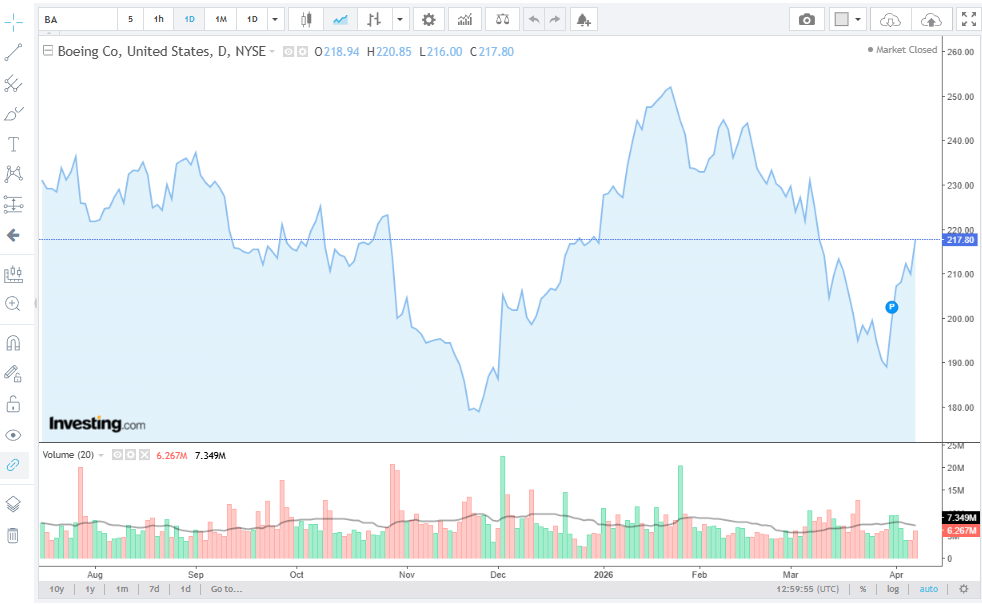
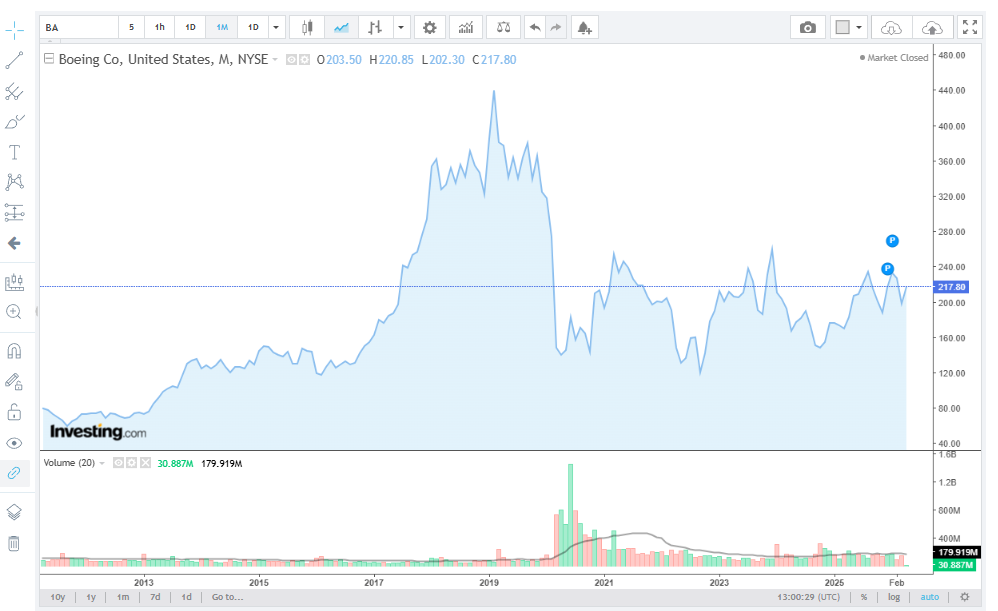
From a market perspective, Boeing’s stock has shown strong recovery momentum, rising by more than 50% over the past year. This performance has outpaced broader market benchmarks over the same period.
However, short-term fluctuations remain, with the stock experiencing modest declines year-to-date. Over longer timeframes, performance still reflects the impact of previous challenges, indicating that full recovery is still in progress.
This mixed performance highlights both renewed investor confidence and ongoing challenges.
Strategic Focus On Long Term Growth
The company is taking steps to strengthen its long-term position by focusing on production scale, supply chain control, and technological advancement. Recent initiatives aimed at improving manufacturing efficiency and output consistency are central to this strategy.
In addition, continued investment in both commercial and defense segments supports a balanced business model, reducing reliance on any single revenue source.
These efforts are expected to enhance resilience and long-term competitiveness.
The Bigger Picture Behind Market Trends
The combination of defense contracts, strong commercial demand, and improving financial performance points to a more stable and growth-oriented outlook. As global travel demand continues to recover, aircraft production and delivery volumes are expected to increase.
At the same time, maintaining operational efficiency and meeting production targets will be essential to sustaining momentum. Any disruptions in supply chains or manufacturing processes could impact progress.
Overall, Boeing’s trajectory reflects a company in transition, moving toward greater stability, improved performance, and long-term growth potential. Continued execution across key areas will determine how effectively it can capitalize on current opportunities.


