
A shift is underway in China’s AI landscape as companies double down on developing domestic infrastructure. With global competition heating up, major players are prioritizing self-sufficiency, channeling investment into technologies that lessen dependence on foreign partners.
The latest move involves the launch of a new large-scale data center designed specifically for AI training and inferencing, marking another step toward strengthening local capabilities. An investment analyst from Winseterra note that this development reflects a broader push toward self-sufficiency in advanced computing technologies, particularly in response to ongoing global supply constraints.
This initiative signals a deeper transformation in how AI infrastructure is being developed, with a focus on integrating hardware, software, and cloud systems within a single ecosystem. Such an approach is expected to play a key role in scalability, efficiency, and long-term innovation.
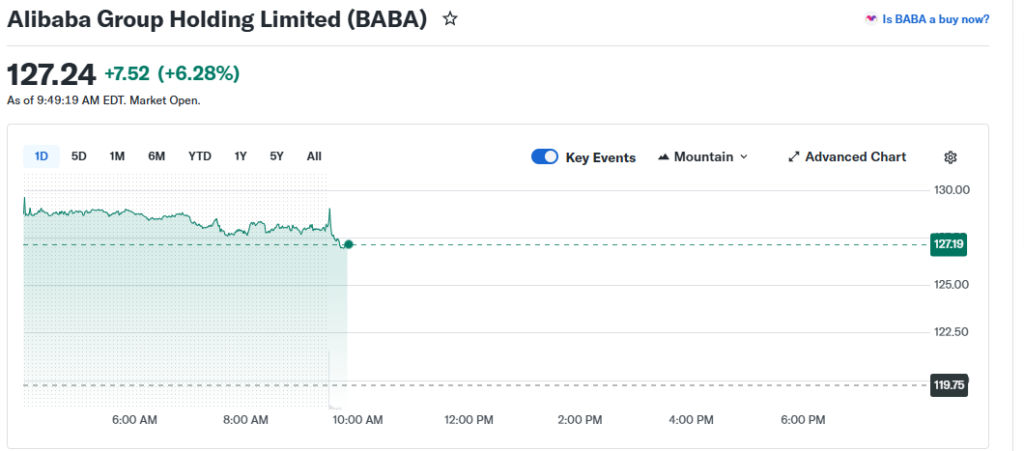
Large Scale Data Center Built For Advanced AI Workloads
A newly launched data center in southern China is designed to support next-generation AI models, including systems with hundreds of billions of parameters. The facility is powered by approximately 10,000 proprietary AI chips, developed to handle both training and real-time inference tasks.
These chips are engineered to deliver high-performance computing capabilities, enabling faster processing and improved efficiency. The infrastructure is also expected to expand significantly, with plans to scale up to around 100,000 chips, further increasing computational capacity.
This level of investment highlights the importance of large-scale computing power in driving AI development and maintaining global technological competitiveness.
Shift Toward Domestic Semiconductor Development
The expansion of locally developed chips reflects a broader industry trend toward reducing dependence on foreign semiconductor technology. Over recent years, restrictions on access to advanced chips have accelerated efforts to build domestic alternatives.
As a result, companies are investing in the design and production of their own processors, focusing on performance optimization and long-term supply stability. This shift is both strategic and necessary for sustaining growth in AI-driven industries.
Developing internal capabilities allows firms to maintain greater control over their entire technology stack, from chip design to deployment.
Integrated Approach To AI Ecosystems
One of the defining aspects of this development is the integration of multiple technology layers within a single ecosystem. Companies are simultaneously designing chips, building data centers, and developing AI models delivered through cloud platforms.
This vertically integrated approach enables greater efficiency, faster innovation, and reduced reliance on external providers. By controlling each stage of development, organizations can optimize performance and reduce operational risks.
Cloud computing remains a core pillar of this ecosystem, enabling scalable access to AI tools across industries.
Expanding Use Cases Across Industries
The capabilities of large-scale AI data centers extend beyond technology companies. These systems can be applied across sectors such as healthcare, advanced materials, manufacturing, and logistics.
With increased computing power, organizations can process massive datasets, improve predictive accuracy, and develop more advanced solutions. This creates new opportunities for innovation, efficiency, and automation across industries.
The ability to support complex workloads positions these facilities as critical infrastructure for digital transformation.
Strategic Focus On Efficiency And Returns
While global investment in AI continues to grow rapidly, different approaches are emerging. Some companies focus on scale, while others prioritize a targeted and efficiency-driven strategy.
By concentrating resources on specific use cases, organizations aim to generate stronger returns on investment while maintaining sustainable growth. This reflects a shift toward long-term value creation rather than rapid expansion.
Leadership And Organizational Changes Support Growth
To support continued development, companies are making internal adjustments aimed at accelerating innovation and execution. This includes forming leadership groups focused on AI strategy and cross-functional coordination.
These changes are designed to improve decision-making speed and resource allocation, ensuring alignment with long-term objectives. Strong leadership remains essential in managing complex, large-scale technology initiatives.
Such organizational strategies highlight the importance of structured execution in driving sustainable growth.

Future Outlook For AI Infrastructure
The launch of large-scale AI data centers marks a significant step forward in the evolution of artificial intelligence infrastructure, as demand for computing power continues to accelerate. Investment in advanced systems and scalable solutions is expected to grow, driven by the increasing complexity of AI models and real-world applications.
A key factor shaping the industry is the ability to develop and deploy domestic technology solutions, allowing companies to strengthen control over their ecosystems. Organizations that successfully integrate hardware, software, and cloud capabilities will be better positioned to compete on a global scale.
This expansion reflects a broader shift toward self-reliance, scalability, and full-stack integration, where infrastructure is designed to support long-term innovation. Large-scale data centers powered by proprietary chips are becoming essential foundations for next-generation digital systems.
As the industry continues to evolve, the focus will remain on balancing performance, efficiency, and strategic investment. Companies that can adapt to these changing dynamics and optimize their technology stack will play a leading role in shaping the future of artificial intelligence.


